°C
 4
Min
The United States Supreme Court has rejected another attempt by the administration of President Donald Trump to allow Missouri to use a Republican-backed congressional map designed to improve the party's chances in November's midterm elections.
US Supreme Court blocks Trump-backed congressional map in Missouri
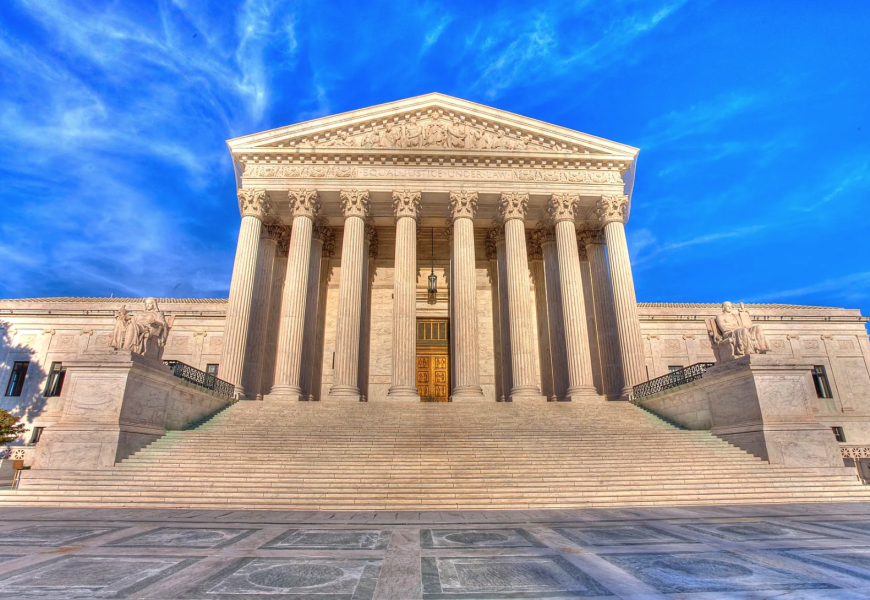
The United States Supreme Court has rejected another attempt by the administration of President Donald Trump to allow Missouri to use a Republican-backed congressional map designed to improve the party's chances in November's midterm elections.
The court issued its latest order on Thursday without recording any dissents, apparently clearing the way for Missouri to use its existing congressional districts in the November general election.
The dispute could have significant political consequences because control of the US House of Representatives is expected to be closely contested in the midterm elections.
Earlier in the week, Supreme Court Justice Brett Kavanaugh, who was appointed by Trump, had also rejected an emergency request to put the new Missouri map into effect. Kavanaugh oversees emergency applications arising from Missouri but did not refer the matter to the full court or provide an explanation for his decision.
Contempt proceedings add to election confusion
The dispute over Missouri's congressional boundaries has continued for more than a year and has created uncertainty over which districts should be used by voters.
The latest Supreme Court decision came only hours after a federal judge allowed Missouri's highest court to proceed with a contempt hearing involving Republican Secretary of State Denny Hoskins.
The Missouri Supreme Court had previously ordered Hoskins not to use the Trump-backed congressional map in the general election. Instead, it directed officials to use the districts approved by state lawmakers following the most recent census.
However, US District Judge Stephen Clark, another Trump appointee, issued a conflicting order on Tuesday barring Hoskins from using anything other than the new map supported by Trump.
The Missouri Supreme Court subsequently ordered Hoskins to appear at a contempt hearing after accusing him of failing to comply with its instructions and directing local election officials to use the new congressional boundaries.
Attorneys representing Hoskins asked Clark to stop the contempt proceedings, but the judge declined.
Republican redistricting push
Missouri became the second Republican-controlled state, after Texas, to redraw congressional districts following Trump's push last year for Republicans to alter House boundaries in their favour ahead of the midterm elections.
The proposed Missouri map was designed to make it more difficult for Democratic Representative Emanuel Cleaver to retain his Kansas City-area seat. Parts of his existing district were shifted into neighbouring districts, while the remaining areas were extended into more rural and heavily Republican territory.
The changes were intended to give Republicans a stronger chance of winning seven of Missouri's eight House seats, potentially increasing their representation by one seat.
Opponents of the redistricting plan collected hundreds of thousands of signatures in an effort to force a statewide referendum on the new boundaries. The petitions were submitted in December, but Hoskins did not reject them until August, on the same day as Missouri's primary election.
Hoskins argued that a referendum petition could not be used to challenge congressional redistricting.
The delay meant the new boundaries were used during the August primary, while Republican officials argued that changing districts before the November election would interfere with voters' federal rights.
The Missouri Supreme Court later ordered Hoskins to place the redistricting referendum on the November ballot. It also ruled that the new congressional map had never legally taken effect and should instead be considered suspended retroactively from the date the referendum petitions were submitted.
Missouri officials appealed that decision to the US Supreme Court, but Kavanaugh rejected the request to block the state court's ruling.
The Supreme Court has now reinforced the requirement that Missouri use the previous congressional map for the November election. That map was approved by Republican lawmakers in 2022 following the latest census.
The court had already declined to hear an appeal of the earlier decision on Tuesday. Shortly afterwards, however, Clark issued his conflicting order directing Missouri to use the newer map, prompting the latest emergency appeal to the Supreme Court.
More Top Stories