°C
 3
Min
Peru is set to join the United States-led "Shield of the Americas" security alliance, strengthening cooperation between the two countries in efforts to combat drug trafficking and organised crime across the region.
Peru joins US-led Shield of the Americas security alliance
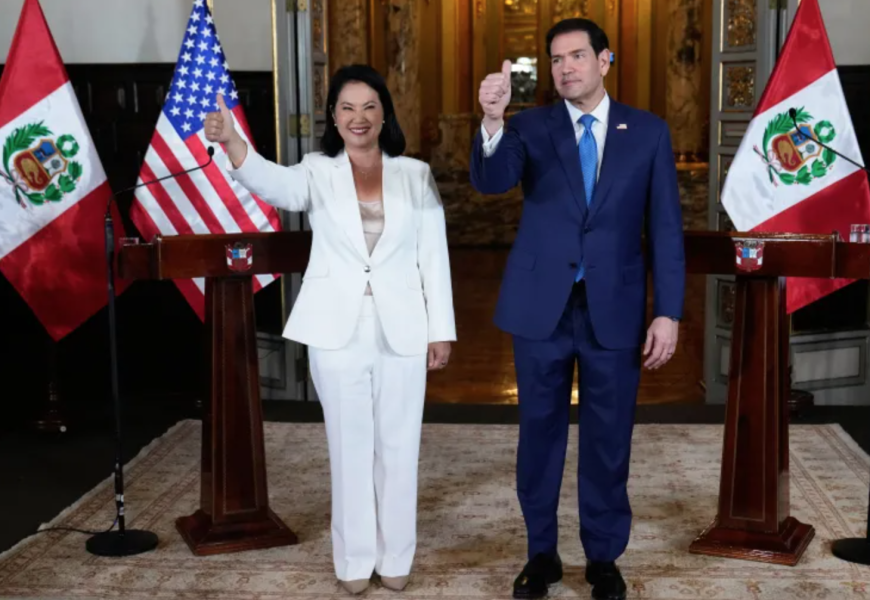
Peru is set to join the United States-led "Shield of the Americas" security alliance, strengthening cooperation between the two countries in efforts to combat drug trafficking and organised crime across the region.
Peruvian President Keiko Fujimori announced the decision following talks with US Secretary of State Marco Rubio during his visit to Lima.
Fujimori said Peru welcomed the opportunity to participate in the initiative, drawing on the country's past experience in confronting terrorism and its current struggle with rising criminal activity.
Her government also awarded Rubio the Order of the Sun, one of Peru's highest civilian honours, during his visit.
Rubio's trip to Peru marked the final stop on a three-country tour of South America aimed at strengthening ties between the administration of US President Donald Trump and conservative governments in the region.
The Shield of the Americas, also known as the Americas Counter Cartel Coalition, promotes intelligence sharing and greater military cooperation between participating countries in efforts against transnational criminal organisations.
Rubio said the alliance was intended to protect the sovereignty of participating nations from criminal groups that can possess substantial financial resources and military capabilities.
He said the United States was prepared to provide assistance requested by partner governments but would not intervene without their approval.
"We're not going to do anything that our partners don't ask us to do," Rubio said.
Fujimori, a former first lady and daughter of former Peruvian President Alberto Fujimori, took office in July after campaigning heavily on crime and public security.
Peru faces significant challenges from organised crime, including extortion and drug trafficking. The country is also the world's second-largest producer of cocaine, behind Colombia.
The expansion of US security cooperation in Latin America remains controversial, however, because of the region's history of US intervention and concerns over the influence of foreign military forces.
Protests were held in Lima during Rubio's visit, with demonstrators gathering outside the government headquarters where the US secretary of state was meeting Fujimori.
Some protesters carried signs opposing the Shield of the Americas and called for greater protection of Peru's national sovereignty.
The closer US-Peru relationship also comes amid growing competition between Washington and Beijing for economic and strategic influence in South America.
China has become Peru's largest trading partner and has invested heavily in the country, including in major infrastructure projects. The Chancay port, located about 80 kilometres from Lima, has been a particular focus of US concern.
The Trump administration has criticised Chinese investment in strategic infrastructure in the region and has encouraged Latin American governments to reduce their economic dependence on Beijing.
Peru is also strategically important to the United States because of its mineral resources. The country is the world's third-largest producer of copper, a critical commodity for global industry and technology.
Washington designated Peru a major non-NATO ally in January. The US State Department has also approved a possible $1.5 billion foreign military sale involving work at the Callao Naval Base, Peru's principal naval facility near Lima.
The new security agreement is expected to deepen military and intelligence cooperation between Peru and the United States while also placing the relationship under greater scrutiny from groups concerned about sovereignty and foreign influence in the region.
More Top Stories