°C
 6
Min
The death toll from catastrophic floods and landslides along the Nepal-China border has risen to 781, while more than 3,000 people remain missing in the aftermath of the disaster. Rescue teams are continuing efforts to locate hundreds of workers believed to be trapped or unaccounted for at hydropower projects in central Nepal.
Nepal-China Flood Disaster: Death Toll Nears 800 as Thousands Remain Missing
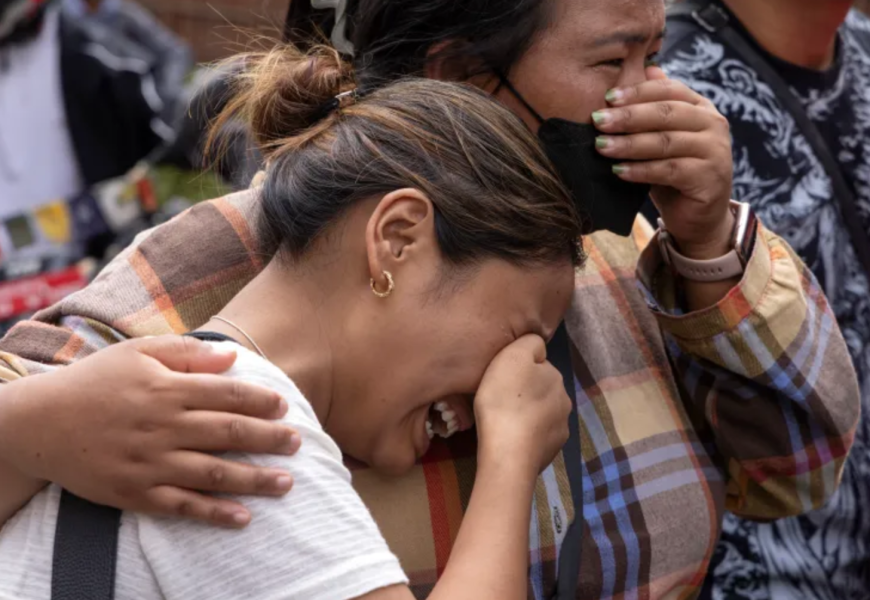
The death toll from catastrophic floods and landslides along the Nepal-China border has risen to 781, while more than 3,000 people remain missing in the aftermath of the disaster.
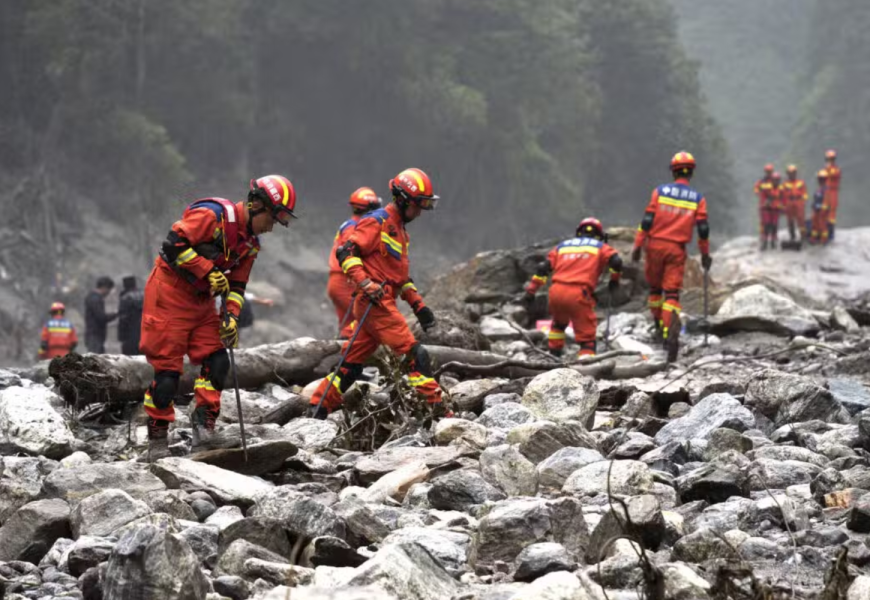
Rescue teams are continuing efforts to locate hundreds of workers believed to be trapped or unaccounted for at hydropower projects in central Nepal, while authorities on both sides of the border search for victims and assess widespread destruction.
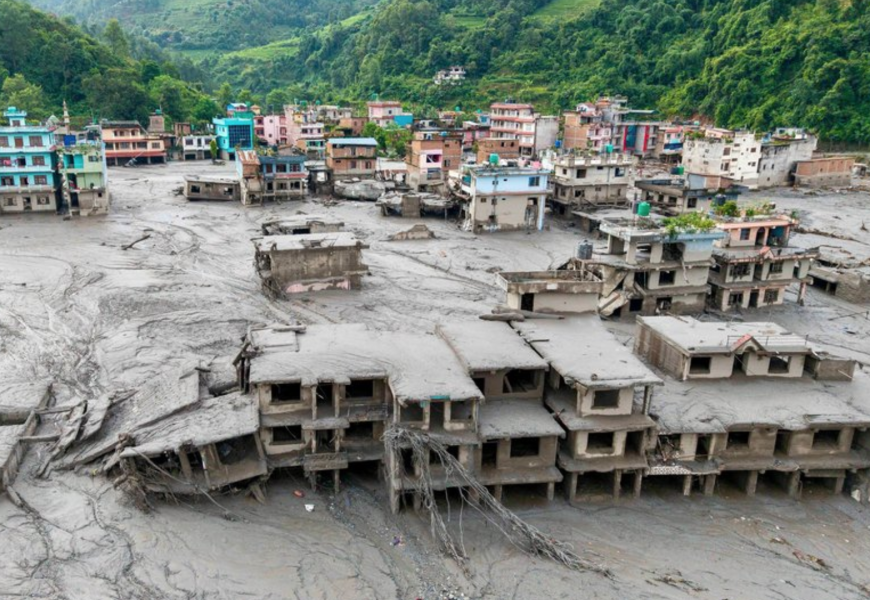
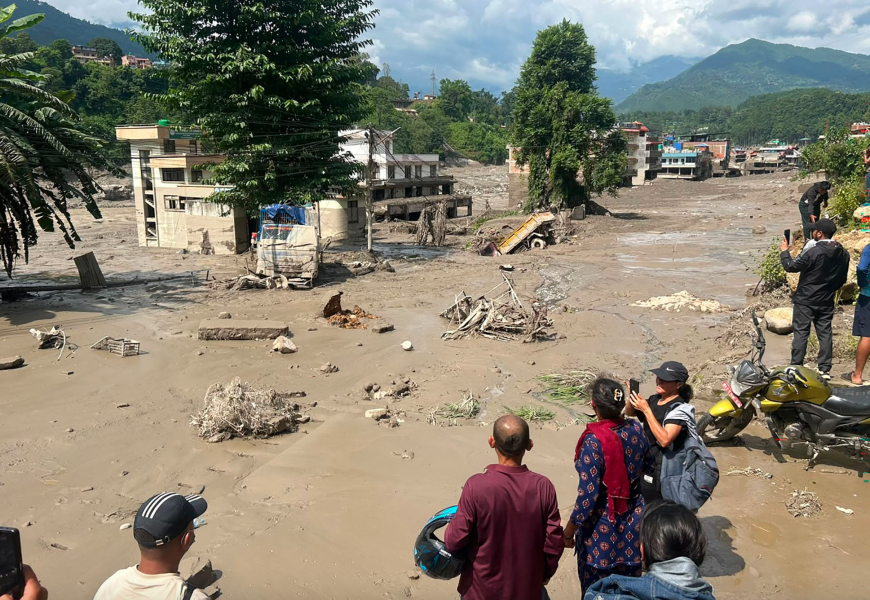
The disaster was triggered by the collapse of a glacier in the high Himalayas near the border with Tibet. The resulting surge of water, debris and mud swept through communities along the Trishuli and Bhotekoshi river systems, destroying roads, bridges, homes and infrastructure.
Some bodies have reportedly been carried downstream into neighbouring India, adding to the difficulties faced by authorities trying to identify victims and establish the full scale of the disaster.
Search operations were temporarily suspended on Friday after debris created a large barrier lake upstream from the affected area. Rising water levels raised fears that the lake could burst and send another destructive surge downstream.
Rescue operations resumed after authorities determined that the immediate threat had become manageable.
Chinese officials said the danger had been reduced but warned that it had not disappeared. The barrier lake, located about one kilometre upstream from the port of Gyirong near the border, is being monitored using satellites, radar and drones.
Authorities say they should be able to provide rescuers downstream with about 30 minutes' warning if conditions around the lake deteriorate.
Hundreds of hydropower workers remain missing
Nepal's Independent Power Producers' Association said about 933 people were missing or unaccounted for as of Sunday morning.
The workers were employed at 11 hydropower projects and tunnel sites in the Rasuwa and Nuwakot districts, two of the areas worst affected by the flooding.
Those missing include citizens of Nepal, India, South Korea and China. Authorities have not yet established how many people are trapped at each individual site.
Nepal's prime minister's office said rescuers were concentrating on clearing the entrance to a tunnel where workers were believed to be trapped.
A joint force of 82 personnel, including 62 members of the Nepali Army and 20 personnel from the Armed Police Force Nepal and Nepal Police, has been working continuously to remove debris and reach those inside.
However, continuing rain and difficult terrain have severely hampered the operation.
Nepal's Foreign Secretary Amrit Bahadur Rai said about 19,000 security personnel and 16 helicopters had been deployed as part of the wider search and rescue operation.
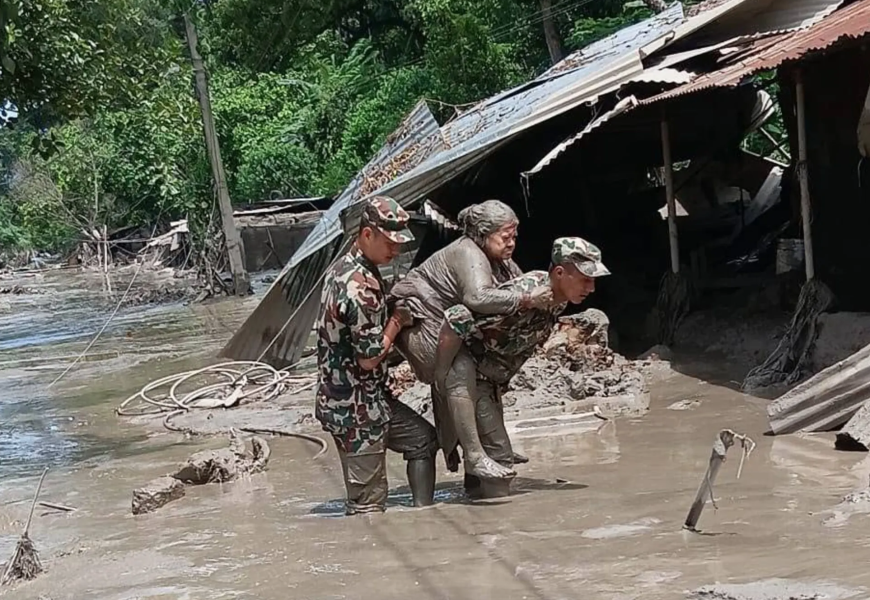
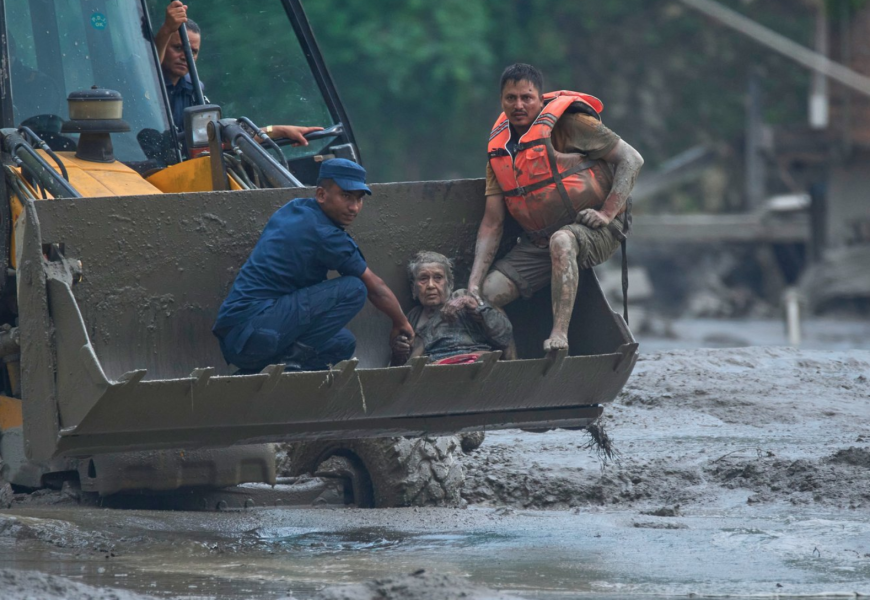
At the 216-megawatt Upper Trishuli-1 hydropower project, the Nepali Army has rescued 254 workers. Footage shared on social media showed soldiers navigating deep mud while working to reach affected areas.
Other sites remain inaccessible.
At the 22MW Chilime Hydropower project in Rasuwa, officials said the tunnel was filled with mud and could not safely be entered. A specialist rock-climbing rescue team was being considered as authorities searched for ways to reach those trapped inside.
India has also sent specialist personnel to assist. An 11-member team of medical workers and tunnel-rescue specialists reportedly arrived in Nepal to assess the Chilime and Langtang areas from the air.
Bodies overwhelm authorities
Nepal's National Disaster Risk Reduction and Management Authority put the death toll at 781.
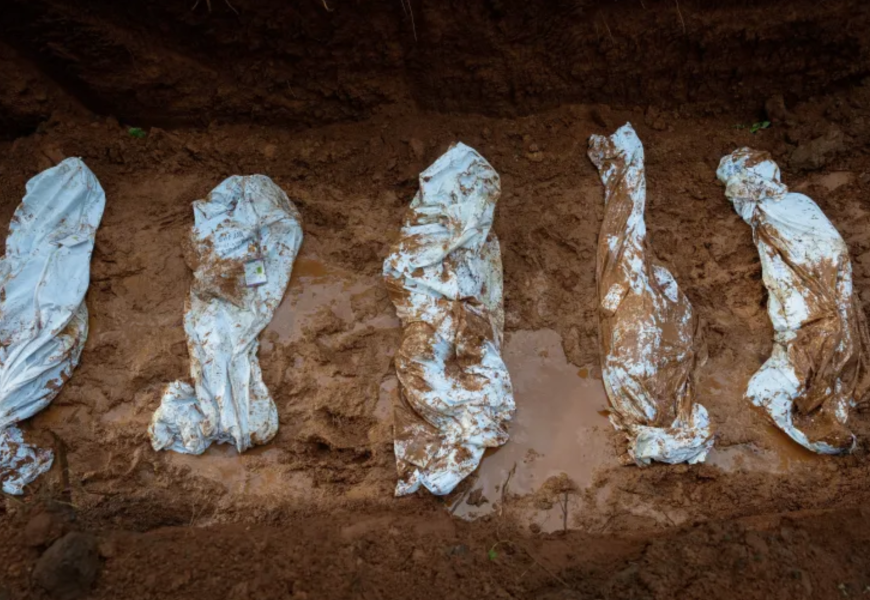
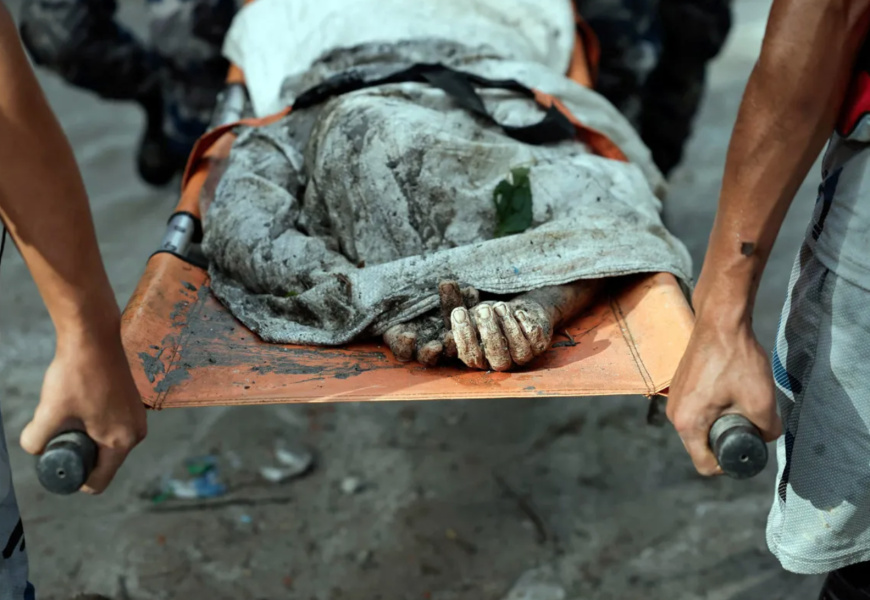
Authorities are struggling to store and identify the growing number of bodies being recovered from the disaster zone and from rivers far downstream.
Unidentified remains have reportedly been transported to 21 hospitals across Nepal for preservation and identification.
Officials have warned that the country does not have enough refrigerated storage capacity to preserve all the bodies while DNA testing and identification procedures are carried out.
The scale of the disaster has also complicated efforts to determine how many people remain missing.
As of Sunday morning, 2,498 people were officially listed as missing in Nepal. The figure included 589 foreign nationals, 127 Nepali citizens travelling with foreign groups, 45 members of the Nepali Army, 27 police personnel and 13 members of the Armed Police Force.
In Tibet, Chinese authorities reported that 16 people had died in Gyirong County.
They also said 261 foreign nationals from 23 countries remained missing, including citizens of Nepal, India, Latvia, the United States, Britain, Canada, Australia and several European and Asian countries.
The situation on the Chinese side remains difficult to assess because foreign journalists have been unable to enter the affected area.
Chinese authorities said hundreds of rescuers had been searching the worst-hit parts of Gyirong since reaching the area on Friday after travelling through difficult mountain terrain.
Teams have searched at least 90,000 square metres using life-detection equipment, search dogs and drones.
Roads and bridges destroyed
Rescue efforts in both countries have been severely hampered by destroyed roads and bridges.
More rain caused water levels in Nepal's Trishuli River to rise again on Sunday morning, forcing some residents and rescue workers to move to higher ground.
Authorities have yet to fully begin the next phase of the response, which includes broader humanitarian assistance and reopening key transport routes.
Nepal's Finance Minister Swarnim Wagle estimated that the disaster had caused losses of more than $4 billion.
Warnings remain in place for possible flooding along rivers in northern Nepal, while access to many affected communities remains extremely difficult.
The government has asked India and China for specialist assistance to address gaps in the rescue operation, describing the situation as urgent because lives remain at risk.
China has deployed about 2,100 rescue workers and allocated at least 220 million yuan, or approximately $32.7 million, for relief operations.
Beijing is also using heavy-lift drones and helicopters to deliver equipment and supplies to rescuers near the border.
International assistance has also begun arriving, with support from the United Nations, Red Cross, Australia, India, South Korea and the United States.
The US and Canada have each pledged $3.6 million in humanitarian assistance, while Britain has offered $6.8 million. The United Nations has released $2.5 million in emergency funding.
The European Union has pledged a further $2.3 million, while the International Federation of Red Cross and Red Crescent Societies has allocated more than $1 million and launched an emergency appeal for $31 million.
Despite the growing international response, rescuers continue to face treacherous terrain, damaged infrastructure and the threat of further flooding as they race to locate survivors and recover those still missing.
More Top Stories