

 °C
 4
Min
Ukrainian President Volodymyr Zelenskyy has travelled to Canada seeking stronger international support as Russia continues an intense campaign of missile and drone strikes that has killed civilians and damaged critical infrastructure. During his visit, Zelenskyy said Canada would provide Ukraine with a new package of air defence assistance.
Zelenskyy in Canada seeking support as Russian attacks intensify
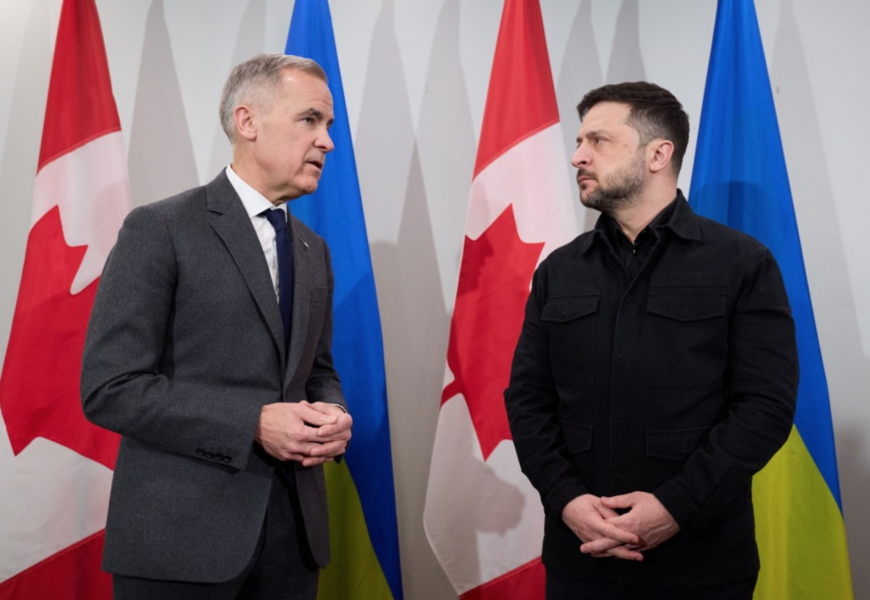
Ukrainian President Volodymyr Zelenskyy has travelled to Canada seeking stronger international support as Russia continues an intense campaign of missile and drone strikes that has killed civilians and damaged critical infrastructure across Ukraine.
During his visit, Zelenskyy said Canada would provide Ukraine with a new package of air defence assistance, along with support for the country's energy sector. Further details of the package were not immediately released.
Zelenskyy arrived in Calgary after travelling from Norway, where he attended the funeral of King Harald V and held discussions focused on strengthening Ukraine's air defence capabilities.
His journey to Norway was delayed after authorities in Moldova reported an alert involving a Russian drone entering nearby airspace.
Following his arrival in Canada, Zelenskyy highlighted the country's continuing support for Ukraine and said the relationship between the two nations remained important as the war entered another difficult phase.
The Canadian visit comes as Russia has intensified attacks across several Ukrainian regions, with strikes reported in Kyiv, Dnipropetrovsk, Donetsk and Mykolayiv.
At least 10 people were reported killed and more than 100 injured in the latest attacks, including children.
In Dnipro, Russian forces struck a food-industry facility that had already been damaged in an earlier attack. In nearby Pavlohrad, an evening drone strike hit a central area, causing fires and damaging shops, vehicles and other property.
The attack occurred in an area with heavy civilian activity, including a bus stop and commercial premises. Images from the scene showed destroyed buildings and burnt-out vehicles.
Further east, Russian forces struck the frontline city of Kramatorsk several times. Regional authorities reported impacts near educational facilities and a multi-storey residential building.
The southern port city of Mykolayiv and other parts of the surrounding region were also targeted, with civilian and industrial infrastructure among the sites affected.
Russia has increasingly relied on ballistic missiles and advanced drones as it attempts to overwhelm Ukraine's air defence network. The attacks have also increasingly focused on energy infrastructure as Ukraine prepares for another winter under wartime conditions.
Damage to the country's electricity and heating systems has previously left large numbers of Ukrainians without essential services during periods of freezing weather.
Ukraine has continued to launch long-range drone attacks against targets inside Russia.
During the night of September 9-10, Ukrainian drones targeted the Caspian Sea port of Makhachkala in Russia's Dagestan region. Russian authorities also reported a separate attack in the Voronezh region that killed one person and injured two others.
Russia's Defence Ministry said its forces had intercepted or destroyed 448 Ukrainian drones during the overnight attacks.
The escalating exchange has placed air defence and protection of critical energy infrastructure at the centre of Zelenskyy's discussions with Canadian officials.
Canadian Prime Minister Mark Carney said the visit would focus on strengthening defence, economic and energy cooperation between Canada and Ukraine, while also addressing the humanitarian consequences of Russia's invasion.
Canada has pledged to continue supporting Ukraine's defence efforts as well as its eventual recovery and reconstruction.
Renewed diplomatic efforts
Zelenskyy's visit comes as the United States continues efforts to revive negotiations aimed at ending the war.
US special envoys Steve Witkoff and Jared Kushner travelled to Kyiv and Moscow over the weekend in an attempt to narrow differences between Ukraine and Russia and explore possible pathways towards a settlement.
The diplomatic activity was followed by a telephone conversation between US President Donald Trump and Russian President Vladimir Putin.
Trump said Putin appeared interested in reaching an agreement and suggested that both Russian and Ukrainian leaders were increasingly weary of the prolonged conflict.
However, Moscow has continued to demand major concessions from Kyiv, including territorial changes in the eastern Donbas region that Ukraine has repeatedly rejected.
A senior Kremlin official indicated that Putin had told Trump an immediate ceasefire could potentially be achieved if Washington ended its military support for Ukraine.
The reported position highlights the significant differences that remain between the two sides despite renewed diplomatic contacts.
Further questions have also emerged in Washington about the future structure of the US-led negotiations.
Reports have suggested that CIA Director John Ratcliffe could take a more prominent role in discussions involving Russia and Ukraine, potentially reducing the responsibilities of Witkoff and Kushner.
The reports were rejected by the White House and the CIA, with officials describing them as inaccurate.
Witkoff and Kushner have been central figures in the Trump administration's diplomatic efforts over the past 18 months.
The latest developments suggest that while diplomatic channels remain active, the battlefield situation continues to place pressure on Ukraine and its international partners.
For Zelenskyy, securing additional air defence systems and assistance to protect Ukraine's energy infrastructure remains a key priority as Russia's aerial campaign intensifies.
More Top Stories


