°C
 3
Min
The United States has begun blocking almost $1bn worth of imports from Canada, including alcoholic beverages, dairy products and motorcycles, in the latest escalation of a widening trade dispute between the two neighbouring countries.
US Ban on $1bn of Canadian Goods Takes Effect
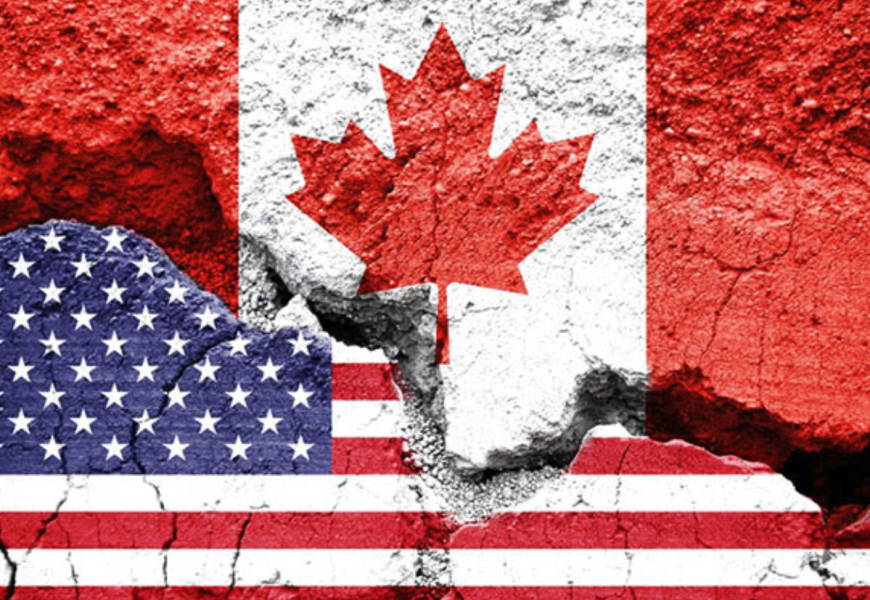
The United States has begun blocking almost $1bn worth of imports from Canada, including alcoholic beverages, dairy products and motorcycles, in the latest escalation of a widening trade dispute between the two neighbouring countries.
The measures took effect early Tuesday and are expected to add further pressure to relations between the long-standing allies and trading partners.
The US and Canada conduct roughly $880bn in two-way trade each year, but their economic relationship has been disrupted during US President Donald Trump's second term as his administration has imposed tariffs on major trading partners, including Canada.
Trump has also repeatedly referred to Canada as the potential "51st state" of the United States, comments that have added to tensions between Washington and Ottawa.
The latest restrictions follow a decision by the US on August 22 to impose 50 percent tariffs on about $20bn worth of Canadian goods, including dairy products and motorcycles, after trade negotiations failed to produce an agreement.
Canadian Prime Minister Mark Carney responded by announcing that Ottawa would match US tariffs "dollar for dollar" to protect Canadian workers, farmers, families and businesses.
Canada subsequently imposed tariffs of 15 percent, 25 percent and 50 percent on US exports of comparable value.
The latest US ban is being imposed in response to those Canadian retaliatory measures.
Gary Shields, a professor at Wayne State University's School of Business, said the direct economic impact of the latest restrictions would probably be limited because of the much larger overall value of trade between the two countries.
"The impact of such a ban will be minor, it is only $1bn while we trade hundreds of billions with Canada," Shields said.
He described the escalation as significant in the broader context of the relationship between the United States and its traditional allies.
Shields said the measures represented another example of reciprocal action between Washington and Ottawa, while arguing that the dispute was unlikely to provide direct benefits to consumers.
"It is a tit-for-tat. It will not reduce people's taxes and won't put money in their pockets," he said.
The latest trade restrictions come as Canada's economy faces a number of challenges.
Statistics Canada estimated that the economy expanded by 0.2 percent in August after recording no growth in July.
Michael Davenport, senior Canada economist at Oxford Economics, said the combination of new US-Canada tariffs, tighter financial conditions and a declining population could weigh further on Canadian economic growth during late 2026 and early 2027.
The latest measures add another layer of uncertainty for businesses on both sides of the border, with the two countries remaining heavily dependent on one another for trade despite the continuing dispute over tariffs and market access.
More Top Stories