°C
 3
Min
The British government has condemned a protest by dozens of masked anti-immigration demonstrators who blocked access to the Port of Dover, temporarily disrupting ferry services between England and France.
UK Government Condemns Masked Anti-Immigration Protest at Dover Port
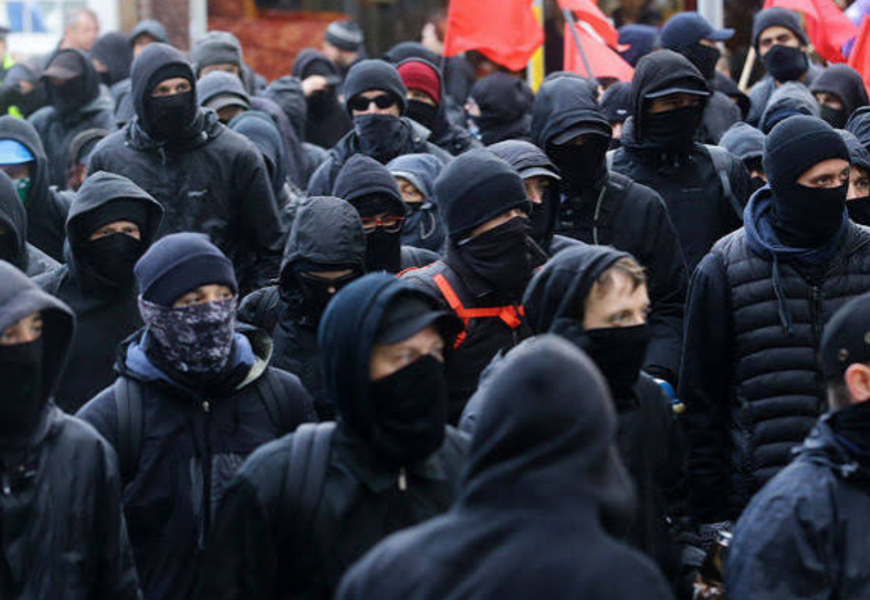
The British government has condemned a protest by dozens of masked anti-immigration demonstrators who blocked access to the Port of Dover, temporarily disrupting ferry services between England and France.
The protesters, many dressed entirely in black and wearing balaclavas, moved onto roads surrounding the major Kent port on Saturday, bringing traffic in and out of the terminal to a halt.
Images circulated online showed groups of demonstrators occupying roads near the port, while footage apparently livestreamed by one of the protesters showed black-clad men chanting "stop the boats" as they confronted a line of police officers.
The Port of Dover said on Saturday morning that all traffic entering and leaving the facility had been stopped because of an ongoing public-order incident. By around midday, however, the port said traffic had returned to normal, with ferry operator P&O Ferries also confirming that access had been restored.
Kent police said officers were engaging with protesters after all routes into and out of the ferry terminal had initially been blocked.
The disruption also caused significant congestion on surrounding roads. National Highways said the demonstration resulted in a traffic queue stretching for about 6.4 kilometres.
Far-right activist Stephen Yaxley-Lennon, who is widely known as Tommy Robinson, claimed on X that "patriots have mobilised to close down the port".
Chris Vinson, a Conservative councillor in the local area, described the demonstration as apparently being linked to illegal immigration. He said he was not aware of any violence but acknowledged that motorists confronted by masked men dressed in what appeared to be paramilitary-style clothing could find the situation intimidating.
The Labour government said peaceful protest remained an important democratic right but strongly criticised the disruption caused in Dover.
"The right to peaceful protest is fundamental to our democracy, but we condemn the behaviour in Dover and the travel disruption it has caused," the government said.
It also expressed sympathy for travellers and other members of the public affected by the blockade.
The protest comes as Britain continues to grapple with the politically divisive issue of migrants crossing the English Channel in small boats. Tens of thousands of people have made the dangerous journey to southeastern England in recent years, making Channel crossings a major issue in Britain's immigration debate.
The issue has also fuelled support for the right-wing Reform UK party, which has made opposition to immigration a central part of its political platform.
The Labour government has argued that the number of small boats crossing the Channel this summer has been lower than in any summer since 2019, attributing part of the decline to increased cooperation with France.
The disruption at Dover highlighted the importance of the port to Britain's trade and transport links with continental Europe.
Located around 110 kilometres southeast of London, Dover is the UK's largest international ferry port. During the busy summer period, it handles more than 10,000 freight vehicles and about 15,000 passenger vehicles each day.
The port accounts for roughly one-third of Britain's goods trade with the European Union. More than nine million passengers and two million freight vehicles passed through Dover last year, according to figures published by the port.
More Top Stories