°C
 4
Min
Switzerland's glaciers have suffered another sharp decline, losing 5.5 percent of their ice volume during the 12 months to September 30, 2026, as low winter snowfall and record summer temperatures accelerated melting across the Alps.
Switzerland's glaciers lose nearly one-fifth of ice in five years
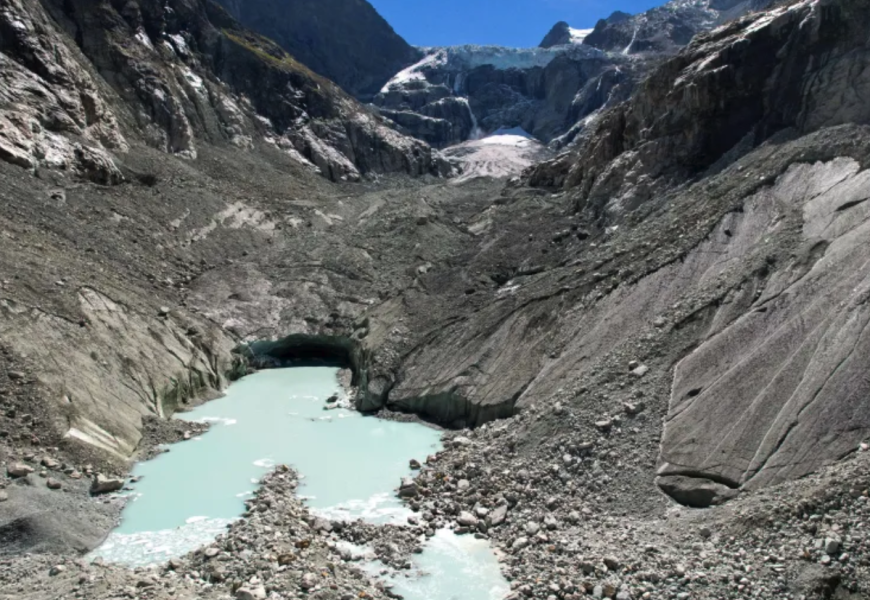
Switzerland's glaciers have suffered another sharp decline, losing 5.5 percent of their ice volume during the 12 months to September 30, 2026, as low winter snowfall and record summer temperatures accelerated melting across the Alps.
Researchers from the Swiss Glacier Monitoring Network and the Swiss Commission for Cryosphere Observation said the latest losses mean Switzerland has lost almost one-fifth of its glacial ice since 2021.
The findings highlight the growing impact of warmer temperatures on the country's glaciers, which play an important role in tourism, hydropower and water supplies.
Scientists measured conditions at 23 glaciers during September, assessing the amount of ice lost during the summer and the accumulation of snow over the previous winter.
At the Scex Rouge glacier in the Western Swiss Alps, researchers found that a measuring pole installed in the ice had shifted significantly as the surrounding glacier melted.
Matthias Huss, head of the Swiss Glacier Monitoring Network, said about three metres of ice had disappeared around the pole during August and September alone.
The glacier is located at an elevation of almost 3,000 metres, where temperatures would traditionally have limited the extent of summer melting.
Scientists said the latest measurements demonstrate how difficult it is for smaller Alpine glaciers to survive under current climatic conditions.
The average thickness of individual Swiss glaciers declined by between 2.5 and four metres during 2026, while some glacier tongues lost as much as 10 metres over the summer.
Researchers attributed the rapid melting to unusually high temperatures combined with limited snowfall during winter.
The lack of snow left glaciers with less protection when warmer weather arrived, increasing exposure of the underlying ice to sunlight and heat.
Smaller glaciers have been particularly affected, with some shrinking rapidly or disappearing altogether. Larger glaciers have also lost substantial amounts of ice, although many remain extensive features of the Alpine landscape.
The melting also released an estimated 2.2 trillion litres of water between July and September alone, according to the researchers.
That volume is more than four times the annual drinking water consumption of Swiss households, highlighting the scale of the water movement caused by the accelerated loss of ice.
The consequences extend beyond the appearance of the mountains.
Tourism is a significant part of Switzerland's economy, with about four percent of the country's workforce employed in the sector. Alpine landscapes and winter sports are particularly important to many mountain communities.
The loss of snow and ice could affect the visual appeal of mountain destinations and create additional challenges for the winter tourism industry.
Glaciers also act as natural reservoirs, releasing stored water during warmer and drier periods of the year.
Their meltwater contributes to rivers and reservoirs used for hydropower generation and provides water to major European river systems.
Scientists say there is an important shift occurring as glaciers become smaller. Initially, accelerated melting can increase the amount of water available during summer. But once glaciers lose enough ice, there is less remaining to melt, causing their contribution to summer water supplies to decline.
Researchers say this point has already been reached for glaciers in the European Alps.
Glacier retreat can also increase the risk of natural hazards in mountain regions, while the eventual movement of meltwater into the oceans contributes to global sea-level rise.
Scientists say the future of Switzerland's glaciers will depend heavily on how quickly global temperatures can be stabilised.
Under scenarios involving rapid reductions in greenhouse gas emissions, researchers estimate that about one-third of the current ice mass in the European Alps and Swiss glaciers could potentially remain.
Under a scenario of continued strong warming, however, more than 90 percent of their volume could be lost by 2100.
The broader global outlook also depends on future warming. Scientists estimate that glaciers worldwide could lose roughly one-quarter of their mass by 2100 under limited warming, compared with about half under higher warming scenarios.
Researchers stress that every additional fraction of a degree of warming can influence how much glacier ice survives in the long term.
More Top Stories