°C
 3
Min
Sweden's political deadlock has deepened after Social Democratic leader Magdalena Andersson failed in her second attempt to form a government following last month's closely contested parliamentary election. Andersson announced on Tuesday that negotiations with the three other parties in the centre-left bloc had reached an impasse.
Sweden's Centre-Left Leader Fails Second Government Bid
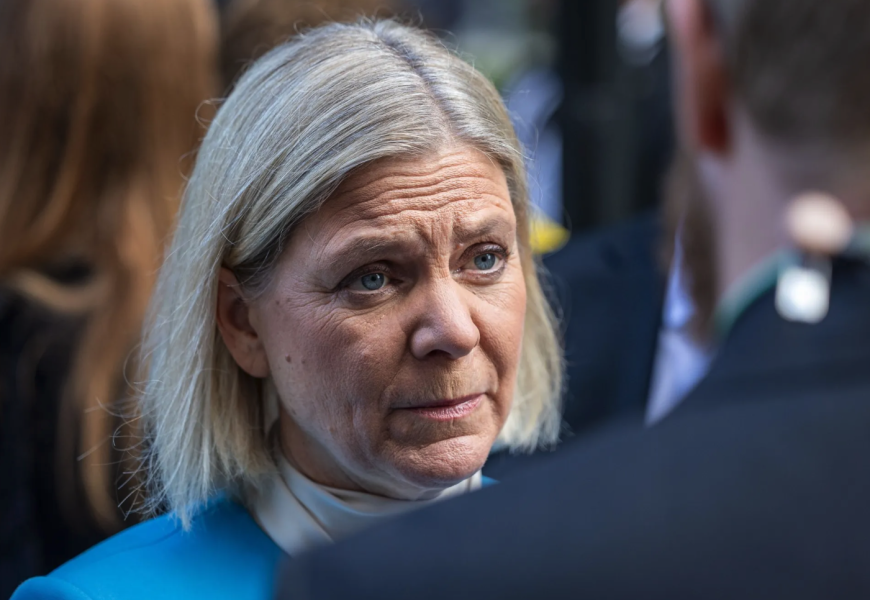
Sweden's political deadlock has deepened after Social Democratic leader Magdalena Andersson failed in her second attempt to form a government following last month's closely contested parliamentary election.
Andersson announced on Tuesday that negotiations with the three other parties in the centre-left bloc had reached an impasse, leaving the opposition struggling to translate its narrow electoral victory into a functioning government.
Although discussions had made progress, Andersson said the conditions were not in place to establish an administration that could secure sufficient parliamentary support.
The setback marks her second unsuccessful attempt to form a government since Sweden's September 13 election.
Parliamentary Speaker Andreas Norlen, who had tasked Andersson with assessing whether a viable government could be formed, subsequently confirmed that parliament would vote on her potential appointment as prime minister on Thursday. He acknowledged that she was unlikely to win the necessary support.
Under Sweden's parliamentary system, a prime ministerial candidate can take office provided a majority of lawmakers do not vote against them.
The centre-left bloc narrowly defeated the right-wing alliance led by outgoing Prime Minister Ulf Kristersson in the election, securing 176 seats in the 349-member parliament, compared with 173 seats for the right-wing bloc.
However, the narrow majority has proved difficult to turn into a workable governing arrangement because of disagreements among the centre-left parties.
The Centre Party has said it will oppose any government that includes cabinet positions for the Left Party. The Left Party, meanwhile, has insisted it will only support a centre-left administration if it is included in the government.
These competing demands have complicated Andersson's efforts to assemble a coalition capable of surviving parliamentary scrutiny.
If Andersson loses Thursday's vote, Norlen is expected to invite Kristersson to explore whether he can secure enough support to form a new government. Kristersson currently heads a caretaker administration.
Norlen has identified Kristersson as a possible next candidate but said he would not prejudge the outcome, emphasising the importance of respecting the parliamentary process.
To succeed, Kristersson would need to persuade at least one opposition party to support his appointment or refrain from voting against him.
Sweden's parliamentary speaker has four opportunities to propose a prime ministerial candidate for a parliamentary vote. If all four attempts fail, a snap election must be called.
The country has experienced prolonged government negotiations following previous elections. After the 2022 election, it took more than a month for a government to be formed, while negotiations following the 2018 election lasted more than four months.
The latest impasse leaves Sweden facing further uncertainty as party leaders attempt to resolve their differences and establish a government capable of commanding parliamentary confidence.
More Top Stories