°C
 6
Min
Russia is preparing to hold its first parliamentary election since the country launched its full-scale invasion of Ukraine in 2022, with voters due to cast ballots in a three-day State Duma election beginning on September 18.
Russia Prepares for First Duma Election Since Ukraine Invasion
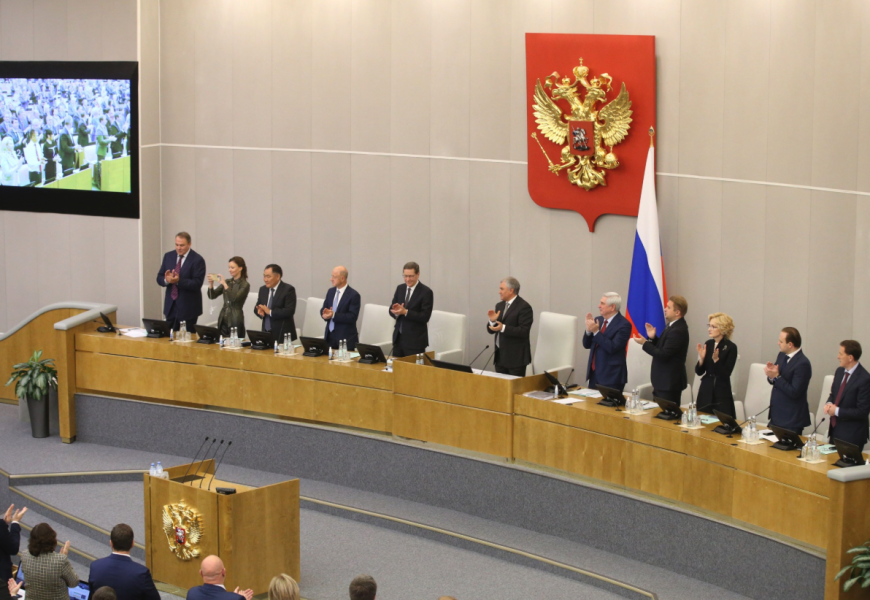
Russia is preparing to hold its first parliamentary election since the country launched its full-scale invasion of Ukraine in 2022, with voters due to cast ballots in a three-day State Duma election beginning on September 18.
The vote comes as Russia's political system remains tightly controlled by the Kremlin, with President Vladimir Putin and his administration continuing to exercise substantial influence over parliament, political parties and the electoral process.
A glimpse of the atmosphere surrounding the election emerged last month in Ryazan, a city southeast of Moscow, where a state television affiliate organised a televised debate for six candidates contesting seats in the State Duma.
None of the candidates attended.
The broadcaster attempted to hold the debate again the following day, but once again no candidates appeared.
The incident highlights questions surrounding public engagement with an election in which the 450-seat State Duma is expected to remain firmly under the control of the ruling political establishment.
Russia has held nationwide elections since the invasion, including the 2024 presidential election, which Putin won by a large margin. While the outcome of the presidential vote was widely anticipated, turnout and other indicators of public participation were closely monitored by the Kremlin as measures of political engagement and legitimacy.
Analysts say the parliamentary election will similarly be watched for signs of voter participation and public sentiment toward the government's policies, including the war in Ukraine.
"The Kremlin has been trying to strike a difficult balance between rallying public support behind the war effort and avoiding an election that might expose growing dissatisfaction or war fatigue," said Natalya Kovaleva, a research fellow at Chatham House.
Mobilisation remains a major question
One of the biggest questions surrounding the election is whether Russia could announce another nationwide military mobilisation after the vote.
Putin ordered a mobilisation of about 300,000 reservists in September 2022, prompting large numbers of Russians to leave the country.
Since then, the military has relied heavily on recruitment incentives, including substantial salaries and benefits, to attract volunteers for service in Ukraine.
The financial burden has increasingly affected regional governments, which have been responsible for providing many of the payments associated with military recruitment and compensation for families of servicemen killed in combat.
At the same time, Russian forces continue to sustain significant casualties.
Speculation has therefore persisted that the Kremlin could consider another mobilisation as the war continues.
Putin said earlier this month that there was currently no need for mobilisation.
The wording has nevertheless attracted attention because it leaves open the possibility of a change in circumstances following the election.
Analyst Aleksandr Kolyandr described the parliamentary vote as both a measure of public attitudes toward the war and an exercise in demonstrating that Russia's government machinery can continue operating normally during wartime.
Veterans enter politics
The election also marks a significant increase in the number of Russian war veterans seeking political office.
The Kremlin has promoted veterans as an important constituency and has introduced programmes designed to prepare former servicemen for positions in government and politics.
One such initiative, known as Time of Heroes, was launched under First Deputy Prime Minister Sergei Kiriyenko and has sought to identify veterans who could move into administrative or political positions.
Putin has described veterans as Russia's "new elite".
At least 200 veterans have reportedly qualified to appear on the ballot for the State Duma election, while about 1,400 others have been cleared to contest regional and local elections.
The political advancement of veterans is being closely watched partly because of the experience of Soviet veterans returning from the war in Afghanistan during the final years of the Soviet Union.
Concerns over electoral integrity
Russian elections have faced allegations of manipulation for many years.
Previous elections have seen independent observers and researchers document allegations involving vote-counting irregularities, pressure on public-sector employees and other forms of electoral interference.
Independent monitoring has become increasingly difficult.
The election-monitoring organisation Golos has been outlawed, while foreign election observers and organisations associated with Western political institutions have faced restrictions.
Opposition groups connected to the late opposition leader Alexei Navalny have also been outlawed or forced to operate from outside Russia.
Former Golos co-chairman Stanislav Andreichuk has said authorities have considerable scope to influence results in some regions, although the ability to do so can vary between areas.
Polling public opinion is also difficult because of restrictions surrounding political activity and criticism of the government.
Some surveys have nevertheless indicated declining support for the war and for Putin, although measuring public sentiment in wartime Russia remains challenging.
Putin himself is not standing in the parliamentary election, but he has campaigned for United Russia, the dominant political force that is widely expected to retain control of the State Duma.
Opposition faces restrictions
Russia's political system permits opposition parties to participate in elections, but parties and candidates must operate within boundaries established by the authorities.
Parties such as the Communist Party have retained parliamentary representation and regularly criticise aspects of government policy, while generally supporting major legislation backed by the Kremlin.
Liberal opposition party Yabloko has historically provided an electoral option for voters seeking an alternative to the government.
The party has not held seats in the State Duma since the mid-2000s, but has continued to campaign on issues including peace and opposition to the war in Ukraine.
Authorities recently prevented Yabloko from participating in the State Duma election following a court decision citing legal complaints against the party. Restrictions have also been imposed on its participation in some regional elections.
Independent politician Boris Nadezhdin, who previously attempted to challenge Putin on an anti-war platform, also sought to contest the parliamentary election. His efforts were halted after Russian authorities took legal action against him, and he subsequently left the country.
Other opposition figures, including members of Navalny's political movement, are now based outside Russia.
On September 14, Navalny's widow, Yulia Navalnaya, and opposition figure Maksim Kats published a list of candidates they were supporting because of their opposition to the war in Ukraine.
The parliamentary election is therefore expected to provide the Kremlin with an opportunity to demonstrate continued political participation and institutional stability, while also offering observers a closely watched indication of voter turnout, opposition activity and public attitudes toward the country's wartime policies.
More Top Stories