

 °C
 4
Min
US Secretary of State Marco Rubio is travelling to Colombia, Ecuador and Peru this week as Washington seeks to strengthen ties with a growing group of conservative governments across Latin America. Rubio is due to arrive in Colombia on Tuesday, where he will meet newly elected President Abelardo de la Espriella.
Rubio Begins South American Tour as Region Swings Right
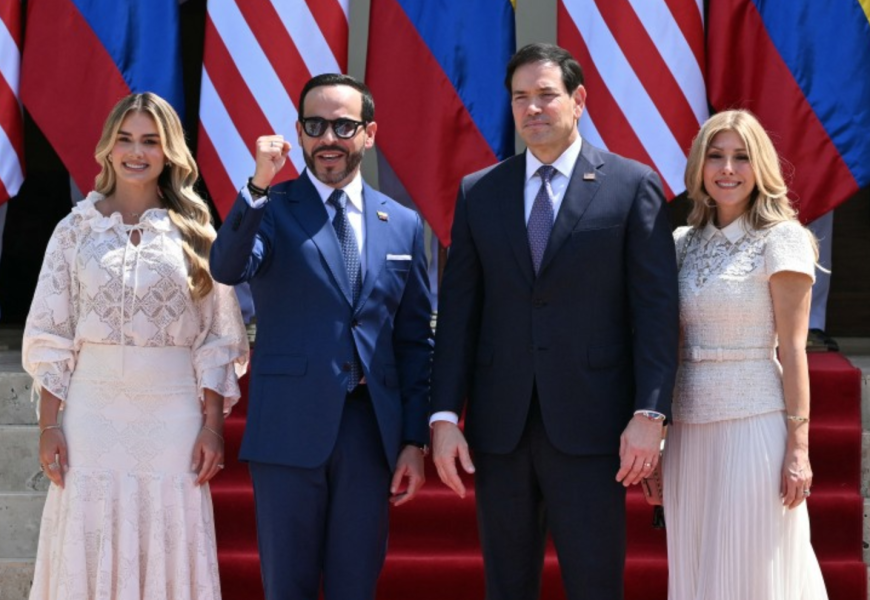
US Secretary of State Marco Rubio is travelling to Colombia, Ecuador and Peru this week as Washington seeks to strengthen ties with a growing group of conservative governments across Latin America.
Rubio is due to arrive in Colombia on Tuesday, where he will meet newly elected President Abelardo de la Espriella. His tour will then take him to Ecuador for talks with President Daniel Noboa before continuing to Peru, where he is scheduled to meet newly elected President Keiko Fujimori.
The US State Department has provided limited details about the secretary of state's agenda. It said discussions would include American assistance following Colombia's recent earthquake, increased cooperation against narcoterrorism and opportunities to expand commercial ties.
The visit comes during a broader political shift to the right across parts of Latin America, with several newly elected leaders maintaining close relationships with US President Donald Trump.
Trump has also supported Honduran President Nasry Asfura and Bolivian President Rodrigo Paz, who won elections in their respective countries. Washington has separately developed close ties with Argentina's President Javier Milei and El Salvador's Nayib Bukele, both prominent figures on the region's political right.
Washington Seeks Greater Regional Influence
Rubio's tour is taking place as the Trump administration seeks to expand US influence throughout the Western Hemisphere.
Trump has described his approach as the "Donroe Doctrine", borrowing from the Monroe Doctrine, the 19th-century US policy opposing outside powers interfering in the Americas.
Under the administration, regional security policy has taken a more forceful approach, with efforts to combat drug trafficking increasingly framed as a military campaign against what Washington calls "narco-terrorists".
Colombia has emerged as an important partner. In August, de la Espriella joined the Trump administration's "Shield of the Americas", a coalition of 19 countries that has pledged to use military force against major criminal and terrorist networks.
De la Espriella has also expressed support for US military operations targeting suspected drug-smuggling vessels in the Caribbean and eastern Pacific. The strikes have reportedly killed at least 227 people and drawn condemnation from human rights organisations, which have raised concerns about possible extrajudicial killings.
Relatives of some of those killed have disputed the US claims, saying the people targeted were fishermen rather than drug traffickers.
The United States has also provided significant assistance to Colombia following last month's devastating earthquake, which killed at least 330 people and left thousands homeless.
Ecuador and Peru Deepen US Ties
Ecuador has likewise become a key security partner for Washington.
In March, the US military announced that it was working with the Ecuadorian government under Noboa to target organised drug-trafficking groups operating in the country.
Ecuadorian Interior Minister John Reimberg recently defended US strikes against vessels allegedly transporting drugs, saying the operations were part of efforts to confront criminal organisations threatening the country.
Peru's newly elected president, Keiko Fujimori, is also expected to pursue closer relations with Washington.
Fujimori, the daughter of former Peruvian leader Alberto Fujimori, has pledged stronger US ties and promised tougher military action against criminal groups.
Her father's presidency from 1990 to 2000 was marked by authoritarian measures, including the dissolution of Congress and the Supreme Court as he sought to consolidate political power.
Conservative Forces Gain Ground
Rubio's journey follows a controversial US agreement with Venezuela's interim leader, Delcy Rodriguez.
The agreement, reached following the January 3 US operation that resulted in the abduction of former Venezuelan President Nicolas Maduro, gives American companies access to Venezuela's vast crude oil reserves, estimated at about 65 billion barrels, over the next century.
At the same time, Washington has continued applying pressure on Cuba. Cuban Foreign Minister Bruno Rodriguez rejected the prospect of negotiations with the United States on Monday, despite an ongoing US fuel blockade.
Brazil and Mexico remain the region's major countries led by left-wing presidents, while Washington has welcomed the broader conservative shift.
Rubio has described the political transformation as an "extraordinary achievement".
The changing political landscape has also coincided with closer relations between Israel and several Latin American governments since Trump returned to office.
Brazil could become the next major battleground in the region's political realignment. Voters are due to elect a president in October, with Flavio Bolsonaro, the son of former President Jair Bolsonaro, campaigning to defeat incumbent Luiz Inacio Lula da Silva.
Trump has remained a strong supporter of the elder Bolsonaro, who was sentenced to 27 years in prison after being convicted over a conspiracy to remain in power.
The US president has also backed Flavio Bolsonaro's campaign, including hosting him at the White House in May.
Rubio's three-country tour therefore comes at a significant moment for US relations with Latin America, as Washington seeks to consolidate partnerships with governments increasingly aligned with Trump's conservative foreign-policy agenda.
More Top Stories


