°C
 12
Min
Manchester United's difficult start to the 2026-27 season has intensified scrutiny of manager Michael Carrick, the club's transfer strategy and its ownership, with defender Lisandro Martinez questioning whether the squad has received sufficient investment.
Why Lisandro Martinez Exposed Manchester United's Deepening Crisis
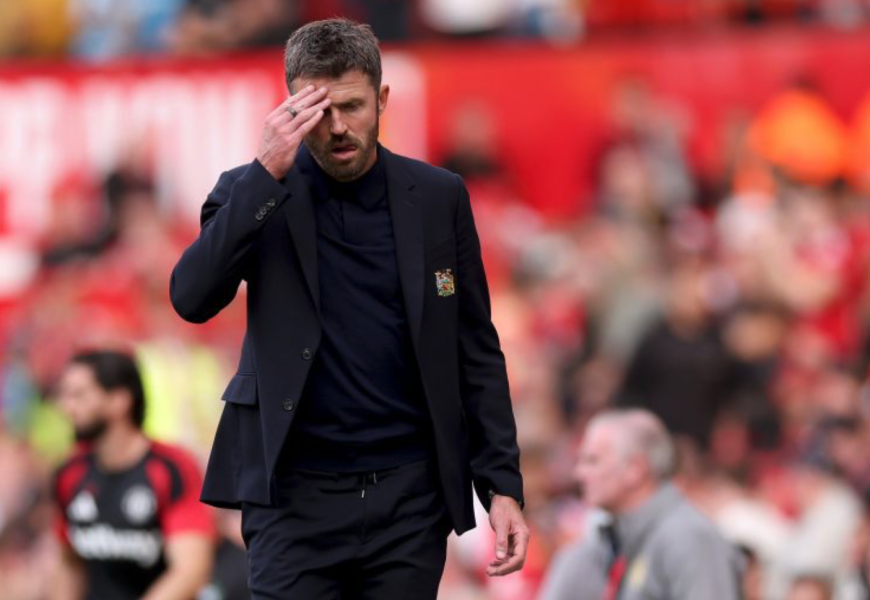
Manchester United's difficult start to the 2026-27 season has intensified scrutiny of manager Michael Carrick, the club's transfer strategy and its ownership, with defender Lisandro Martinez questioning whether the squad has received sufficient investment.
United's 2-0 Champions League defeat to Atletico Madrid on Tuesday was another setback for a club that began the campaign with renewed optimism after finishing third in the Premier League last season.
That late-season recovery under Carrick had raised expectations that United could challenge for major honours and secure a place among Europe's leading clubs. However, just two months into the new campaign, those ambitions appear increasingly distant.
The defeat in Madrid was United's third loss in five matches without a win, adding to mounting frustration among supporters and increasing pressure on the club's leadership.
Martinez, the Argentina international defender, expressed disappointment with the club's recruitment decisions, suggesting United needed a stronger squad to compete consistently at the highest level.
"I expect more from our technical director Jason Wilcox, I have to be honest," Martinez said. "As players we have to do more. But it is also important when you make a strong squad to be ready for these kinds of nights."
His comments have highlighted broader concerns about the club's direction, with problems emerging on the pitch, in the transfer market, among the youth ranks and in its financial management.
A disastrous start to the Premier League campaign
United's opening-day defeat to newly promoted Hull City provided an early warning that the season might not unfold as expected.
The club has won only two of its first nine matches across all competitions: a comeback victory over Ipswich Town in August and a 4-0 Champions League win against Azerbaijan's Sabah last month.
A controversial defeat to Manchester City in the derby was followed by elimination from the League Cup after losing 3-2 to Brighton and Hove Albion.
United subsequently recorded consecutive 1-1 draws against Fulham and Tottenham Hotspur, both of whom were in the relegation zone at the time.
The performances have exposed weaknesses across the team, with a lack of urgency and consistency contributing to a disappointing run of results.
United sit 12th in the Premier League, with six points from their opening six matches. It is the club's lowest points total at that stage of a league season since 1986.
Carrick under growing pressure
Carrick was expected to build on the progress achieved during his interim spell last season, when he helped restore confidence following Ruben Amorim's troubled tenure.
Instead, his first season as permanent manager has begun with mounting questions about his ability to turn the club's fortunes around.
United needed a late equaliser to secure a 1-1 draw against Fulham before the extended international break, avoiding what would have been a third consecutive defeat.
The performance attracted criticism from former players and commentators, including Gary Neville, who described the team's second-half display as "absolutely pathetic".
Carrick responded defiantly, acknowledging the difficult start while insisting the team needed to respond.
"It's not been ideal," he said. "It was always going to come at some point, and it's come at the start of the season."
The pressure intensified when United surrendered a late lead against 10-man Tottenham at Old Trafford on Saturday.
Supporters booed the team at half-time and again at the final whistle after Tottenham controlled significant portions of the match despite entering the game at the bottom of the table.
Carrick acknowledged the reaction, saying he understood the frustration and recognised that supporters wanted better performances.
However, with results continuing to disappoint, the former United midfielder faces an increasingly difficult task to restore belief in his project.
Transfer strategy under scrutiny
United spent £155 million ($204 million) during the summer transfer window to strengthen their midfield, bringing in Carlos Baleba, Andrey Santos and Youri Tielemans. Goalkeeper Karl Darlow also arrived as a backup option.
Despite the investment, the club did not recruit an established left-back or a dependable striker, leaving important gaps in the squad.
Those omissions have raised questions about whether the recruitment strategy adequately addressed the team's most pressing needs.
Martinez's criticism following the Atletico defeat appeared to reflect those concerns, suggesting that investment in a stronger squad was necessary to cope with demanding fixtures across domestic and European competitions.
United's recruitment decisions will face further scrutiny if the team continues to struggle, particularly given the scale of its summer spending and the expectations surrounding the new campaign.
Youth prospect JJ Gabriel creates another headache
United are also dealing with uncertainty surrounding highly rated young winger JJ Gabriel.
The teenager, regarded as one of football's most promising prospects, has reportedly expressed a desire to leave the club and submitted a letter seeking deregistration.
British media reports indicate United are reluctant to grant the request and remain hopeful that an agreement can be reached.
Gabriel won the Premier League under-18 player of the year award last season and has attracted interest from leading European clubs, including Barcelona, Paris Saint-Germain and Bayern Munich.
The situation presents another challenge for United's football leadership as the club attempts to retain emerging talent while rebuilding its senior squad.
Financial losses continue despite record revenue
United's problems extend beyond football results.
The club reported an annual net loss of £43 million ($57 million) for the financial year ending June 30, an increase of almost one-third despite record revenue of £677.6 million ($890.7 million).
The latest figures marked the seventh consecutive annual loss after tax.
Cost-cutting measures introduced under co-owner Jim Ratcliffe have been offset by factors including contractual payments to former manager Amorim and increased loan repayments.
United's overall debt remains above £1 billion ($1.3 billion), underlining the financial pressure facing one of the world's most commercially successful football clubs.
Ratcliffe, who acquired a minority stake in the club in February 2024, has overseen extensive efforts to reduce operating costs. These have included job cuts and higher ticket prices, measures that have attracted criticism from supporters.
Ratcliffe's relationship with supporters deteriorates
The billionaire businessman has also faced criticism over comments about immigration in the United Kingdom.
In February, Ratcliffe said the country had been "colonised by immigrants", later apologising if his remarks had caused offence. He subsequently defended his position during a BBC interview, saying the country was "on the slide".
The Manchester United Muslim Supporters' Club condemned the comments and renewed its criticism, describing his remarks as "deeply disappointing" and calling for his resignation.
Discontent over the ownership has also spilled into the stands. Before United's derby defeat to Manchester City, supporters displayed a banner protesting against the club's leadership and declaring: "The way you treat us is a disgrace."
With disappointing results, financial losses, recruitment concerns and growing tensions with fans converging, Manchester United face challenges that extend well beyond their latest defeat.
Martinez's remarks in Madrid have brought those frustrations into sharper focus. For Carrick and the club's leadership, the immediate priority is to improve results, but restoring confidence in United's broader direction may prove just as important.
More Top Stories