°C
 5
Min
Fighting between Yemen's Houthi movement and forces loyal to the country's internationally recognised government has intensified, raising fears of a wider escalation in the long-running conflict. Government-aligned forces have launched counterattacks against the Iran-aligned Houthis across several fronts.
Yemen fighting intensifies as Houthi forces clash with Saudi-backed government forces
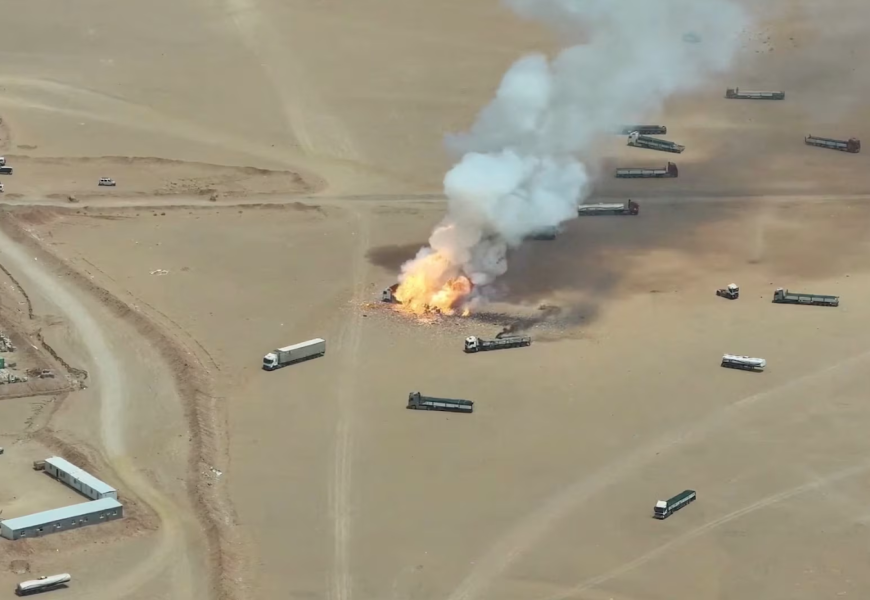
Fighting between Yemen's Houthi movement and forces loyal to the country's internationally recognised government has intensified, raising fears of a wider escalation in the long-running conflict.
Government-aligned forces have launched counterattacks against the Iran-aligned Houthis across several fronts, with officials saying their objective is to regain territory and ultimately advance towards the capital, Sanaa.
The renewed clashes represent the most serious deterioration in Yemen's security situation since a United Nations-backed truce brought a significant reduction in large-scale fighting in 2022.
The Houthis have claimed to have repelled government advances in the northern province of al-Jawf, while fighting has also intensified around Taiz and other strategically important areas in western Yemen.
Government forces said their aircraft recently struck a Houthi gathering and command centre on the Jabal Habashi front, west of Taiz. No immediate details were available on casualties or the extent of the damage.
The latest fighting has also spilled across Yemen's borders, with Houthi forces launching missile and drone attacks against targets in southern Saudi Arabia.
The attacks reportedly targeted facilities belonging to Saudi energy giant Aramco in Abha, Najran and Jizan, as well as an airbase near Khamis Mushait.
Saudi Arabia has condemned the attacks and warned the Houthis against continuing strikes on civilian and economic infrastructure.
The United Nations has also expressed concern. Secretary-General Antonio Guterres condemned what his spokesman described as Houthi cross-border attacks against several sites in southern Saudi Arabia.
The attacks affected civilians as well as energy infrastructure, according to the UN, which said it was deeply concerned by reports of civilian casualties.
At least 73 civilians have reportedly been wounded in Houthi attacks on cities and economic infrastructure in southern Saudi Arabia.
The escalation followed accusations by the Houthis that Saudi forces had carried out a deadly air strike on a prison in the Yemeni town of al-Hazm. Houthi authorities said the attack killed at least seven people, while other figures released by the group put the death toll higher.
Yemen's parliament condemned the strike on the Al-Hazm Correctional Facility, describing it as a serious violation of international law.
The Houthi foreign ministry has defended the group's attacks on Saudi Arabia, arguing that retaliation is permitted under international law and represents an act of self-defence.
The group has cited Article 51 of the United Nations Charter while accusing Saudi Arabia of abandoning efforts towards a political settlement and moving towards renewed military escalation.
Saudi officials have rejected the Houthi attacks, while Saudi Foreign Minister Prince Faisal bin Farhan described strikes against civilian infrastructure as a serious violation of international law and a threat to regional security.
Several countries, including Oman, Qatar, Bahrain, Kuwait and Pakistan, have condemned the Houthi attacks and expressed support for Saudi Arabia.
US Secretary of State Marco Rubio has also accused Iran of playing a role in some of the attacks, referring to what he described as an "Iranian hand" behind Houthi operations.
Russia has separately condemned attacks on civilian infrastructure, as Moscow and Riyadh discuss the wider regional security situation.
The latest escalation has already had a significant impact on civilians inside Yemen. The International Organization for Migration estimates that nearly 20,000 people have been forced from their homes since the renewed fighting began.
Humanitarian organisations are warning that further escalation could place millions of already vulnerable Yemenis at greater risk.
Hisham Al-Omeisy, a senior Yemen adviser at the European Institute of Peace, said the country's economy and humanitarian situation were already extremely fragile and that renewed fighting would increase pressure on communities struggling with limited resources.
He warned that the conflict could produce another wave of internally displaced people, additional civilian casualties and increased danger from landmines.
Al-Omeisy said the government offensive had been prompted by Houthi advances and appeared aimed at preventing the group from establishing greater control over territory leading towards Yemen's western coastline and the Bab al-Mandeb Strait.
Although fighting has spread across several fronts, he said it was too early to describe the situation as a return to full-scale war.
The government forces nevertheless have an opportunity to change the military balance if they remain committed to recovering territory, he said.
However, he cautioned that a decisive victory by either side remains unlikely because both forces remain deeply entrenched across large areas of the country.
The International Committee of the Red Cross has urged all parties to protect civilians and essential infrastructure, warning that a prolonged escalation could have devastating consequences.
The organisation said continued fighting could result in more deaths and injuries, further displacement and severe disruption to healthcare, water supplies, fuel and electricity.
The Red Cross has also warned that the conflict could expand beyond Yemen and Saudi Arabia, potentially worsening instability across the wider region.
With humanitarian funding already under pressure, aid organisations fear that a renewed conflict could deepen one of the world's longest-running humanitarian crises.
For millions of Yemenis, the latest fighting threatens to undo years of efforts to reduce violence and revive negotiations aimed at finding a lasting political settlement.
More Top Stories