°C
 7
Min
The massive conventional weapon could devastate above-ground targets, but experts question whether it could destroy Iran's heavily fortified underground nuclear facilities. The United States has reportedly developed military plans to use its largest non-nuclear bomb against Iranian energy infrastructure and nuclear-related targets.
What Is the 'Mother of All Bombs' the US Could Use Against Iran?
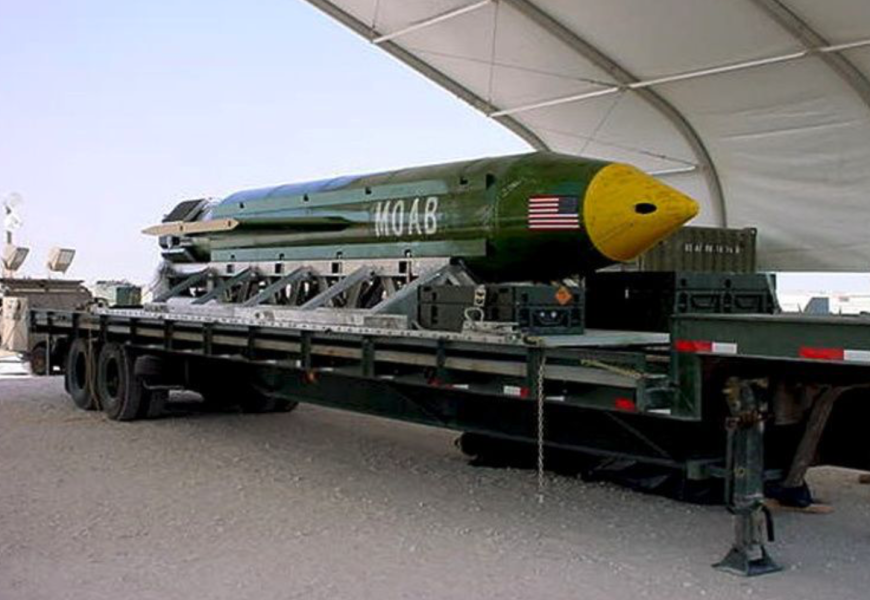
The massive conventional weapon could devastate above-ground targets, but experts question whether it could destroy Iran's heavily fortified underground nuclear facilities.
The United States has reportedly developed military plans to use its largest non-nuclear bomb against Iranian energy infrastructure and nuclear-related targets if President Donald Trump orders a resumption of major combat operations.
The GBU-43/B Massive Ordnance Air Blast bomb, commonly known as the "Mother of All Bombs" or MOAB, could represent a significant escalation in the conflict at a time when fighting has eased.
However, military experts and some officials within the Trump administration have questioned whether deploying the weapon would achieve Washington's strategic objectives, particularly its stated goal of eliminating Iran's nuclear capabilities.
Brussels-based military analyst Elijah Magnier has warned that the bomb would not necessarily destroy deeply buried nuclear installations. He argues that its use could produce a dramatic display of military force without delivering a decisive strategic outcome.
What is the MOAB?
The GBU-43/B MOAB is a conventional air-delivered bomb containing approximately 8,500kg of high explosives. The weapon weighs about 9,800kg in total, measures just over nine metres in length and is comparable in weight to several passenger vehicles.
The bomb is generally deployed from a modified C-130 Hercules cargo aircraft. Its size means it cannot be carried by conventional stealth bombers.
Developed in the early 2000s, the MOAB underwent a series of detonation tests before entering the US military's arsenal. Its name is widely understood as a reference to former Iraqi President Saddam Hussein's description of the 1991 Gulf War as the "Mother of All Battles".
The United States has used the weapon in combat only once, in April 2017, when it was dropped on an Islamic State Khorasan Province cave and tunnel complex in Afghanistan.
Afghan authorities reported that 94 Islamic State fighters were killed in the attack and said no civilians died. However, local reports of civilian casualties were not independently confirmed, while homes in the surrounding area were reportedly destroyed.
What damage could the bomb cause?
The MOAB is designed to detonate above the ground, creating an enormous blast that can devastate exposed positions, buildings and vulnerable structures.
Military analyst Magnier said the weapon's principal purpose was to generate a powerful blast over a broad surface area rather than penetrate deeply buried targets.
Colonel Nidal Abu Zeid, another military analyst, said the bomb could destroy above-ground positions across a substantial area. The precise extent of the destruction would depend on factors including terrain, the surrounding environment and the distance from the detonation.
In a potential operation against Iran, the US could seek to destroy exposed military installations, ground-force positions and infrastructure associated with the country's nuclear programme.
Targets could include facilities near Pickaxe Mountain, where Iran is developing an underground site, as well as other heavily fortified locations.
However, the MOAB's enormous explosive yield does not automatically make it effective against installations buried beneath thick layers of rock or reinforced concrete.
Magnier said the weapon could cause devastating damage to exposed personnel, equipment and vulnerable structures, but its use in Afghanistan did not demonstrate that it could destroy every type of underground facility.
Why underground nuclear sites present a challenge
Iran's nuclear infrastructure includes facilities built deep underground or protected by substantial fortifications. Such construction is intended, in part, to make sensitive installations more difficult to destroy through conventional air strikes.
The MOAB relies primarily on the force of its blast rather than the ability to penetrate deeply into the ground.
That distinguishes it from the GBU-57 Massive Ordnance Penetrator, the US military's most powerful specialised bunker-busting bomb.
The GBU-57 weighs approximately 13,600kg and carries a warhead weighing around 2,700kg. Built with a reinforced steel body and designed for precision delivery, it is intended to penetrate substantial layers of earth and concrete before detonating.
Its specialised design makes it better suited than the MOAB to attacking certain deeply buried, hardened targets.
Even with specialised weapons, however, the outcome of an attack would depend on the construction of the target, the depth at which it is located and the effectiveness of the strike.
Consequently, using the MOAB against Iran's underground nuclear facilities would not guarantee their destruction.
Would Washington use the MOAB against Iran?
The US has already demonstrated its willingness to use the weapon in combat, but deploying it against Iran would present different operational and political challenges.
One difficulty would be delivering the bomb to the required locations. The weapon's size restricts the aircraft capable of carrying it, while some Iranian targets are situated in mountainous or heavily defended areas.
Aircraft better suited to penetrating defended airspace, including stealth bombers, cannot carry the MOAB in its current configuration.
Magnier has also questioned whether the destruction caused by the weapon would translate into meaningful political concessions from Tehran.
He argued that military planners should establish what the MOAB could achieve that other available weapons could not, and how that outcome would contribute to a realistic political settlement.
Without a clear strategic objective, he warned, the strike could become a highly visible demonstration of force rather than an effective means of achieving US policy goals.
Reports have also suggested that Trump has privately sought a decisive conclusion to the conflict that would allow Washington to present the outcome as a victory.
Whether the MOAB could contribute to such an outcome remains uncertain.
How could Iran respond?
A US strike using the MOAB could provoke a significant Iranian response and increase the risk of a wider regional confrontation.
Military analysts have warned that Tehran could target American military assets and facilities in neighbouring countries that host US forces.
Iranian officials have also issued threats concerning the possible capture of American troops if Washington launches a ground offensive.
In May, Kuwait said it had thwarted an alleged infiltration operation involving members of Iran's Islamic Revolutionary Guard Corps on Bubiyan Island. The incident reportedly resulted in an exchange of fire, leaving one Kuwaiti injured and four Iranian soldiers in custody.
Iran denied that it had invaded the island, attributing the incident to a navigation-system malfunction.
On Tuesday, IRGC security adviser Mohammad Reza Naghdi warned that an American ground attack could result in large numbers of US troops being captured. Military analysts have questioned the feasibility of a major ground invasion, citing Iran's mountainous terrain and the challenges of conducting sustained operations there.
Iran has also been preparing for the possibility of renewed hostilities by strengthening defensive positions, stockpiling weapons and reinforcing important military and nuclear installations, according to the assessment presented in the reports.
Another potential flashpoint is regional digital infrastructure.
On Sunday, National Security Council chief Mohsen Rezaei threatened attacks on infrastructure supporting communications, data storage and artificial intelligence in the Gulf if American strikes resumed. The warning specifically raised concerns about facilities in the United Arab Emirates and other regional locations.
Such threats could extend the consequences of renewed fighting beyond military installations, placing communications networks, data centres and other critical infrastructure at risk.
A weapon with uncertain strategic value
The MOAB is capable of inflicting extensive destruction on exposed targets, but its size alone does not establish that it would achieve Washington's objectives in Iran.
Its limitations against deeply buried facilities, the difficulties of delivering it in contested airspace and the possibility of Iranian retaliation all raise questions about its military value.
If the United States resumes major combat operations, the decision to deploy the weapon would therefore involve more than demonstrating overwhelming firepower. The central question would be whether its use could deliver a measurable strategic advantage without triggering a wider and potentially more costly conflict.
More Top Stories