°C
 5
Min
US President Donald Trump and senior Republicans are gathering in Dallas, Texas, for an unusual two-day party convention aimed at energising the Republican base ahead of the November midterm elections. The event, being held on September 9 and 10, is a departure from the traditional role of national political conventions.
Trump puts Republicans under the spotlight at unusual Dallas convention
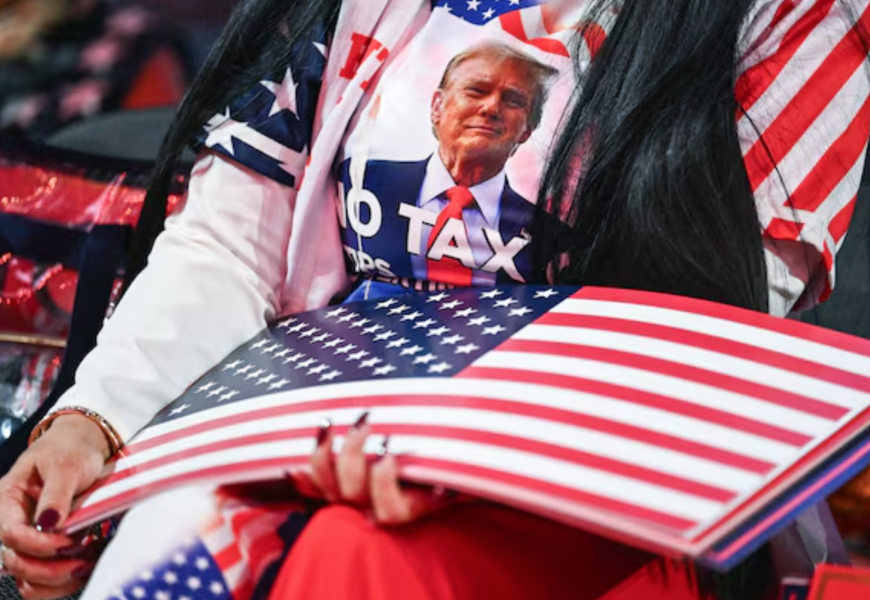
US President Donald Trump and senior Republicans are gathering in Dallas, Texas, for an unusual two-day party convention aimed at energising the Republican base ahead of the November midterm elections.
The event, being held on September 9 and 10, is a departure from the traditional role of national political conventions, which are normally associated with presidential election years and the formal nomination of candidates.
Trump pushed for the high-profile gathering as Republicans face a difficult political environment heading into the November 3 vote.
His approval ratings have fallen sharply in recent months, with public dissatisfaction linked to a range of issues, including the US-Israel war with Iran and its economic consequences for American households.
Republicans are already facing a difficult battle to retain their majority in the House of Representatives, while the Senate is also becoming increasingly competitive.
Losing control of either chamber would significantly restrict Trump's ability to advance his agenda during the final two years of his second presidential term.
The convention is being held at the American Airlines Center in Dallas and is scheduled to run from 3pm to 9pm Central Time on both days.
Trump is expected to address the gathering on both nights, with Vice President JD Vance scheduled to deliver the closing speech on the opening night.
Trump will then deliver the convention's closing keynote on Thursday evening.
A very different type of convention
The Republican National Committee has described the Dallas gathering as a first in American political history.
Unlike traditional presidential conventions, there will be no nomination process because no presidential election is being held this year.
Instead, the event is designed as a major campaign rally, fundraising opportunity and showcase for Republican candidates competing in closely contested races.
Party organisers say the convention will highlight Trump's record, Republican candidates and issues they believe will motivate voters in November.
The programme includes dozens of speakers and sessions covering subjects including tax cuts, healthcare costs, immigration, border security, trade and American manufacturing.
The second day will place greater emphasis on household affordability and family-related issues, including taxes on tips and overtime as well as Social Security.
Some of the most contentious issues surrounding Trump's presidency, including the war involving Iran and his tariff policies, receive comparatively little attention in the official programme.
Texas race takes centre stage
Among the Republicans expected to receive significant attention is Texas Attorney General Ken Paxton, who is running for the Senate.
Paxton is facing Democrat James Talarico in a race that has attracted considerable attention because of Talarico's early polling advantage.
Trump has strongly backed Paxton, having endorsed him over Republican Senator John Cornyn during the party's primary contest.
The president has made clear that winning the Texas Senate race is a priority for his administration.
Other prominent Republicans attending include former Congressman Mike Rogers, Ohio Senator Jon Husted and Georgia Congressman Mike Collins, all of whom are involved in competitive Senate races.
Some Republicans keeping their distance
Not every Republican candidate is embracing the convention.
Several lawmakers and candidates in vulnerable districts and states have chosen not to attend, concerned that appearing alongside Trump could hurt their chances with voters who oppose the president.
Maine Senator Susan Collins is among those staying away as she faces a competitive re-election campaign.
Iowa Representative Mariannette Miller-Meeks has also said she will remain in her district rather than attend the Dallas gathering.
Her decision reflects the difficult calculations facing Republicans in competitive races, where candidates must balance loyalty to Trump with the need to appeal to voters in their own states and districts.
Republicans are also watching turnout figures closely. Democratic primary participation has increased in several important states, including Michigan, Wisconsin, Texas and Georgia, while Republican turnout has been comparatively steady.
Can Trump change the political outlook?
Whether the convention can improve Republican prospects remains uncertain.
Trump has previously demonstrated an ability to generate publicity and mobilise voters through large political events. However, the Dallas convention faces several potential obstacles.
Trump's closing speech coincides with the opening of the NFL season, potentially competing for television audiences.
The timing also comes just before September 11 commemorations, which could further affect public attention.
There have also been reports of concerns within Republican circles about the relatively short preparation period after Trump proposed the event in June.
The biggest challenge, however, may be Trump's declining popularity.
His approval rating has fallen from roughly 52 percent when he returned to office in January 2025 to around 38 percent in major polling averages, with some recent surveys putting his approval as low as 33 percent.
Democrats prepare a response
Democratic-aligned groups are planning protests and other events in Dallas to challenge the Republican gathering.
House Democratic leader Hakeem Jeffries has also announced that four Democratic lawmakers will travel to the city for counterprogramming.
The Democratic National Committee, however, has opted against organising its own midterm convention.
The party continues to face financial pressures following the 2024 presidential election and has been working to address substantial debts.
For Republicans, the Dallas convention represents an attempt to use Trump's political influence and campaign style to energise supporters at a critical moment.
With control of Congress at stake, the gathering will also provide an early indication of how willing vulnerable Republican candidates are to embrace - or distance themselves from - the president before voters head to the polls.
More Top Stories