°C
 3
Min
The remains of medieval Bulgarian ruler Czar Samuel have returned to Bulgaria more than 1,000 years after his death, ending years of sensitive negotiations between Bulgaria and Greece over their final resting place. Samuel, regarded as an important figure in Bulgarian history and national identity, ruled during a period of intense conflict with the Byzantine Empire.
Remains of Bulgarian Czar Samuel Return Home After 1,000 Years
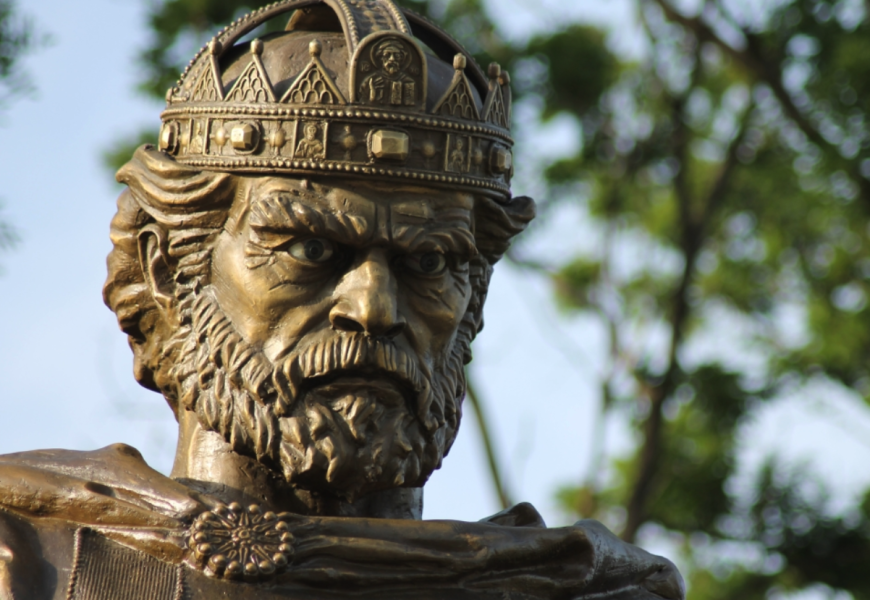
The remains of medieval Bulgarian ruler Czar Samuel have returned to Bulgaria more than 1,000 years after his death, ending years of sensitive negotiations between Bulgaria and Greece over their final resting place.
Samuel, regarded as an important figure in Bulgarian history and national identity, ruled during a period of intense conflict with the Byzantine Empire. He fought to expand and defend his kingdom before suffering a major defeat. He died shortly afterwards in 1014.
The remains believed to belong to Samuel were discovered in the 1960s in a Greek border region. Their return to Bulgaria followed an agreement reached between the two countries this week.
The coffin carrying the remains was flown to Sofia on Saturday aboard a Bulgarian military aircraft, accompanied by fighter jets from the country's air force.
Thousands of people gathered in a public square in the Bulgarian capital to mark the arrival. Political leaders from across the country's political spectrum attended the ceremony, which included the national anthem and a 21-gun salute.
Bulgarian Prime Minister Rumen Radev said Samuel's return was an opportunity for Europeans to view history through a broader sense of shared cultural identity.
He also called for peace between European nations, saying historic rivalries should not be allowed to reopen old wounds.
Fighter jets later conducted a flypast as crowds gathered to honour the medieval ruler.
Among those attending was 42-year-old software engineer Martin Nestorov, who said he had come to welcome Samuel back to Bulgaria.
Retired art historian Tsanka Zlatkova, 65, said she attended because she considered Samuel's return significant for Bulgarian national identity.
The remains were later taken in a ceremonial procession to the Church of Saint Sofia, a sixth-century basilica that gives the capital its name. Church officials say Samuel was baptised at the site.
Competing historical claims
The agreement concerning Samuel's remains forms part of a broader cultural arrangement between Greece and Bulgaria.
Under the agreement, Greece is expected to receive 48 objects taken by Bulgarian troops from Greek churches and monasteries during World War I.
Greek Prime Minister Kyriakos Mitsotakis said ahead of the handover that he hoped the agreement would strengthen international efforts to protect and return cultural heritage.
He argued that historic objects should not be regarded as spoils of war, as countries around the world increasingly reassess the ownership and movement of cultural treasures.
The issue also has wider regional significance because Samuel's historical legacy is contested beyond Bulgaria and Greece.
North Macedonia has also claimed a connection to the medieval ruler, with a large statue of Samuel standing in the capital, Skopje.
In 2022, a bilateral historical commission recommended describing Samuel as the ruler of a state that most contemporary historians identify as the Bulgarian Empire, although much of its territory was located in what is now North Macedonia.
Samuel's return to Bulgaria therefore carries significance not only as a cultural repatriation, but also as part of the continuing debate over the history and identity of the Balkans.
More Top Stories