°C
 4
Min
South Korean electronics giant LG has rejected allegations that its smart televisions secretly record conversations in users' homes, listen while in standby mode or retain recordings for transmission at a later time. The company issued its response after a lengthy investigation by technology outlet and YouTube channel Gamers Nexus, conducted alongside Level1Techs and independent security researchers.
LG defends smart-TV features amid audio surveillance allegations
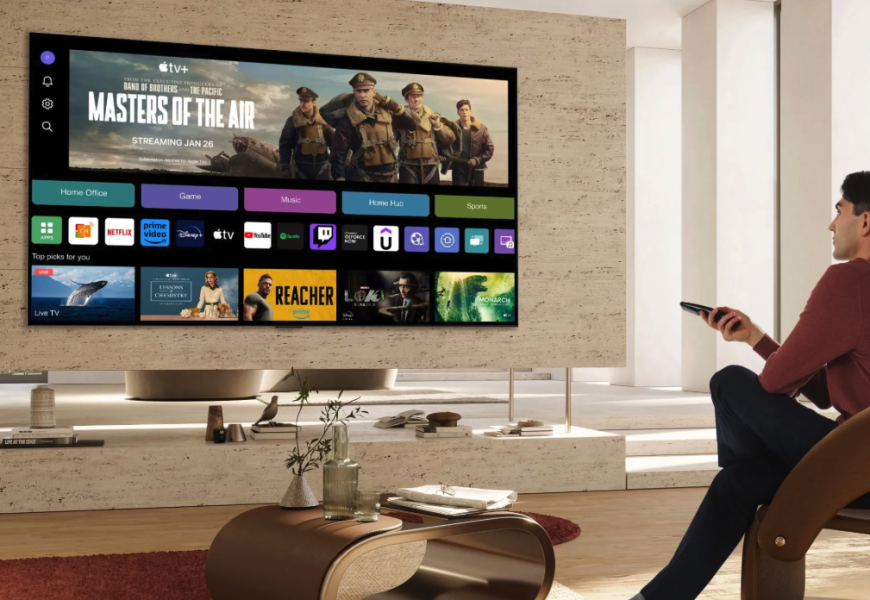
South Korean electronics giant LG has rejected allegations that its smart televisions secretly record conversations in users' homes, listen while in standby mode or retain recordings for transmission at a later time.
The company issued its response after a lengthy investigation by technology outlet and YouTube channel Gamers Nexus, conducted alongside Level1Techs and independent security researchers, raised questions about the way some LG televisions collect and process audio and other household data.
LG said its televisions only record voice data when users deliberately press and hold the voice button on the remote or activate the "Hi LG" wake word after enabling the television's Far-Field voice recognition feature.
"Other than these instances, the TVs do not collect or record ambient conversations," LG said.
The company said voice information is processed only following an explicit user command and that audio is immediately deleted when the wake word is not recognised.
However, the investigation claimed researchers had identified behaviour that raised concerns about audio collection, data retention and network activity.
Gamers Nexus said testing and analysis of network traffic and television software indicated that some LG televisions could capture audio even when the television was in a hibernation state.
Researchers also claimed that turning off the television's microphone switch did not necessarily disable every microphone capable of interacting with the device, including microphones incorporated into associated remotes.
The investigation further alleged that background sounds could be captured from significant distances, with researchers reporting audio being detected from as far away as 12 metres.
LG says it has 49 million smart TVs in the United States and 216 million globally.
University of California, Davis computer science researcher Yash Vekaria said the potential security implications warranted attention because televisions can remain in homes for many years, sometimes beyond the period in which they receive software updates.
He argued that security vulnerabilities in connected televisions could potentially expose private conversations if a device were compromised.
Researchers also claimed that certain wake-word interactions or unclear audio could remain temporarily stored on a television, be converted into text and potentially be uploaded later if the device's network connection was restored.
They said they identified text transcripts apparently generated from audio recorded following "Hi LG" interactions, including instances where there was a period of silence afterwards.
The claims have not been independently verified.
Vekaria said there could be legitimate explanations for some of the data retention, including diagnostics, speech-recognition improvements or other technical functions, but argued that users should be clearly informed about what information is being collected and retained.
He also said there was no concrete evidence that ambient audio or transcripts were being used by LG for advertising or consumer profiling.
Questions over household data
The investigation also examined LG televisions' network-discovery capabilities.
Researchers said some televisions scanned home networks and collected information such as internal IP addresses, nearby Wi-Fi networks and information about other connected devices.
LG said device discovery is a standard smart-TV function and can support features such as screen casting, media sharing and connections with smart-home equipment.
Anna Maria Mandalari, a communications and networking lecturer at University College London, said network discovery can have legitimate purposes but could potentially provide a television with information about the devices operating inside a home.
Depending on how such systems are implemented, information about device names, manufacturers and types could potentially reveal details about the technology used within a household.
LG also operates an advertising business, LG Ad Solutions, which promotes the ability to derive insights from connected television households.
The company said features including automatic content recognition, voice recognition and interest-based advertising are separate functions and require users to provide explicit consent.
LG said those features can also be disabled through television settings.
The company said it remains committed to transparency and rejected what it described as deceptive practices.
The dispute highlights growing concerns surrounding connected televisions and other smart-home devices, which can combine entertainment functions with microphones, network connectivity, advertising technology and data-collection systems.
For consumers, the controversy reinforces the importance of checking privacy settings, understanding which voice features are enabled and keeping connected devices updated with the latest available security software.
More Top Stories