°C
 5
Min
Voters in Bosnia and Herzegovina are taking part in a complex general election covering the country's state, entity and canton levels, with more than 3.4 million people eligible to cast ballots.
Bosnia and Herzegovina heads to polls in complex 2026 election
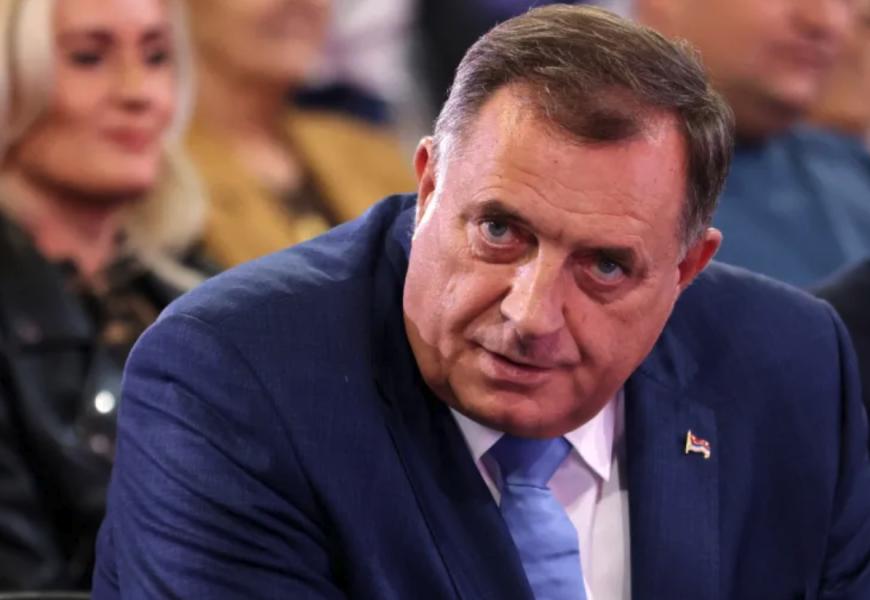
Voters in Bosnia and Herzegovina are taking part in a complex general election covering the country's state, entity and canton levels, with more than 3.4 million people eligible to cast ballots.
The election reflects the unusual political structure created by Bosnia and Herzegovina's constitutional system, which divides the country between two main entities - the Federation of Bosnia and Herzegovina and Republika Srpska - alongside the separately administered Brcko District.
New voting technology introduced
The 2026 election features new technology intended to improve the accuracy and transparency of the voting process.
Biometric equipment is being used to identify voters, while ballot papers are being scanned after votes are cast.
The system does not introduce electronic voting. Voters continue to mark paper ballots, with scanning technology being used to assist with verification and counting.
Authorities hope the changes will reduce opportunities for irregularities and speed up the publication of results.
Three-member Presidency
One of the most closely watched contests is for Bosnia and Herzegovina's three-member Presidency.
Rather than electing a single president, voters select representatives for the country's three main constituent peoples: Bosniaks, Croats and Serbs.
The Bosniak and Croat representatives are elected in the Federation of Bosnia and Herzegovina, while the Serb representative is elected in Republika Srpska.
The Bosniak contest includes current Presidency member Denis Becirovic of the Social Democratic Party, former Presidency member Bakir Izetbegovic of the Party of Democratic Action, Semir Efendic of the Party for Bosnia and Herzegovina and Fahrudin Radoncic of the Union for a Better Future of BiH.
Izetbegovic, who leads the centre-right SDA, is seeking a return to the Presidency after losing to Becirovic in 2022.
Three candidates are contesting the Croat position: Darijana Filipovic of the Croatian Democratic Union of Bosnia and Herzegovina, Slaven Kovacevic of the Democratic Front and Zdenko Lucic, who has the backing of a coalition of five Croat parties.
For the Serb seat, incumbent Zeljka Cvijanovic of the Alliance of Independent Social Democrats is seeking another term. She has maintained close relations with Russia during her time on the Presidency.
Cvijanovic faces competition from Serb Democratic Party candidate Marinko Bozovic and Nebojsa Vukanovic of the List for Justice and Order.
A complicated political system
The election extends far beyond the Presidency.
Voters are choosing representatives across 14 governments, while the country's political system includes state institutions, two entity governments and 10 cantonal governments within the Federation.
The Central Election Commission has registered 75 political parties and four independent candidates for the election.
At the national level, voters elect members of the Parliamentary Assembly, which has two chambers.
The House of Representatives has 42 members, with two-thirds elected from the Federation and one-third from Republika Srpska.
The 15-member House of Peoples is elected indirectly and consists of five Bosniaks, five Croats and five Serbs.
Entity and canton elections
In Republika Srpska, voters directly elect the entity's National Assembly, president and vice presidents. The government itself is subsequently confirmed by the National Assembly.
In the Federation, voters elect the House of Representatives of the Federation Parliament as well as cantonal assemblies.
Those cantonal assemblies then participate in choosing delegates to the Federation's House of Peoples.
The Federation presidency and governments at both the entity and canton levels are formed following negotiations based on parliamentary majorities and political agreements.
Ethnic divisions remain central
Bosnia and Herzegovina's electoral system has long been criticised for reinforcing ethnic divisions.
Under the current arrangements, citizens cannot always vote for candidates representing the ethnic community with which they identify if they live in another part of the country.
For example, a Serb living in the Federation cannot vote for the Serb member of the Presidency, while Bosniaks and Croats living in Republika Srpska cannot vote for candidates for the seats allocated to their communities.
The system has also contributed to tensions between Bosniak and Croat political parties.
The Croatian Democratic Union and its allies have pushed for changes to electoral laws to prevent what they argue is undue influence by Bosniak voters over the selection of the Croat Presidency member.
Any fundamental change would require constitutional amendments.
Government formation could take time
The election result may not immediately translate into functioning governments.
Political disagreements between Bosnia and Herzegovina's three main ethnic communities have repeatedly produced parliamentary blockades and delays in decision-making.
As a result, forming governing coalitions can take months and requires extensive negotiations between parties.
The central question after the election will therefore be not only which parties win seats, but whether they can reach agreements capable of producing stable governments.
EU ambitions at stake
The election also carries significance for Bosnia and Herzegovina's long-term bid to join the European Union.
The EU granted the country candidate status in December 2022 and formally opened accession negotiations in 2024. However, progress has since been limited, with political disputes and institutional blockages slowing reforms.
A new government capable of reaching agreement on key legislation could help revive the country's European integration process.
The election is also a test for the governing parties, which have faced pressure over rising living costs and have pledged greater attention to economic and social issues.
When will results be known?
Initial results are expected to be released by the Central Election Commission on election night, with figures updated as votes from additional polling stations are processed.
Further ballots, including those from mobile voting teams, postal voters and diplomatic and consular missions, will be added in the days following the election.
The final official results are expected to be announced by November 20 at the latest.
For Bosnia and Herzegovina, however, the election is only the beginning. The difficult process of negotiating governments and overcoming political divisions could ultimately determine how much of the electorate's mandate translates into effective government.
More Top Stories