°C
 13
Min
Political dissidents from Iran and Russia say they continue to face intimidation, cyberattacks and threats after fleeing their home countries, raising concerns about the growing reach of authoritarian governments beyond their borders.
Political dissidents from Iran and Russia say they continue to face intimidation, cyberattacks and threats after fleeing their home countries, raising concerns about the growing reach of authoritarian governments beyond their borders.
Political dissidents from Iran and Russia say they continue to face intimidation, cyberattacks and threats after fleeing their home countries, raising concerns about the growing reach of authoritarian governments beyond their borders.
Milad Pourtalebian, a 32-year-old Iranian living in Canada, was confronted with a disturbing scene when he returned to his Saskatoon apartment one Thursday in early March.
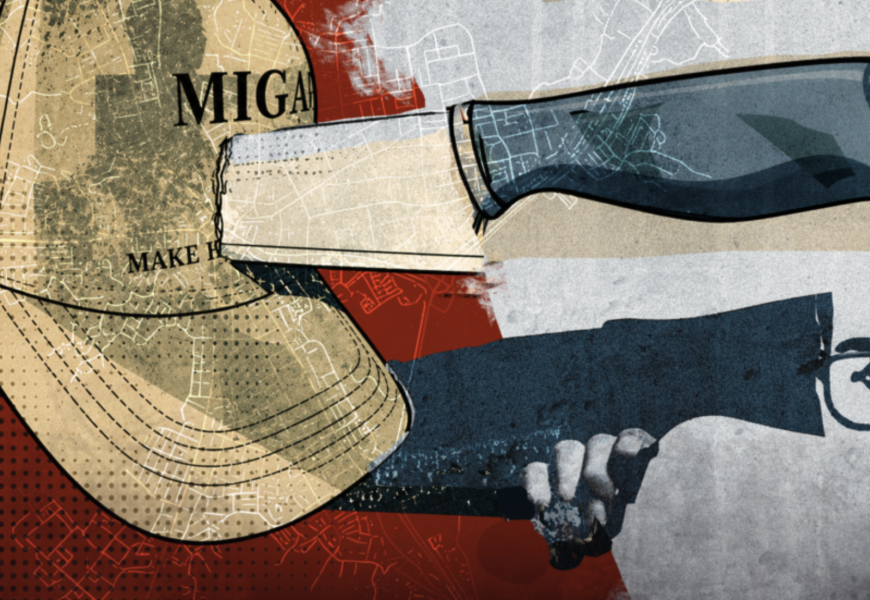
His home had been ransacked, but nothing appeared to have been stolen. Instead, his attention was drawn to a baseball cap bearing the words "Make Iran Great Again", which had been pinned to a wall with a large kitchen knife.
Pourtalebian, who arrived in Canada in 2024, has organised rallies opposing Iran's government in his adopted hometown of Saskatoon, Saskatchewan.
The break-in occurred days after US and Israeli air strikes against Iran triggered a war. It followed a series of online threats directed at him over his political activities.
He reported the incident to police, believing he had been targeted because of his opposition to the Iranian government.
"The incident was initially extremely frightening for me," Pourtalebian said, adding that he had since decided not to let fear silence him.
"I decided not to allow fear to stop me from expressing my political views. I think about the thousands of Iranians who have lost their lives seeking freedom."
Photographs, police documents and social media posts provided by Pourtalebian suggest that his activities may have attracted attention far beyond Iran.
One post on Telegram accused him of conducting propaganda against Iran's political establishment and supporting attacks by the United States and Israel.
The post also claimed that the author had identified his home in Saskatoon and delivered a warning there months earlier.
Pourtalebian described that message as particularly disturbing. No arrests have been made in connection with the break-in, according to the information provided.
The incident highlights a broader international concern known as transnational repression, in which governments attempt to intimidate, monitor or silence critics living abroad.
Iran has a long history of alleged overseas assassination plots and attacks, but its methods increasingly extend into digital spaces.
Canadian-based Persian-language fact-checking organisation Factnameh has reported an increase in online surveillance, the publication of personal information and cyber-enabled intimidation targeting Iranian critics overseas.
Among the reported tools are websites that encourage people to denounce individuals accused of opposing the Iranian government.
One such platform, Alaj, reportedly contains files on approximately 1,600 people. Iranian state television has warned people identified through these channels that they could face asset seizures, the suspension of consular services and international arrest notices.
Another website, Goorkan, publishes personal information about individuals it describes as traitors.
Intelligence agencies in the United States, Britain and the Netherlands have also reported an international cybercampaign attributed to Iran. The FBI has identified malware known as Heavygram as a tool used to target Iranian dissidents, journalists critical of the government and opposition groups around the world.
Iran is not alone in pursuing opponents beyond its borders.
Yana Gorkhovskaia, head of research and analysis at Washington-based Freedom House, said China, Iran and Russia were among the leading perpetrators of transnational repression identified by the organisation's research.
China was responsible for substantially more reported activity than other governments, she said, while Russia stood out for the violence associated with its operations.
Examples linked to Russia include the poisonings of former intelligence officer Aleksandr Litvinenko and former Russian military intelligence officer Sergei Skripal in Britain, as well as a hammer attack on Leonid Volkov, an associate of the late Russian opposition leader Alexei Navalny, in Lithuania.
For Mikhail Klimaryov, a Russian cybersecurity specialist and Kremlin critic who left Russia following its full-scale invasion of Ukraine in 2022, the threat has become a persistent part of daily life.
Now living in Berlin, Klimaryov said concerns about surveillance and possible attacks had made him increasingly cautious.
He routinely checks his surroundings for signs of being followed and examines his apartment door handle before touching it, recalling the poisoning of Sergei Skripal with the nerve agent Novichok.
Klimaryov said the pressure extended well beyond the fear of physical violence. Cyberattacks, phishing attempts and administrative complications had created what he described as a form of psychological warfare.
His Russian passport expires in 2029, and renewing it could prove difficult. The problem could also affect his residency arrangements in Germany.
He said he did not have asylum in Germany and was reluctant to seek it because he wanted to continue operating a business that employs 20 people.
Travel has also become complicated. Klimaryov said Russian authorities had placed him on a terrorist list, potentially creating difficulties when crossing international borders.
He recalled being removed from a boarding queue during a return journey from the United States and questioned for approximately 30 minutes by an armed officer accompanied by a dog.
The possibility of extradition has forced him to consider carefully which countries he visits.
Klimaryov also said he had been designated a foreign agent in Russia and faced approximately US$1 million in fines that he believes were imposed for political reasons.
His ability to resolve administrative matters has been further restricted because his Russian telephone number was cancelled. He said this prevented him from accessing certain online government services and his Russian banking arrangements.
Klimaryov has restricted his use of mobile phones because of concerns about hacking and avoids sharing his number unnecessarily.
Despite his cybersecurity expertise, he said he had nearly fallen victim to a sophisticated phishing operation involving someone who posed as a potential client of his business.
After weeks of apparently legitimate exchanges, the individual attempted to persuade him to enter a code sent through Telegram, which could have compromised his account.
"I managed to stop myself right at the last moment. It was such a high-level scam," he said.
The continuing pressure has affected his mental health, prompting him to seek medical advice. He described experiencing panic attacks and acknowledged that he was considering whether to temporarily step back from his political activities.
Nevertheless, Klimaryov said he did not consider himself a victim, pointing out that he remained free and able to earn a living.
Gorkhovskaia said the cumulative effect of intimidation was often the intended outcome.
Surveillance, threats against relatives and digital attacks could discourage people from attending demonstrations, speaking publicly or continuing political work, she explained.
Even when threats do not result in physical violence, the uncertainty can make dissidents question whether the risks of public opposition are worth taking.
Freedom House has also identified countries including Turkey, Saudi Arabia and Rwanda among governments associated with transnational repression.
Gorkhovskaia said meaningful, sustained responses from Western governments remained relatively uncommon.
She attributed this partly to the difficulty of proving responsibility when governments use indirect methods or deny involvement, as well as to competing diplomatic and political considerations.
Without stronger consequences, she warned, governments could continue targeting critics abroad while learning from the methods used by other states.
"Perpetrators of transnational repression don't pay a cost for targeting dissidents abroad," Gorkhovskaia said, arguing that the lack of consequences encouraged the practice to continue.
Pourtalebian wants Canadian authorities to take a tougher approach towards people suspected of having connections to Iran's government.
He believes Canada remains too open to individuals linked to the Islamic Republic.
Saskatoon police said they had closed the file concerning the break-in but would reopen the investigation if further information about a suspect or additional evidence became available.
For dissidents such as Pourtalebian and Klimaryov, the experiences illustrate how leaving an authoritarian state does not necessarily bring an end to political intimidation. Even thousands of kilometres from home, the threat of surveillance, harassment and potential violence can continue to shape their lives.