°C
 12
Min
South African jurist Navi Pillay has been awarded the 2026 Nobel Peace Prize in recognition of decades spent defending human rights, pursuing accountability for genocide and war crimes, and strengthening international law. The Norwegian Nobel Committee announced the award on Friday, praising the 85-year-old.
Navi Pillay wins 2026 Nobel Peace Prize for human rights work
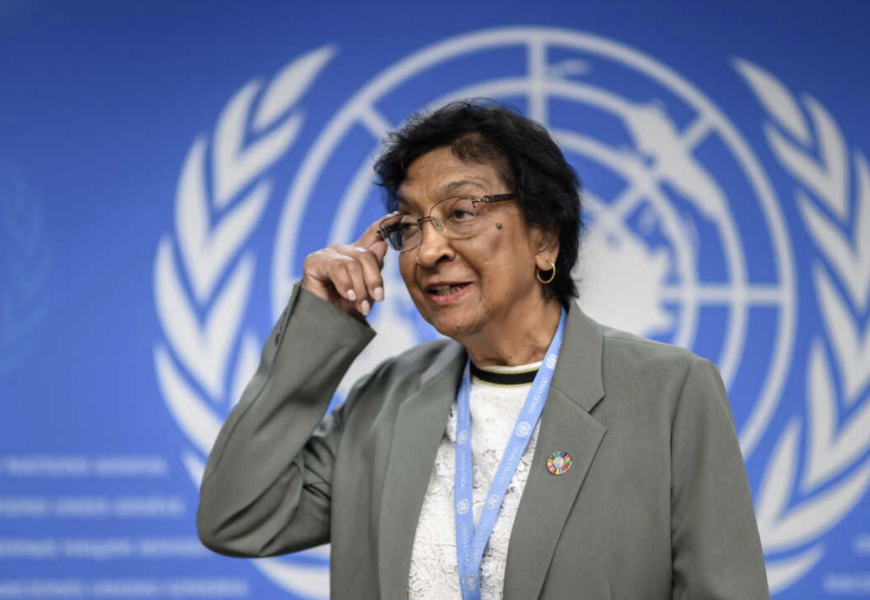
South African jurist Navi Pillay has been awarded the 2026 Nobel Peace Prize in recognition of decades spent defending human rights, pursuing accountability for genocide and war crimes, and strengthening international law.
The Norwegian Nobel Committee announced the award on Friday, praising the 85-year-old for her sustained efforts to bring those responsible for serious international crimes to justice.
Pillay, who has held senior positions in international judicial and human rights institutions, was recognised for her commitment to justice, personal integrity and courage in confronting some of the world's most serious human rights violations.
Her career has spanned South Africa's apartheid era, the prosecution of crimes committed during the 1994 Rwandan genocide and investigations into alleged atrocities in conflict zones, including Gaza.
Who is Navi Pillay?
Navanethem Pillay, widely known as Navi Pillay, was born in Durban, South Africa, in 1940 to parents of Tamil descent.
Growing up under apartheid, she experienced a system of racial discrimination that would shape her career and commitment to human rights.
After obtaining a law degree from the University of Natal, Pillay became the first woman in the province to establish her own law firm. She represented anti-apartheid activists and worked to protect the rights of political prisoners.
In 1973, she took on a case that helped secure basic rights, including access to legal representation, for political prisoners held on Robben Island, where Nelson Mandela was imprisoned.
Pillay subsequently became the first woman of colour to serve on South Africa's High Court, marking a significant milestone in the country's legal history.
Her career later expanded internationally, bringing her into some of the most consequential human rights cases of recent decades.
Role in prosecuting the Rwandan genocide
One of Pillay's most influential positions was as a judge and president of the International Criminal Tribunal for Rwanda, which prosecuted people responsible for crimes committed during the 1994 genocide.
The tribunal's work helped establish important precedents in international criminal law, particularly concerning sexual violence during armed conflict.
Pillay played a significant role in recognising that rape and sexual violence could constitute crimes against humanity and acts of genocide when committed with the required intent and circumstances.
She also contributed to a landmark legal development involving the prosecution of incitement to genocide through propaganda.
These precedents helped strengthen international efforts to hold individuals accountable for atrocities and reinforced the principle that sexual violence can be an instrument of systematic persecution and destruction.
The Nobel Committee highlighted these contributions as central to its decision to honour her.
Senior United Nations human rights role
From 2008 to 2014, Pillay served as United Nations High Commissioner for Human Rights, a position that placed her at the centre of international efforts to address discrimination, abuses of power and violations of fundamental freedoms.
During her tenure, she advocated for stronger human rights protections and accountability for governments and other powerful actors.
Her subsequent work continued to focus on investigating alleged international crimes and ensuring victims were not denied justice.
Pillay later chaired the UN Independent International Commission of Inquiry on the Occupied Palestinian Territory. In 2025, the commission concluded that Israel had committed genocide in Gaza, a finding that Israel has rejected.
The commission called on countries to take action to prevent further atrocities, pursue accountability and support efforts to establish a ceasefire.
Pillay is also serving as a judge at the International Court of Justice, which is considering a case concerning allegations of genocide against Myanmar's predominantly Muslim Rohingya population.
The International Court of Justice deals with legal disputes between states, while the International Criminal Court prosecutes individuals accused of certain international crimes. The two institutions have distinct roles.
Why has she won the Nobel Peace Prize?
The Nobel Committee said Pillay was being honoured for her efforts to promote peace and international law.
It described her as one of the leading defenders of international legal principles, emphasising her work to hold states and national leaders accountable and provide hope to victims of violence and conflict.
Her award comes amid growing international debate over the authority of international courts, compliance with their decisions and the willingness of powerful countries to support independent judicial institutions.
The committee said international law and the institutions responsible for upholding it were facing considerable pressure.
The award was welcomed by human rights advocates and international officials.
United Nations High Commissioner for Human Rights Volker Türk described the prize as an affirmation of the importance of human rights, the rule of law, justice and accountability to peace, security and prosperity.
International Criminal Court President Tomoko Akane also welcomed the recognition, saying it carried particular significance at a time of serious challenges to the international legal order.
South African President Cyril Ramaphosa praised Pillay's courage, integrity and lifelong commitment to justice.
Haakon Gjerlow, acting director of the Peace Research Institute Oslo, said the award underscored the importance of strong international institutions and individuals prepared to defend them.
International law and political tensions
Pillay's selection also comes amid tensions between some governments and international judicial bodies.
The administration of United States President Donald Trump has imposed sanctions on members of the International Criminal Court, prompting criticism from those who argue that such measures threaten judicial independence.
The ICC has previously issued arrest warrants for Israeli Prime Minister Benjamin Netanyahu and former defence minister Yoav Gallant over alleged war crimes and crimes against humanity relating to the Gaza conflict. The allegations and legal proceedings remain distinct from the separate question of state responsibility for genocide before the International Court of Justice.
The US sanctions and disputes over international investigations have intensified wider debate about whether international legal institutions can operate independently when their work challenges powerful political interests.
Ashok Swain, a professor of peace and conflict research at Uppsala University, described Pillay's selection as a positive surprise and a strong choice.
He suggested the committee's decision could be interpreted as a statement about the importance of confronting genocide and defending international law. It could also be viewed against the backdrop of Trump's repeated assertions that he deserves the Nobel Peace Prize and his administration's disputes with South Africa.
Pillay's award places renewed attention on the role of independent courts in addressing allegations of serious international crimes, regardless of the political influence of those accused.
How has Pillay responded?
Pillay appeared initially uncertain about reports that she had won the prize, asking supporters whether the news was true as congratulations began to circulate.
She also joked about Trump, suggesting she might share the prize with him if the applause continued.
After the award was confirmed, Pillay said she would dedicate it to survivors of international crimes.
She said the recognition strengthened her determination to defend the rule of law, independent courts and an international legal order based on principle.
The Nobel Committee had earlier indicated it had experienced difficulty contacting Pillay to inform her of the decision. Its chair, Jørgen Watne Frydnes, urged her to answer if she received a call from a Norwegian telephone number.
For South Africa, Pillay's achievement represents another major international honour for a country whose history of apartheid helped shape the global human rights movement.
For the international community, the award highlights the continuing struggle to ensure that allegations of genocide, war crimes and other grave abuses are investigated fairly and that those responsible can be held accountable.
More Top Stories