°C
 4
Min
Bombardier has rejected US President Donald Trump's threat to prevent the Canadian aircraft manufacturer from selling its planes in the United States unless it increases aircraft production on American soil. The Quebec-based company said it already has a substantial manufacturing, employment and supply-chain presence across the US.
Bombardier pushes back against Trump threat to block US aircraft sales
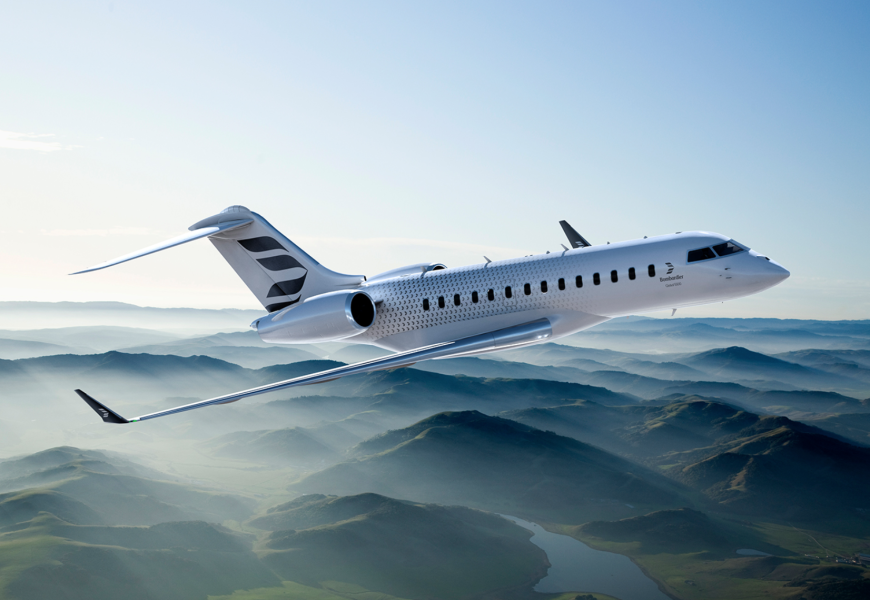
Bombardier has rejected US President Donald Trump's threat to prevent the Canadian aircraft manufacturer from selling its planes in the United States unless it increases aircraft production on American soil.
The Quebec-based company said it already has a substantial manufacturing, employment and supply-chain presence across the US, with thousands of American workers involved in its operations.
In a statement, Bombardier said its aircraft incorporate numerous components manufactured by US companies, including engines, avionics and other critical systems.
The company employs about 3,500 people in the United States and manufactures aircraft components at facilities across the country. Its US operations include wing production in Texas and flight-control components manufactured in California.
Bombardier also said it works with suppliers across 47 US states and spends approximately $2.5 billion annually with American suppliers.
The company is continuing to expand its US footprint, including plans to establish a new service centre in Fort Wayne, Indiana. It also operates service centres in Arizona, Texas, Kansas, Florida and Connecticut.
"Bombardier values its great partnership with American companies and its US employees," the company said, adding that it intends to continue investing in its workforce, customers and communities across the country.
Trump demands more US production
Trump intensified his criticism of Bombardier on Monday, accusing the company of benefiting heavily from the American market while producing its aircraft primarily outside the United States.
In a post on Truth Social, Trump said Bombardier generates around half of its revenue in the US and accused the company of relying on American customers, businesses, airports and service providers.
He warned that Bombardier could face restrictions on selling aircraft in the US unless it begins building more planes domestically.
"If they want our Market, they must build here," Trump said, while also criticising the quality of the company's products.
The comments immediately raised concerns within the aviation industry, particularly because Bombardier has extensive relationships with American airlines, aerospace companies and suppliers.
Political and union opposition
Trump's position also drew criticism from some US political allies.
Republican Senator Jerry Moran of Kansas, home to Bombardier's US headquarters in Wichita, defended the company's contribution to the local economy and American aerospace sector.
Moran said Bombardier supports more than 1,000 jobs in the Wichita area and contributes skilled workers and expertise to the country's defence and aviation industries.
The International Association of Machinists and Aerospace Workers also opposed any attempt to prevent Bombardier from selling aircraft in the United States.
The dispute comes as trade relations between Washington and Ottawa continue to deteriorate.
Canada has introduced retaliatory tariffs on approximately $20 billion worth of US goods following the Trump administration's decision to impose 50 percent tariffs on Canadian imports.
The growing trade conflict has increased uncertainty for companies operating across the US-Canada border, including major aerospace manufacturers.
Bombardier shares fall
Investors reacted sharply to Trump's comments, with Bombardier shares falling more than 6.5 percent during midday trading.
Shares in major US and European competitors moved in the opposite direction, with Boeing gaining about 0.3 percent and Airbus rising approximately 1 percent.
The latest dispute is not the first clash between Trump and Bombardier.
In January, Trump accused the company of restricting Gulfstream business jets from entering the Canadian market by delaying aircraft certification.
Bombardier also faced a major trade dispute with Boeing during Trump's first presidential term.
Boeing accused the Canadian manufacturer of benefiting from government subsidies and selling passenger aircraft in the US at artificially low prices.
The US Commerce Department subsequently calculated potential tariffs approaching 300 percent on Bombardier aircraft. Those duties were ultimately not imposed after the US International Trade Commission concluded that Bombardier's aircraft had not caused injury to the American aircraft industry.
Major US airline customers
Bombardier's aircraft already have a significant presence in the American aviation market.
Regional aircraft manufactured by the company are operated through several major US airline networks, including Delta, United, American Airlines and Alaska Airlines.
Those aircraft are commonly flown by regional carriers such as Endeavor Air and SkyWest as part of larger airline networks.
The dispute therefore puts the Trump administration's push for greater domestic manufacturing directly against an established aerospace supply chain that already connects Bombardier with American manufacturers, workers, airlines and suppliers.
For Bombardier, the challenge will be demonstrating that its existing US investment is sufficient to satisfy Washington while avoiding disruption to a market that represents a major part of its business.
More Top Stories