°C
 4
Min
Police detain more than 1,000 people as authorities move to prevent protests over alleged voter roll manipulation and demands for the election chief's resignation. Indian authorities have detained more than 1,000 people, including opposition politicians, journalists, students, lawyers and leaders of the satirical Cockroach Janta Party (CJP).
India Detains 'Cockroach' Leaders as Delhi Locks Down
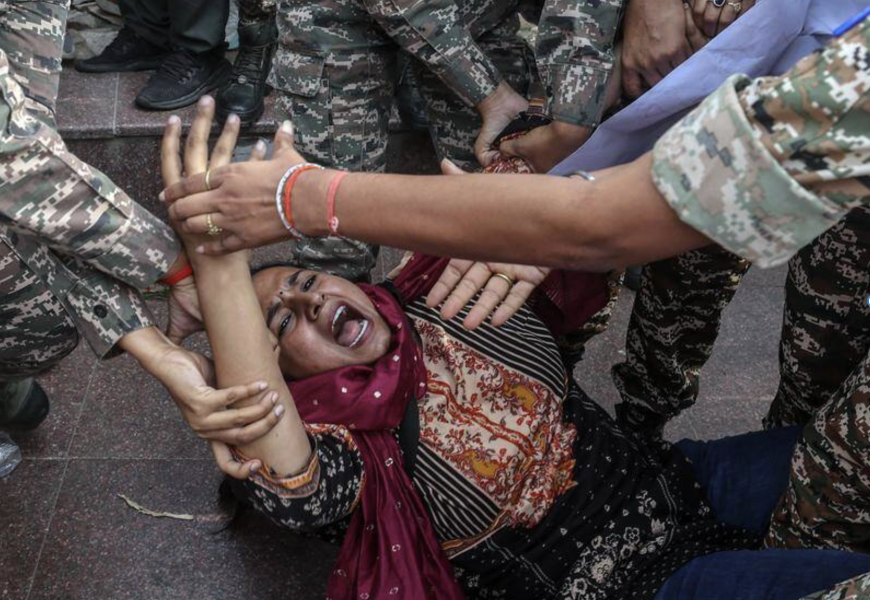
Police detain more than 1,000 people as authorities move to prevent protests over alleged voter roll manipulation and demands for the election chief's resignation.
Indian authorities have detained more than 1,000 people, including opposition politicians, journalists, students, lawyers and leaders of the satirical Cockroach Janta Party (CJP), as security forces moved to prevent demonstrations in New Delhi over allegations of electoral interference.
The protests, planned for Saturday, targeted Chief Election Commissioner Gyanesh Kumar and the government's Special Intensive Revision (SIR) of voter lists.
Opposition groups have accused Prime Minister Narendra Modi's Bharatiya Janata Party (BJP) of using the revision process to influence election outcomes, allegedly with the cooperation of officials within the Election Commission. The BJP has rejected the protesters' campaign, while opposition parties argue that voter deletions may have affected the results of recent state elections.
Organisers had planned to bring thousands of demonstrators to Jantar Mantar, a designated protest area in central New Delhi. However, security forces sealed off the site before the planned gathering could begin.
Authorities deployed thousands of police and paramilitary personnel across the capital. Train services to New Delhi were cancelled, mobile internet services were suspended, and metro stations and markets were shut as part of measures intended to prevent large-scale demonstrations.
BJP spokesperson Sambit Patra dismissed the protesters as "anarchic elements", claiming their demonstration had failed to gain significant support.
He said the situation at Jantar Mantar did not reflect the broader mood across India, describing the country as calm and progressing under the government's leadership.
Youth movement leaders detained
CJP founder Abhijeet Dipke and associates Saurav Das and Ashutosh Ranka were detained aboard an Air India flight after arriving in New Delhi from Mumbai.
In a video posted on Instagram, Dipke showed police officers entering the aircraft after landing. He told the officers he had come prepared to be arrested and was not afraid.
In another video shared by Ranka, Dipke addressed fellow passengers, describing the police intervention as evidence of growing authoritarianism in the country.
Other people detained included CJP members, YouTuber and government critic Dhruv Rathee, All India Students' Association national president Neha Bora, Communist Party of India (Marxist-Leninist) general secretary Dipankar Bhattacharya, senior Supreme Court lawyer Prashant Bhushan, and politicians Yogendra Yadav and Mamata Banerjee.
Despite the arrests, smaller demonstrations took place at locations including Dilli Haat, a popular crafts market in the capital. Journalists covering the gatherings and people attempting to protest elsewhere were also detained and taken away in police vehicles.
Shranaya, a state committee member of the left-wing Students' Federation of India, said members of her organisation had been under surveillance for hours before some managed to leave their office and join the protests.
She accused the government of suppressing opposition to protect officials alleged to have undermined electoral integrity.
Shranaya said students and unemployed young people would continue demonstrating despite the arrests, insisting the movement would return to the streets.
She was subsequently dragged away by police after climbing a barricade and was taken away in a bus.
Opposition condemns crackdown
Congress party president Mallikarjun Kharge criticised Modi's government over the detentions, accusing it of undermining India's democratic traditions.
Kharge said arrests, detention and the use of force would not discourage citizens from exercising their rights, adding that young people had historically played a central role in shaping the country's future.
Human rights groups raise concerns
Amnesty International called for the immediate and unconditional release of people detained solely for exercising their rights to freedom of expression and peaceful assembly.
Aakar Patel, chair of Amnesty International India's board, said the detentions reflected an attempt by authorities to suppress critical voices.
The Committee to Protect Journalists also called on Delhi Police to release detained journalists and media workers, and to allow the press to report on the demonstrations and the police response without interference.
The crackdown comes amid growing political tensions over allegations that electoral authorities improperly revised voter lists before recent state elections.
The dispute could become increasingly significant ahead of a series of important state elections scheduled to begin in early 2027.
Political analyst Sanjay Kapoor, editor of Hard News Magazine, described the government's response as unusually fearful of the potential scale and consequences of the protests.
Kapoor said the BJP appeared concerned about declining public confidence and the possibility that political support had shifted against it.
The allegations surrounding voter registration, the detentions and restrictions imposed across the capital have intensified debate over electoral transparency and the protection of democratic freedoms in the world's largest democracy.
More Top Stories