°C
°C
 5
Min
5
Min
ARACHOVA, Greece (AP) – As a child, Giannis Stathas remembers being snowed in for days at a time in Arachova, a village famous for its ski resort and long known as a winter playground for Greeks. “We couldn’t go to school because of the snow,” said Stathas, now mayor of Arachova and the surrounding area.
The shrinking snowfall on Greece’s mountains is provoking anxiety and altering the economy
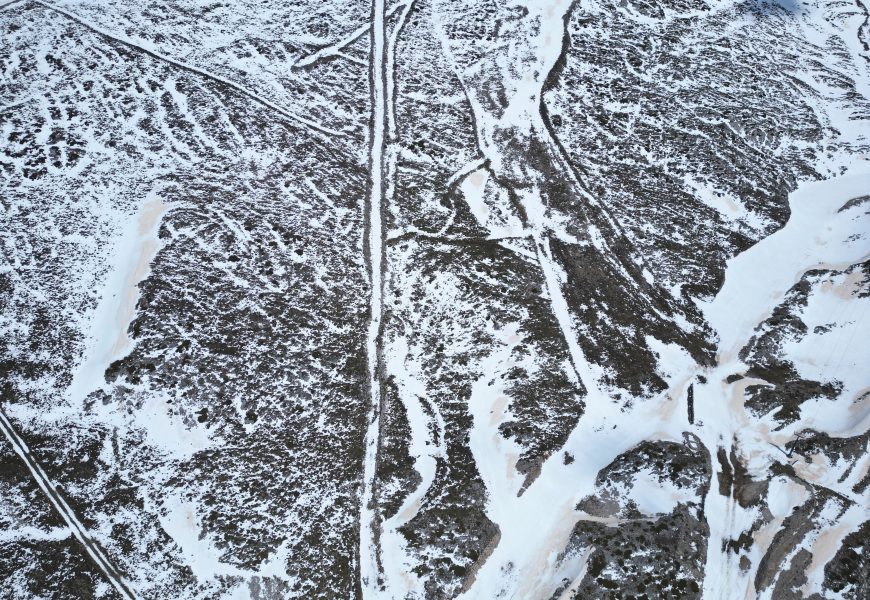

ARACHOVA, Greece (AP) - As a child, Giannis Stathas remembers being snowed in for days at a time in Arachova, a village famous for its ski resort and long known as a winter playground for Greeks.
"We couldn't go to school because of the snow," said Stathas, now mayor of Arachova and the surrounding area. "We might have been stuck at home for two days without being able to go out because of the snow."
"Now we don't see that here anymore."
Stathas says snowfall on Mount Parnassos at an altitude of 2,400 meters (7,874 feet) is what once fell at 300 meters (984 feet).
New findings from the University of Cambridge's Scott Polar Research Institute confirm the mayor's observations.
"What we found across 10 mountains of Greece, across the mainland, is that snow cover is rapidly declining," said Konstantis Alexopoulos, a snow hydrologist at the University of Cambridge and the National Observatory of Athens, and co-founder of the Hellenic Mountain Observatory. "We've lost more than half of the snow cover ... since the mid-1980s."
Using 40 years of NASA and European Space Agency satellite imagery, researchers reconstructed gaps left by cloud coverage and infrequent satellite passes by using machine learning to estimate missing snow cover data.
Alexopoulos said the decline matters because snow acts like a natural water reservoir.
"Snowpack is really like a savings account," he said. "You can deposit an amount today and the longer you keep it in this savings account without spending it, the interest value is going to increase. And snow works in the exact same way."
Unlike rain, which runs off quickly into rivers and the sea, snow remains stored in the mountains "ultimately melting at the time that we need it the most," Alexopoulos said.
This helps sustain water supplies during the dry season, which is especially important in the Mediterranean climate where summer rainfall is limited.
He added that the loss of snow is driven primarily by rising temperatures linked to greenhouse gas emissions, which reduce both snowfall and the duration of snow cover on the ground.
"The snow cover decline that we're observing on the Greek mountains is not connected to the natural climate variability that does exist," he said. "The current rate of climate change globally and specifically in hotspots like the Mediterranean is much faster than what the earth has experienced previously. "
Alexopoulos said the team expected a decline, but was surprised by its magnitude. "Other mountainous regions of the world, such as the Andes or the Himalayas, ... have all experienced a steep decline in snow cover but not at the rate that we saw in the Greek mountains."
The study was one of the first long-term analyses of Greek mountains.
"Studying mountainous environments is inherently difficult due to remote access," Alexopoulos said, adding that it's difficult to install weather stations to take measurements and maintain a consistent record of observations.
"In Greece we haven't focused so much on it because we never really understood the importance of snow's contribution to our water resources," he said. "But as this shifts and as this starts to decline, we are seeing those droughts, and we are trying to explain them."
While Mount Parnassos wasn't part of the study, Alexopoulos said it is still representative of the conditions seen across Greece.
Back in Arachova, in the shadow of Mount Parnassos, the consequences are already visible.
"One hundred percent of Arachova's water is supplied by snowmelt," said local restaurant owner Aktida Koritou.
She said locals have become increasingly conscious of water scarcity and are extra careful not to be wasteful, especially during summer when shortages are most severe.
There is great concern because the springs in Arachova are drying up and reservoirs are not refilling, according to the mayor.
"The biggest problem begins in late August and early September and lasts until late September or early October," Stathas said.
An unexpected snowfall in April caught locals off-guard and was welcomed as a top-up, but "will hardly help the reservoirs fill up," according to Stathas.
Authorities are trying to adapt. The municipality is exploring the construction of small dams so that no water is lost, while the ski center is also implementing snow retention measures to help preserve it longer.
Less snow also means drier vegetation and increased fire risk. Stathas said fires weren't really an issue in northern Greece in the past, but this has changed.
"You could set fire among the fir trees 30 years, 40 years ago and there was never a chance that the mountain would burn," he said. "But now there is a great danger because of the severe drought."
Arachova's ski-based economy is also shifting.
Koritou, who worked at the ski center when it opened in the early 1980s, said the ski season now starts in January instead of December.
"No one will come to the mountain for Christmas. They will go to Switzerland. They will go wherever they find snow," she said. "So they leave and (business) decreases. This Christmas, there was a 30% reduction, for me at least."
In response, the municipality is trying to diversify beyond winter tourism, promoting the mountain town of Arachova as a summer destination.
"Someone can swim and in 20 minutes come to stay here where it's cool," Stathas said. "But to be able to hold on to tourism in the summer, we have to have water."
Locals still remember how winters once were. Koritou recalls farmers rushing to harvest grapes in late October before the first snowfall. People kept shovels behind their doors, and neighbors cleared roads together. She also remembers sections of the mountain where snow never fully melted before the following winter came.
"There are some years when despair grips you," Koritou said. "For those of us who know winter well, it's disappointing not to see snow. You want it in the winter. The change is enormous."
More Top Stories