

 °C
 3
Min
Yemeni government forces have claimed that 1,860 Houthi fighters have been "neutralised" since launching a major counteroffensive aimed at retaking territory controlled by the Iran-backed armed group.
Yemeni forces claim 1,860 Houthis killed or neutralised
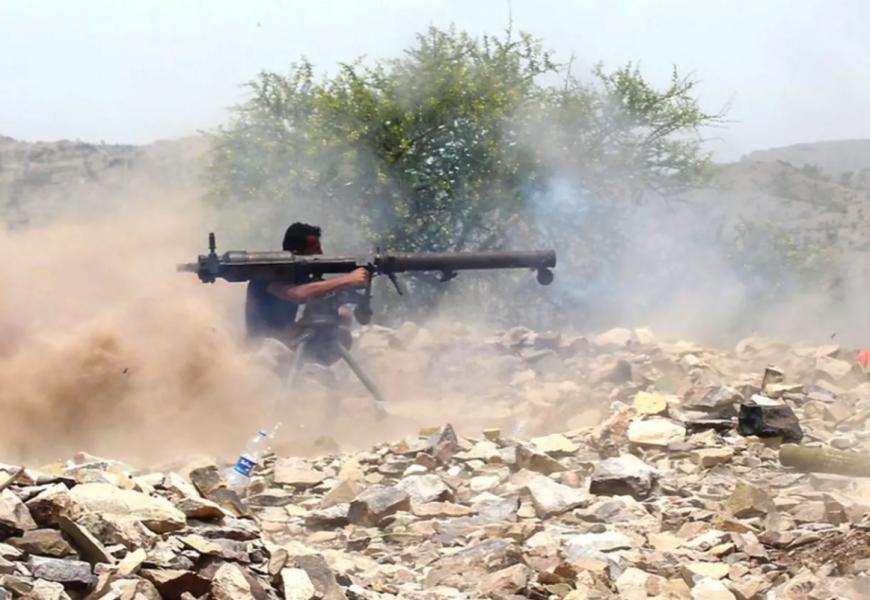
Yemeni government forces have claimed that 1,860 Houthi fighters have been "neutralised" since launching a major counteroffensive aimed at retaking territory controlled by the Iran-backed armed group.
A spokesperson for Yemen's internationally recognised government said the forces had conducted 2,103 "precise targeting operations" against Houthi military positions across several fronts as part of an offensive known as "Dawn of Yemen".
The claims could not be independently verified.
The government, which is backed by Saudi Arabia, also said its forces had captured strategic mountain positions in western Taiz overlooking the Red Sea coast.
Rashad al-Alimi, chairman of Yemen's Presidential Leadership Council, announced the operation on Sunday, saying its objective was to retake all territory held by the Houthis, including the capital, Sanaa.
The Houthis, formally known as Ansar Allah, have controlled Sanaa since 2014. Their forces have fought Yemen's internationally recognised government in a conflict that has drawn in regional powers and contributed to a prolonged humanitarian crisis.
Fighting has intensified in recent days around the Bab al-Mandeb strait, one of the world's most strategically important maritime passages linking the Red Sea with the Gulf of Aden.
The waterway has gained additional significance for international shipping and energy markets amid disruptions to trade through the Strait of Hormuz following the US-Israel war on Iran.
Government-aligned Yemeni forces launched a fresh operation on Tuesday to recapture territory near the Bab al-Mandeb and the strategic port city of Mocha, areas where Houthi forces had expanded their control last month.
Saudi-led coalition strikes
The Saudi-led coalition operating in support of Yemen's government said it had destroyed 82 Houthi military targets in the governorates of Saada, Hodeidah, al-Jawf and Marib.
The coalition said the targets included missile facilities, command and control centres, communications systems and weapons storage sites.
Among the reported targets were 11 mountain-based ballistic missile storage facilities in Saada.
The latest coalition strikes followed Houthi attacks targeting King Khalid International Airport in Riyadh and Abha International Airport, according to Saudi authorities.
The Saudi General Authority of Civil Aviation said three people were killed in the attacks.
One person was reportedly killed and eight wounded at King Khalid airport, while two people were killed and 28 wounded in attacks on facilities at Abha airport.
The strikes prompted condemnation from several countries across the region.
Kuwait described the attacks as a violation of Saudi sovereignty and international law, while Egypt warned that the escalation threatened regional security.
The Muslim World League, based in Mecca, also condemned the attacks.
Meanwhile, Yemen's permanent representative to the United Nations, Abdullah al-Saadi, met UN Special Envoy for Yemen Hans Grundberg on Wednesday to discuss the escalating conflict.
Al-Saadi accused the Houthis of rejecting peace initiatives and de-escalation efforts put forward by the Yemeni government.
He said the government remained committed to extending its authority across the country and ending the Houthis' ability to conduct military operations.
Al-Saadi also said the government wanted a permanent resolution to the conflict rather than a temporary truce, arguing that a short-term ceasefire could simply postpone further fighting.
The latest escalation comes as regional tensions remain high and Yemen's strategic waterways continue to play an increasingly important role in international shipping and energy security.
More Top Stories
















