

 °C
 6
Min
World leaders have responded to the Democrats’ sweeping victory in the United States midterm elections, with reactions ranging from optimism over potential changes in foreign policy to warnings that Washington’s international relationships could face a period of uncertainty.
World leaders react to seismic US election shift
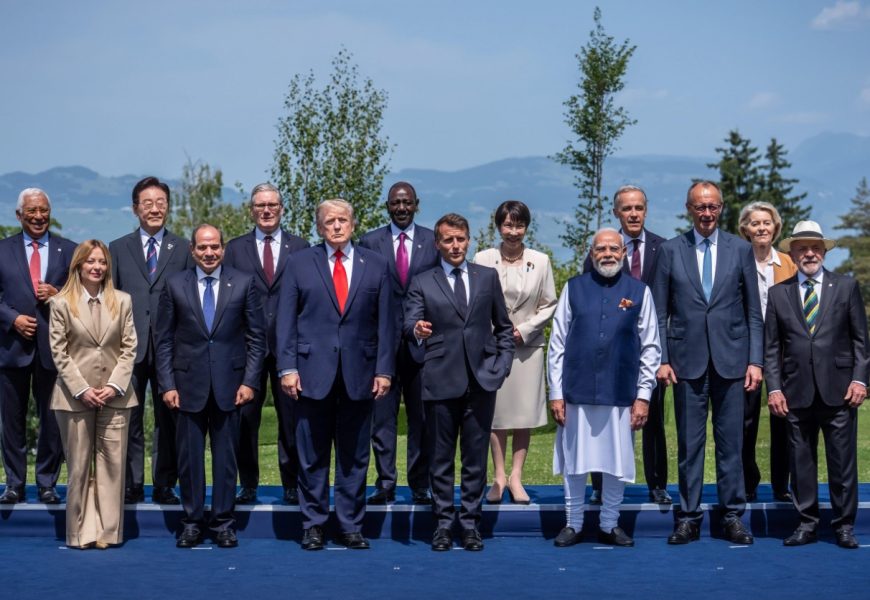
World leaders have responded to the Democrats' sweeping victory in the United States midterm elections, with reactions ranging from optimism over potential changes in foreign policy to warnings that Washington's international relationships could face a period of uncertainty.
The Democratic Party has secured control of both chambers of Congress, delivering a major political setback to President Donald Trump and his Republican Party.
The result is being closely watched internationally, particularly over its potential implications for the US-Israel war on Iran, the Russia-Ukraine conflict, international trade and relations with key allies.
Trump has acknowledged that the conflict involving Iran may have contributed to his party's poor performance, suggesting voters were concerned about the short-term economic consequences, including rising petrol prices.
The election outcome has prompted responses from governments across Europe, the Middle East, Asia and Africa.
Iran says voters rejected war
Iranian parliamentary speaker Mohammad Bagher Ghalibaf, who is also the country's chief negotiator in discussions with Washington, interpreted the result as a rejection of military conflict.
"Americans said NO TO WAR, and we endorse this message," Ghalibaf wrote on social media.
He warned that any attempt by the US administration to disregard public opinion in favour of outside interests would have serious consequences.
However, Iran's Supreme Leader Mojtaba Khamenei dismissed suggestions that the change in congressional control would lead to a significant improvement in relations between Washington and Tehran.
He said changes between political parties would not alter what he described as the United States' hostility towards Iran.
Khamenei also rejected the idea that concessions to Washington could persuade the US to change its position towards the Iranian people.
Europe considers implications for Ukraine
European Parliament Vice President Christel Schaldemose described the election outcome as a reason for cautious optimism across Europe.
She suggested the Democratic victory could strengthen support for Ukraine, environmental policies and improved international relations.
However, she stressed that European nations should continue developing their own capabilities rather than becoming overly dependent on the United States.
German Chancellor Friedrich Merz questioned whether Trump's approach to governing would change following the loss of congressional control.
Merz suggested the president could continue relying heavily on executive orders rather than seeking congressional approval for his policies.
German Defence Minister Boris Pistorius congratulated the Democrats on what he called a historic victory, while emphasising the importance of Europe taking greater responsibility for its own security.
Israel's opposition criticises Netanyahu
Israeli Prime Minister Benjamin Netanyahu had not immediately commented on the American election results.
Netanyahu, a close political ally of Trump, is already facing domestic political difficulties after his governing coalition lost its parliamentary majority in Israel's recent elections.
Opposition figure Yair Golan said the American results demonstrated the extent of Netanyahu's declining political standing among both Democrats and Republicans.
Golan warned that Israel could face international sanctions, growing diplomatic isolation and a confrontation with Washington if Netanyahu's far-right government remained in power.
Opposition leader Yair Lapid also suggested the American election results had effectively ruled out the possibility of a unity government led by Netanyahu.
Britain expects relationship to remain strong
British Health Minister James Frith said the election represented a significant shift in American domestic politics but was unlikely to undermine the relationship between London and Washington.
He described the United States as Britain's closest ally and said the longstanding relationship between the two governments would remain strong regardless of changes in congressional control.
France watches Trump's next move
French Finance Minister Roland Lescure said the international community would be watching closely to see whether Trump adjusted his approach following the Republican defeat.
Lescure suggested the president could respond by concentrating more heavily on domestic economic concerns, particularly petrol prices, while potentially reducing his international involvement.
He said Trump's next decisions would become clearer in the coming days.
Spain's leader predicts further defeats for far right
Spanish Prime Minister Pedro Sanchez welcomed the Democratic victory, describing it as another indication of weakening support for far-right political movements internationally.
Sanchez pointed to previous political developments in Brazil and the United States, predicting a similar outcome in Spain.
He said American voters had rejected policies he associated with economic hardship, discrimination, climate change denial and political privilege.
His comments come ahead of Spain's November 29 snap election, which could determine the future of his own government.
Greece expects continuity
Greek government spokesman Pavlos Marinakis said the election would not affect relations between Athens and Washington.
He described the United States as a strategic ally and said existing agreements, major projects and bilateral cooperation would continue regardless of the political changes in Congress.
Russia calls for caution
Russian Deputy Foreign Minister Sergey Ryabkov said Moscow would wait for the final election results before assessing their implications.
He noted that senior Democratic figures had taken a strongly negative position towards relations with Russia.
However, Ryabkov maintained that Moscow's policies on Ukraine and international affairs would not be determined by political developments in other countries.
Kremlin spokesman Dmitry Peskov said Russia hoped the election results would not interfere with Trump's efforts to pursue a peaceful resolution to the war in Ukraine.
China calls for constructive relations
China said it would continue seeking a constructive relationship with the United States despite the change in congressional control.
Foreign Ministry spokesperson Mao Ning described the American elections as a domestic matter and said Beijing remained committed to cooperation between the two countries.
She called for stronger communication, the management of differences and expanded cooperation based on mutual respect and equality.
Japan reaffirms US alliance
Japanese Chief Cabinet Secretary Minoru Kihara said the election outcome would not change the importance of the US-Japan alliance.
He described the partnership as central to Japan's foreign and security policies, particularly amid increasing international instability.
Kihara said maintaining a strong relationship with Washington remained essential for Japan's national interests and broader regional security.
South Africa sees new era in relations
South African President Cyril Ramaphosa said the Democratic victory could mark the beginning of a new period in international relations.
Speaking to reporters, Ramaphosa acknowledged that American voters had delivered a clear political message by handing control of both chambers of Congress to the Democrats.
His comments come after a series of disagreements with Trump, including disputes over the US president's claims about the treatment of white South Africans.
The election results could reshape the political environment in Washington, although Trump will retain control of the presidency and the administration's foreign policy.
International governments will now be watching how the newly elected Democratic majority approaches the White House, particularly on military conflicts, trade, diplomatic relations and America's role in global affairs.
More Top Stories
















