

 °C
 5
Min
The United States maintains its strategic bomber fleet primarily at bases inside the country, while regularly deploying aircraft to allied and overseas locations as part of its global military operations. The issue has come into focus after 12 B-1B Lancer bombers departed Royal Air Force Fairford in western England on Sunday and returned to the United States.
Where US Bombers Are Based Around the World
The United States maintains its strategic bomber fleet primarily at bases inside the country, while regularly deploying aircraft to allied and overseas locations as part of its global military operations.
The issue has come into focus after 12 B-1B Lancer bombers departed Royal Air Force Fairford in western England on Sunday and returned to the United States.
Their withdrawal ended Fairford's latest role as a forward operating base for US bomber missions linked to military operations against Iran, which began on February 28.
Located about 160 kilometres west of London, RAF Fairford is the US Air Force's only European airfield dedicated to heavy bombers and remains an important location for temporary deployments.
The departure followed the arrest of six people in Britain over suspected terrorism-related activities during the previous two weeks. All six were subsequently released on bail.
US President Donald Trump said the bombers had been moved because of threats that he believed were connected to Iran. He said the aircraft had not been moved a significant distance.
However, US Secretary of State Marco Rubio said the bomber movement was not necessarily connected to the arrests, describing aircraft rotations as a routine occurrence and expressing confidence in the security of US military installations.
What happened at RAF Fairford?
British police arrested five men on September 27 over allegations that they were planning to plant explosives near the airbase. They were released on bail the following day.
Investigators found petrol inside vans linked to the suspects but no explosive devices. The investigation remains ongoing.
A sixth person, a 25-year-old British-Iranian dual national, was arrested in London on October 1 on suspicion of involvement in an alleged plot against the airbase. He was released on bail on October 3.
British Prime Minister Andy Burnham said Iran appeared to have played a role in the alleged plot but did not provide further details.
Iran has rejected the allegations and summoned Britain's ambassador in Tehran to protest against the arrests.
What bombers does the US operate?
The US Air Force currently operates three main bomber types, with a fourth aircraft being developed.
The B-52 Stratofortress is the oldest aircraft in the fleet. The B-52H variant entered service in the early 1960s. With a wingspan of about 56 metres, it is the largest US bomber and can carry approximately 31 tonnes of weapons, including nuclear weapons and cruise missiles.
The B-1B Lancer entered service during the 1980s and is the fastest of the US bomber fleet. It can reach speeds of about 1.2 times the speed of sound and features variable-sweep wings designed for high-speed flight. The aircraft can carry roughly 34 tonnes of conventional weapons, giving it the largest conventional payload of the three operational bomber types. It no longer carries nuclear weapons.
The B-1Bs that recently left Fairford were part of this fleet.
The B-2 Spirit is a stealth bomber designed to penetrate heavily defended airspace. Twenty aircraft were originally built, with 19 remaining in service. The B-2 can carry both nuclear and conventional weapons and has been used to deliver extremely large conventional bombs.
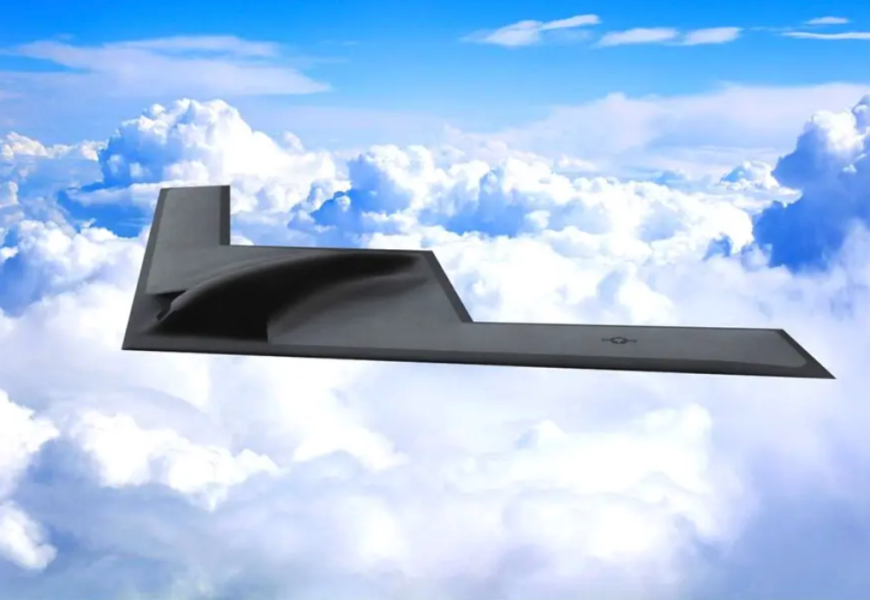
The B-21 Raider is the newest US bomber design and remains in flight testing. It is expected to begin entering service in 2027.
The US Air Force plans to gradually retire the B-1B and B-2 fleets over the coming years. They are expected to be replaced by B-21 Raiders, while upgraded B-52s will continue serving alongside them.
Where are US bombers permanently based?
Although American bombers regularly operate overseas, the aircraft are permanently based at five principal US military installations.
B-52H bombers are stationed at Barksdale Air Force Base in Louisiana and Minot Air Force Base in North Dakota.
B-1B bombers operate from Dyess Air Force Base in Texas and Ellsworth Air Force Base in South Dakota.
B-2 bombers are based at Whiteman Air Force Base in Missouri.
Ellsworth is also scheduled to become the first operational home of the B-21 Raider when the aircraft begins entering service.
The bases have long runways, generally more than 3,000 metres in length, allowing the large aircraft to take off with substantial fuel and weapons loads.
However, runway length is only one consideration. Security, weapons storage, maintenance facilities and specialist personnel are among the factors that determine where bomber operations can be supported.
Where do US bombers deploy overseas?
For operations outside the United States, the Air Force uses a network of forward operating locations and temporary deployments.
Important overseas locations include Andersen Air Force Base in Guam and Diego Garcia in the Indian Ocean.
The United States also periodically sends small groups of bombers to allied bases for several weeks under its Bomber Task Force programme.
Recent deployments have included B-52 bombers at Morón Air Base in Spain, B-1Bs at Ørland in Norway and Misawa in Japan, and B-52s at RAAF Base Tindal in Australia's Northern Territory.
The United States can also launch long-range bomber missions directly from North America using aerial refuelling aircraft.
Some missions have demonstrated the ability of American bombers to remain airborne for more than 30 hours on round trips. Such operations require extensive tanker support, with groups of three bombers potentially needing between six and nine aerial refuelling aircraft during a mission.
The global deployment system allows the US Air Force to move bombers between bases and regions without permanently stationing its entire strategic bomber fleet overseas.
More Top Stories
















