

 °C
 4
Min
India's relationship with Israel has deepened significantly under Prime Minister Narendra Modi, with the war in Gaza appearing to accelerate a shift that had already been under way for more than a decade. The change has become increasingly visible as several traditional Western allies of Israel have adopted tougher measures.
India's Growing Alignment With Israel Deepens During Gaza War
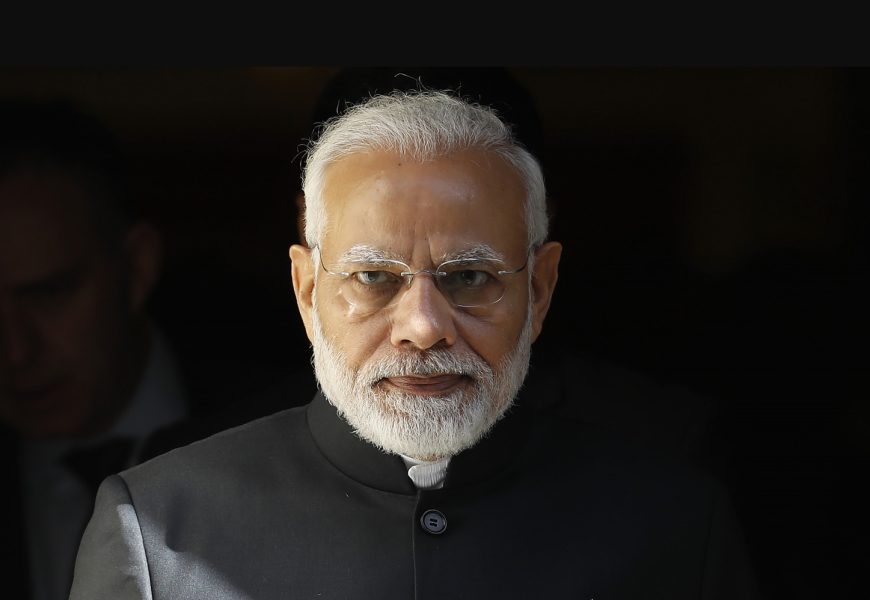
India's relationship with Israel has deepened significantly under Prime Minister Narendra Modi, with the war in Gaza appearing to accelerate a shift that had already been under way for more than a decade.
The change has become increasingly visible as several traditional Western allies of Israel have adopted tougher measures against the government of Israeli Prime Minister Benjamin Netanyahu and far-right figures within his administration.
In September 2025, Israeli Finance Minister Bezalel Smotrich travelled to India despite being barred from entering several countries over his statements and policies concerning Palestinians. During his visit, he was publicly welcomed and travelled to New Delhi, Mumbai and Gujarat.
Smotrich signed a trade agreement in New Delhi, visited the Mumbai stock exchange and travelled to Gujarat, Modi's home state, where he visited an emerging investment centre.
The visit highlighted the growing economic and political relationship between India and Israel at a time when Israel was facing increasing international criticism over its military campaign in Gaza.
India historically maintained a strong pro-Palestinian position. For decades, successive governments supported Palestinian statehood and advocated diplomatic negotiations as the preferred means of resolving the Israeli-Palestinian conflict.
That position has evolved considerably since Modi and his Bharatiya Janata Party came to power in 2014.
India has continued to publicly support a two-state solution and has called for humanitarian assistance and an end to violence. However, its broader relationship with Israel has expanded across defence, intelligence, trade and technology.
The October 7, 2023, Hamas attack on Israel further altered the political tone.
Modi condemned the attack within hours, describing it as a terrorist assault and expressing shock over the violence. India has subsequently maintained a strong focus on combating terrorism, with Modi drawing parallels between the attack on Israel and the 2008 Mumbai attacks.
Analysts say the emphasis on terrorism and national security has helped strengthen political support in India for closer ties with Israel.
Rasheed Kidwai, a political analyst, said Israel's security policies fit into elements of the BJP's broader political narrative, particularly its focus on Islamist extremism and terrorism.
India's Hindu nationalist movement has also historically included strong support for Zionism. Analysts have pointed to ideological similarities between Hindutva, which promotes India as a homeland for Hindus, and Israel's conception of itself as a Jewish homeland.
At the same time, strategic interests have played a major role.
Former Indian diplomat Navdeep Suri, who served as ambassador to Egypt and the United Arab Emirates, said the relationship had moved from largely discreet cooperation to a much more open partnership under Modi.
Israel has become an important defence and intelligence partner for India, while the two countries have developed closer cooperation in areas including security and technology.
Suri also pointed to growing people-to-people connections, particularly among sections of Indian society that admire Israel's approach to national security.
The relationship has continued to expand even as international pressure on Israel has increased.
A number of European countries and Canada have introduced measures targeting Israeli settlement activity in the occupied West Bank, while some governments have imposed sanctions on settlers and Israeli officials, including Smotrich and National Security Minister Itamar Ben-Gvir.
India has taken a considerably more cautious approach.
Although New Delhi has criticised violence and continued to endorse Palestinian statehood, critics argue that the government has been reluctant to directly challenge Israel over its military operations in Gaza, settler violence in the West Bank and other disputed actions.
Suri said India should be willing to adopt stronger and more principled positions on international issues while maintaining its strategic relationship with Israel.
The evolution represents a major departure from India's historical policy.
India opposed the creation of Israel in 1948 and maintained close political ties with the Palestinian leadership for decades. It was among the early countries to recognise Palestinian statehood and supported a 1975 United Nations resolution that characterised Zionism as a form of racism.
Formal diplomatic relations with Israel were not established until 1992.
Relations subsequently expanded under successive Indian governments, but Modi became the first Indian prime minister to visit Israel in 2016.
His government's approach has been markedly more public and politically aligned with Israel.
For the Modi government, the relationship combines strategic considerations with domestic political calculations, analysts say. Israel's focus on security and counterterrorism resonates with sections of India's Hindu nationalist movement, while stronger defence and intelligence cooperation provides practical benefits for New Delhi.
The Gaza war has therefore not weakened India's relationship with Israel. Instead, it appears to have reinforced a transformation that began before the conflict, making Israel a more prominent strategic and political partner for India.
More Top Stories
















