°C
°C
 5
Min
5
Min
Electric vehicles (EVs) are no longer a niche technology. Australians are buying them in growing numbers as petrol prices bite and the federal government continues its tax exemption until 2029. The challenge now is to build the supporting charging infrastructure.
Australia needs thousands more kerbside EV chargers. Here's how to roll them out fast and fairly
Electric vehicles (EVs) are no longer a niche technology. Australians are buying them in growing numbers as petrol prices bite and the federal government continues its tax exemption until 2029.
The challenge now is to build the supporting charging infrastructure.
Fast and ultrafast chargers, which recharge a typical EV in 10-15 minutes, have proven to be commercially attractive, with the number of these chargers growing by 22% in 2025. This is because drivers will pay a premium to recharge quickly while travelling.
But they aren't appropriate for everyday use. They're too expensive, and place stress on EV batteries and the grid. They also risk aggravating metro-regional divisions, with regional communities hosting infrastructure that serves the needs of city travellers and not locals.
So, what's the answer? Our new research crunched the data from 27,000 kerbside charging sessions and made it public in an effort to find out.
A kerbside revolution
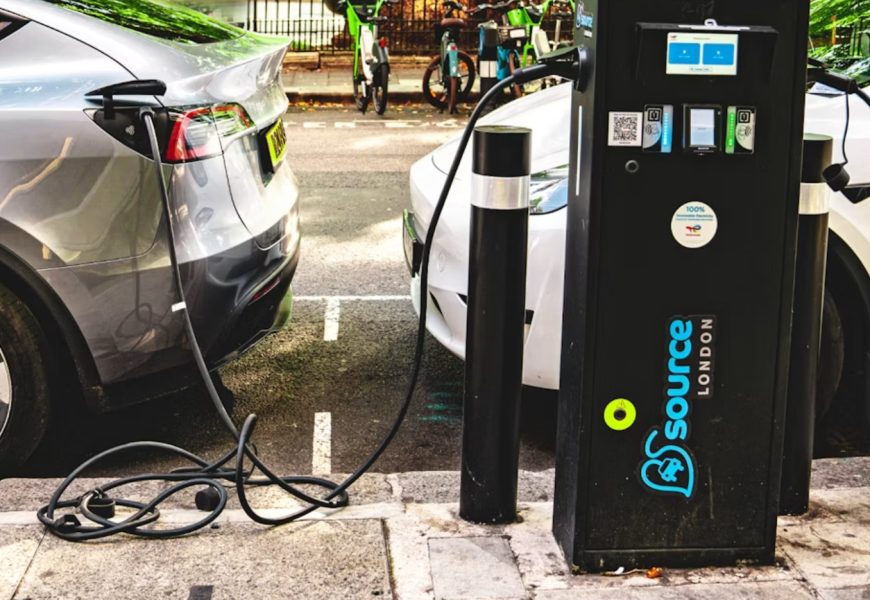
For EVs to truly go mainstream, Australia needs more public "kerbside" chargers. These can be microwave-sized boxes mounted to power poles or slightly larger boxes fixed to the kerb. These offer affordable, reliable and convenient recharging in 2-8 hours (depending on the charger and EV).
They are needed for apartment residents and renters without access to private off-street charging, as well as EV drivers who need to charge between trips.
While the need for more kerbside chargers is widely agreed, there is fierce debate about who should deploy them. Electricity distribution companies are lobbying to do so - they would add the cost to all consumer electricity bills. Private operators oppose this because they want to protect their market share.
The federal government is proposing this way forward: $40 million in taxpayer funding, electricity distributor funding through consumer bills, and private investment.
This proposal would allow private investors to cherrypick sites that are expected to be profitable, such as where EV uptake is already high and many residents live in apartments. Other kerbside charging sites would be developed by electricity distribution companies.
In the scramble for position, one question risks being overlooked: what serves the public interest best?

What we need to do
Our new research addresses this question with three guiding principles, and open access data and analysis.
It finds kerbside charging must be delivered in a way that is fast, fair and adaptable in the future.
Rapid EV adoption brings associated advantages in terms of pollution, health, fuel security and economic benefits.
A fair uptake of kerbside charging would see all members of society share in its benefits, not just the predominantly wealthy recipients of the federal government's current Fringe Benefits Tax subsidies.
Australia's 20 million domestic cars - and almost all heavier vehicles - will eventually be electric, so we need to prepare for this. And we need to avoid the kind of hiccups Australia experienced when the grid wasn't ready for millions of rooftop solar systems.
Kerbside charging is profitable
Our research team at UNSW, in partnership with Waverley, Woollahra and Randwick Councils in New South Wales, has processed and made public data from 27,000 kerbside charging sessions.
Our most significant finding is that some kerbside charging sites are quite profitable, but there are not enough of them. And they are not profitable enough to make kerbside networks commercially profitable overall.
This level of profitability is consistent with kerbside charging being public infrastructure - providing an essential service at affordable rates.
What about current proposals?
We analysed the federal proposal, which would to let private investors choose the most attractive sites while the rest were developed through electricity distribution companies. We found there was a risk this would increase long-term costs for electricity customers.
This is because profitable sites would not cross-subsidise unprofitable - but still important - sites. And this might outweigh the benefits of having private investment cover some of the costs otherwise carried by taxpayers and electricity customers.
On the other hand, a proposal that distribution companies should recover the cost of charging hardware from electricity customers and not charge EV drivers for access is, we believe, too generous. It places an unfair burden on all electricity customers.
A better way
There are other approaches that might be more fair.
For example, distributors could use a combination of taxpayer subsidies and charging EV drivers a modest fee for use. This would only be feasible if their charger networks included profitable sites.
In general, it is fairer to get funding from the broad and progressive tax system than from all customers' electricity bills - especially because electricity distribution companies are split between city and country areas.
One way to deliver fast and fair deployments is involve local councils. Their role has been largely overlooked in federal and distributor proposals. But their insights are invaluable for selecting sites that will be well used. And their planning expertise is fundamental to creating high-quality charging sites.
How to balance the costs and benefits of the much-needed kerbside charging expansion across EV drivers, taxpayers and electricity customers is a challenge for governments and regulators. They must focus on delivering public benefit that makes the EV transition fast, fair and adaptable.
TheConversation.com
Author: Bjorn Sturmberg - Senior Research Fellow, Collaboration on Energy and Environmental Markets, UNSW Sydney
More Top Stories