°C
 6
Min
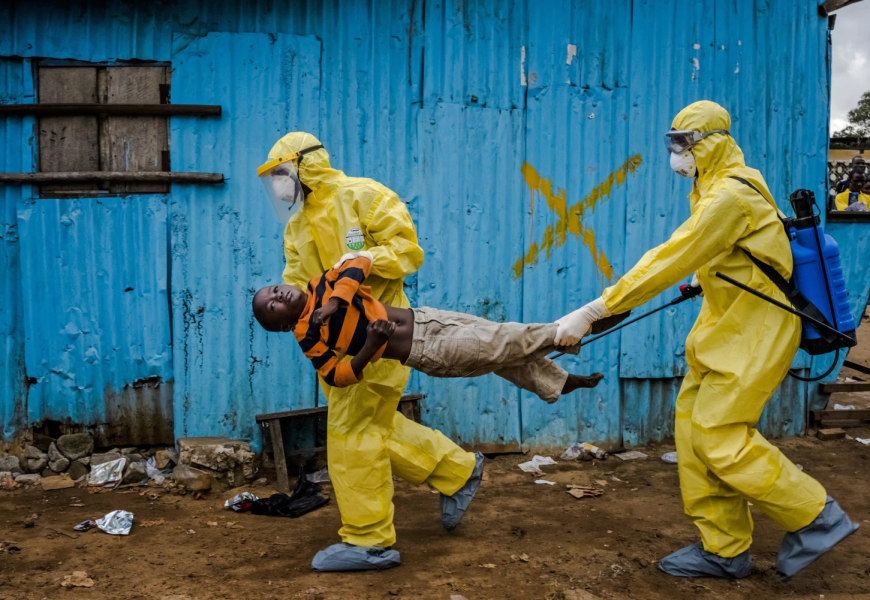
The World Health Organization (WHO) has warned that the Ebola outbreak in Africa is becoming increasingly complex, with cases reported across three countries and health authorities investigating the source of Nigeria's first confirmed infection.
WHO Warns Ebola Outbreak Spreading Across Three African Countries

The World Health Organization (WHO) has warned that the Ebola outbreak in Africa is becoming increasingly complex, with cases reported across three countries and health authorities investigating the source of Nigeria's first confirmed infection.
Nigeria confirmed its first case of the Bundibugyo strain of Ebola on Tuesday, raising concerns about the potential spread of the disease across international borders.
The outbreak, first reported in the Democratic Republic of Congo (DRC) in mid-May, has become the deadliest in the country's history, with more than 9,000 confirmed cases and over 4,000 deaths reported.
"We are facing a more complex outbreak landscape," WHO Africa regional director Mohamed Janabi said during an online media briefing on Thursday.
The outbreak has affected the DRC, Kenya and Nigeria, while neighbouring Uganda, which recorded cases earlier this year, was declared Ebola-free in August.
Health authorities are now investigating how Nigeria's first patient contracted the virus and whether she may have encountered Kenya's initial case during a stopover at an airport in Uganda.
The Nigerian patient is the Ugandan-born wife of a Swiss diplomat based in Abuja. Ugandan authorities said she had travelled to eastern DRC before passing through Uganda. However, the WHO and the Africa Centres for Disease Control and Prevention (Africa CDC) said they had not received verified information confirming that she had visited the DRC.
A Swiss government statement indicated that she was believed to have contracted the disease while travelling in Uganda.
Wessam Mankoula, head of emergency preparedness and response at the Africa CDC, said investigators were examining a possible connection between the Nigerian and Kenyan cases. Both patients had departed from Entebbe, Uganda, on October 3, although no confirmed link between them has been established.
Ugandan government spokesman Alan Kasujja rejected suggestions that the country was responsible for the Nigerian infection, describing it as "preposterous" to link the case to Uganda simply because the woman had spent time there.
Africa CDC director-general Jean Kaseya and WHO representative in Nigeria Pavel Ursu said available information had not established that the patient travelled to the DRC. Ursu said the travel history provided to the WHO indicated no travel outside Uganda.
WHO emergency response manager Patrick Otim said the source of the infection remained unknown as investigators worked to reconstruct the woman's movements.
Authorities are also examining which healthcare facilities she visited in Abuja after developing symptoms and before being hospitalised approximately 48 hours later.
Contact tracing expands
Kenya confirmed its first case earlier this month and has subsequently reported eight additional cases. Health Ministry director-general Patrick Amoth said officials had traced all 135 contacts associated with the initial infection.
In Nigeria, authorities were initially tracing 44 contacts, with additional individuals subsequently identified. Officials have not yet provided an updated total.
Uganda recorded 20 confirmed cases during its earlier outbreak, including 15 infections classified as imported from the DRC. Two people died before the country was declared Ebola-free in August.
The Africa CDC has described the outbreak as an "extremely serious threat", warning of the potential consequences of further regional transmission.
With the reported fatality rate in the DRC approaching 50 per cent, health authorities are intensifying surveillance, contact tracing and investigations into how the virus is moving between countries.
The source of Nigeria's infection remains a key unanswered question as regional health agencies work to establish whether the latest cases are connected and prevent further spread.
More Top Stories