°C
 4
Min
Ukraine's expanding drone campaign against Russia is increasingly disrupting civilian air travel, raising questions about how far Kyiv could go in restricting flights without directly targeting passenger aircraft. The latest disruption came after Ukrainian President Zelenskyy warned airlines operating in Russian airspace that the risks were becoming increasingly serious.
Ukraine's Drone Campaign Puts Russian Civil Aviation Under Pressure
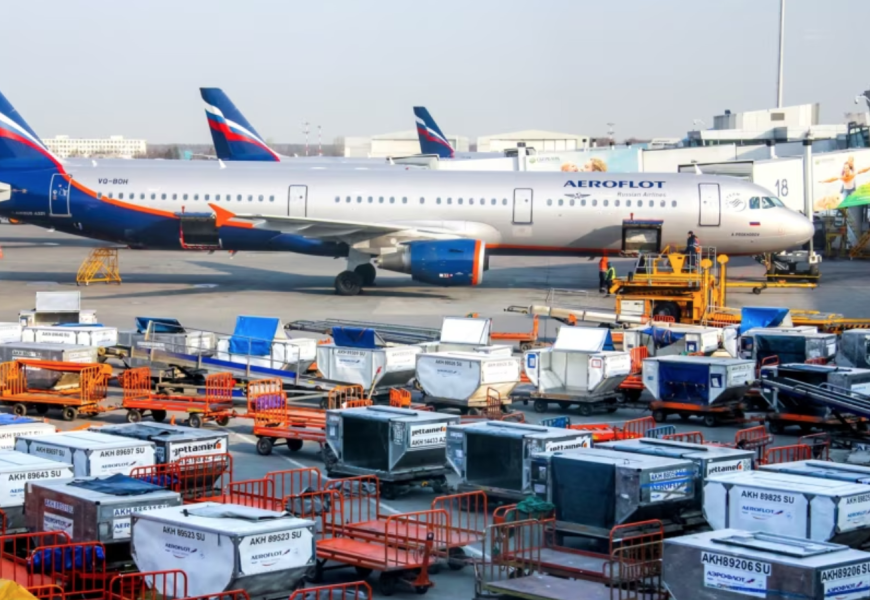
Ukraine's expanding drone campaign against Russia is increasingly disrupting civilian air travel, raising questions about how far Kyiv could go in restricting flights without directly targeting passenger aircraft.
The latest disruption came two days after Ukrainian President Volodymyr Zelenskyy warned airlines operating in Russian airspace that the risks were becoming increasingly serious.
Ukraine has previously launched large-scale drone attacks that temporarily forced Russian airports to close or suspend operations. However, Zelenskyy's warning suggested that Kyiv may be considering a more sustained campaign aimed at making some Russian airports difficult or impossible to operate.
"We are not talking now about the temporary disruption of operations, but about blocking them 24/7," said Valeriy Romanenko of Ukraine's Museum of Aviation. "In other words, the strategy is to make these airports unusable."
Romanenko said such a strategy was technically possible and could force Russia to deploy significant numbers of air-defence systems to protect its aviation infrastructure, while Ukraine could rely on relatively small drones.
Growing risks to airlines
Zelenskyy issued his warning during his nightly address on September 1.
"Today, we want to warn every airline that uses Russian airspace, every insurer, everyone who still uses key Russian airports: The Russian sky is becoming completely dangerous," he said.
The following day, Ukraine formally notified the International Civil Aviation Organization (ICAO), warning of what it described as increasing risks to civilian aviation operating in Russian airspace.
The concerns were reinforced on September 3, when Moscow's Vnukovo Airport temporarily suspended operations. Restrictions were also reported at the capital's Sheremetyevo and Domodedovo airports.
Moscow Mayor Sergei Sobyanin said 548 Ukrainian drones had flown toward the Moscow region between September 2 and 3.
Russia's Transport Ministry said it had provided foreign airlines with additional information about safety procedures at Russian airports and in the country's airspace following requests from carriers.
Transport Minister Andrei Nikitin said authorities were coordinating with the Defence Ministry and National Guard to limit the impact on civilian aviation.
"I believe that we will not allow any significant disruption to civil aviation," Nikitin said.
Despite the assurances, flight-tracking data from Flightradar24 showed that four Russian airports ranked among the five most disrupted airports in the world on September 3.
Infrastructure could become the target
Ukraine's previous drone campaigns have caused significant but generally temporary disruption to Russian airports. A prolonged campaign could have a much broader impact.
Romanenko suggested that Ukraine could seek to increase pressure without deliberately attacking civilian aircraft - an action Zelenskyy has explicitly ruled out and which could constitute a war crime.
Potential targets, he said, could include infrastructure used to manage and safely operate flights.
"The targets will be Russia's air-traffic-control infrastructure: control towers, automated landing systems at airports, glide-path equipment, and radar systems for air traffic control," Romanenko said.
Alexander Lanetsky, chief executive of Lithuania-based aircraft brokerage Friendly Avia Support, said disruption around Moscow could affect the wider Russian aviation network.
"If the Moscow aviation hub were paralyzed for a week, the entire country would absolutely feel it," he told Current Time.
He said sustained drone activity could result in the introduction of no-fly zones, potentially bringing airport operations and significant parts of the aviation sector to a standstill.
Domestic passengers bear the cost
Flight data on September 3 indicated that much of the disruption affected domestic services.
That could have a particularly significant impact in Russia, which stretches across 11 time zones and relies heavily on air travel to connect distant regions.
The disruptions also highlight the growing civilian cost of Russia's war with Ukraine, particularly for ordinary passengers facing cancellations, delays and uncertainty.
Russia's international aviation sector has already been significantly affected by Western sanctions imposed following Moscow's full-scale invasion of Ukraine in 2022. Many routes to Europe remain unavailable.
However, Russia continues to have substantial international air links with countries including Turkey, Uzbekistan, the United Arab Emirates, China and Egypt. Together, those destinations accounted for about 72 percent of Russia's international passenger traffic, according to the Association of Tour Operators of Russia.
The increasing threat could therefore create problems not only for Russian carriers but also for foreign airlines deciding whether to continue serving the country.
"When deciding whether or not to fly to Russia, these airlines will assess the threats," said aviation and defence technology expert Bohdan Dolintse.
He said any loss of an aircraft in Russian airspace would place responsibility on Russia and the airline involved.
The potential for sustained disruption therefore presents Moscow with a difficult challenge: maintaining civilian air services while protecting airports and aviation infrastructure from an increasingly aggressive Ukrainian drone campaign.
More Top Stories