°C
 3
Min
Thousands of people have taken to the streets of Slovenia's capital, Ljubljana, to protest the opening of Israel's first embassy in the European Union country. The demonstration took place on Wednesday as Slovenia's nationalist Prime Minister Janez Jansa pursued a major shift in the country's diplomatic relationship with Israel.
Thousands protest as Slovenia opens first Israeli embassy
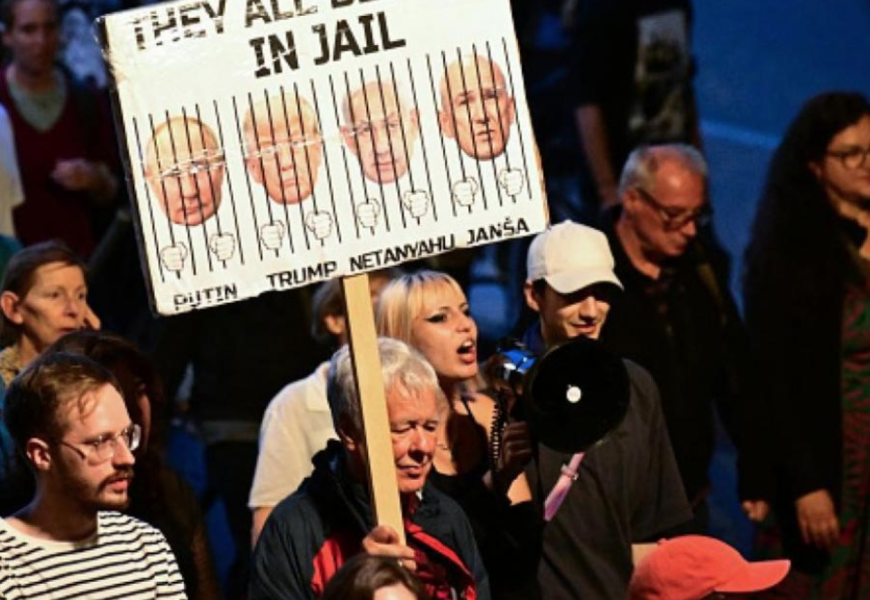
Thousands of people have taken to the streets of Slovenia's capital, Ljubljana, to protest the opening of Israel's first embassy in the European Union country.
The demonstration took place on Wednesday as Slovenia's nationalist Prime Minister Janez Jansa pursued a major shift in the country's diplomatic relationship with Israel, reversing policies introduced by his predecessor, Robert Golob.
Golob's government had recognised a Palestinian state and described Israel's military campaign in Gaza as a "genocide". It also imposed an arms embargo on Israel, banned imports from Israeli settlements in the occupied West Bank and restricted the entry of senior Israeli officials, including Prime Minister Benjamin Netanyahu.
The new government has moved quickly to dismantle those measures.
In Ljubljana, protesters marched past the hotel where the embassy's inauguration was being held. Demonstrators carried signs including "We stand together for peace and Palestine" and "Genocide is not self-defence".
Art historian Urska Breznik, 48, described the Jansa government as a "collaboration" administration, while fellow protester Melina Sahernik said the diplomatic shift was damaging Slovenia's reputation.
Public opinion also appears to be at odds with the government's new approach. A poll conducted by Slovenian newspaper Delo in June found that 56 per cent of respondents opposed closer relations with Israel, while only 14 per cent supported stronger ties.
Political analyst Andraz Zorko said the government's foreign policy appeared inconsistent with the views of much of the Slovenian population, which numbers around two million people.
"The majority of Slovenian public is either against Israel or in some kind of neutral position," he said.
The opposition has also challenged the government over the change in policy.
The liberal Freedom Movement, led by former prime minister Golob, joined the Left party in submitting a proposal to parliament seeking Jansa's impeachment. The parties cited his foreign policy as a major concern, arguing that it had become excessively favourable to Israel.
They also called for the removal of Foreign Minister Tone Kajzer and criticised the opening of the embassy, describing it as a possible political return for alleged Israeli support for Jansa during Slovenia's March election.
Jansa began reversing the previous administration's approach soon after taking office, including removing the Palestinian flag from the Slovenian government building. His government subsequently abandoned measures that had been imposed against Israel.
At the embassy inauguration, Kajzer said the opening should begin a new period of diplomatic engagement and cooperation.
He said the goal should be "greater dialogue, stronger cooperation and, above all, more tangible results for the benefit of our people".
Israeli Foreign Minister Gideon Saar travelled to Slovenia for the ceremony and described the opening as a "historic day".
Saar thanked Jansa and the Slovenian government for what he called their friendship towards Israel, saying the embassy represented a clear expression of Israel's commitment to closer relations with Slovenia.
The embassy opening comes amid growing diplomatic disagreement between Israel and several Western countries over the war in Gaza and Israeli policies in the occupied West Bank.
Britain had announced a ban on trade with illegal Israeli settlements in the West Bank, while France and Canada indicated they would take similar measures.
The moves have highlighted increasing tensions between Israel and some of its traditional allies, while Slovenia's decision to strengthen diplomatic ties represents a contrasting position within Europe.
Israel has strongly criticised the measures announced by Britain and other countries and has responded by threatening diplomatic action, including plans to close the British consulate in Jerusalem.
More Top Stories