°C
 6
Min
Nigeria has confirmed its first case of Ebola in the capital, Abuja, as health authorities across Africa work to contain outbreaks in several countries and prevent further spread of the virus. The case involves a woman who travelled from Uganda and subsequently tested positive for Ebola, according to Nigeria's Federal Ministry of Health and Social Welfare.
Nigeria Confirms First Ebola Case as Africa Monitors Outbreak

Nigeria has confirmed its first case of Ebola in the capital, Abuja, as health authorities across Africa work to contain outbreaks in several countries and prevent further spread of the virus.
The case involves a woman who travelled from Uganda and subsequently tested positive for Ebola, according to Nigeria's Federal Ministry of Health and Social Welfare.
The woman began developing symptoms on October 7 and was admitted to a private hospital in Abuja on October 11, where she was diagnosed with the virus.
Health Minister Muhammad Pate said authorities had launched contact-tracing efforts to identify 44 people who may have been exposed to the patient.
"We are doing everything possible to contain this case by tracing all the contacts the individual may have had," Pate said.
The confirmation comes as the Democratic Republic of Congo (DRC) continues to battle a major Ebola outbreak, while Kenya has reported nine cases linked to a separate cluster of infections.
Kenya confirms ninth case
Kenya's Ministry of Health confirmed its ninth Ebola infection on Tuesday, involving a 24-year-old man who was already in quarantine when he developed symptoms.
The man was isolated at the first sign of illness, tested for the virus and placed on treatment after receiving a positive result, the ministry said.
He is a close family member of Kenya's first Ebola patient, who travelled from the DRC through Uganda before arriving in Kenya. The initial patient died at a Nairobi hospital on October 5.
Kenyan health authorities said all nine confirmed infections belonged to the same cluster, with no evidence of transmission beyond the group.
Director-General for Health Patrick Amoth said eight patients were stable and responding well to treatment.
Authorities have traced 134 of the 135 identified contacts, all of whom were placed under quarantine and monitoring.
Amoth said most people in quarantine were approaching the end of the 21-day monitoring period and could begin returning home from October 25, provided they remained free of symptoms.
The ministry urged communities to welcome those completing quarantine, stressing that people who have completed the required monitoring period without developing the infection do not pose a risk to others.
Officials also said no infections had occurred inside quarantine facilities and that infection-prevention measures were being closely monitored to protect healthcare workers.
Despite the outbreak, Kenya has not introduced restrictions on travel, trade or public gatherings. Authorities have maintained that the country remains open for business while response measures continue.
Major outbreak continues in Congo
The situation in the DRC remains a significant concern, with more than 9,000 reported Ebola cases and 4,000 deaths since May, according to the figures provided in the outbreak report.
The European Centre for Disease Prevention and Control has described the epidemic as the second-largest on record.
Containment efforts have been complicated by the Bundibugyo strain of the virus, for which there is no licensed vaccine or specific approved treatment.
Uganda, which has previously reported Ebola cases, had subsequently been declared free of the virus.
Nigeria's newly confirmed case and Kenya's ongoing cluster have increased concerns about cross-border transmission, particularly given the movement of people between affected countries.
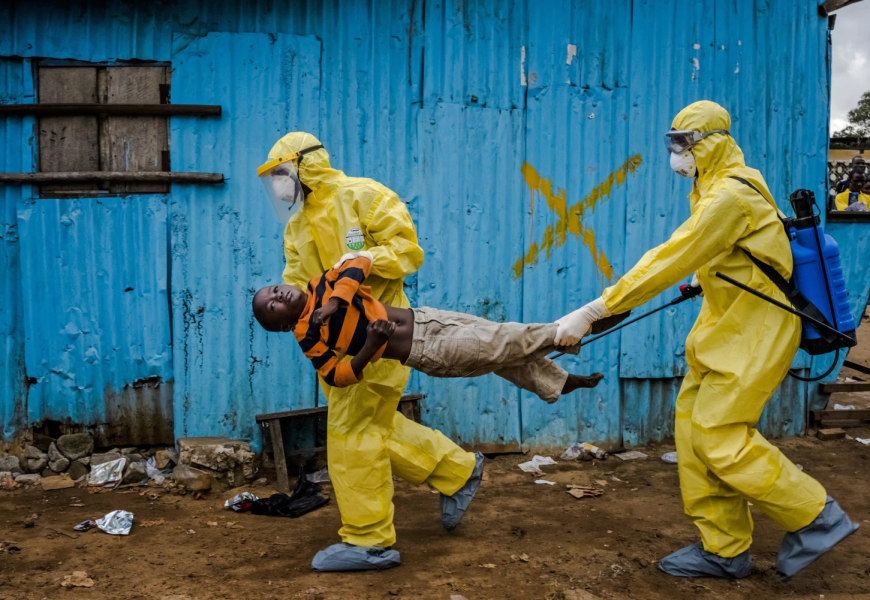
Health authorities are relying on isolation, contact tracing, quarantine and close monitoring to identify infections early and limit further transmission.
The developments underline the importance of coordinated public-health responses as countries work to contain the outbreaks and prevent the virus from spreading to additional communities.
More Top Stories