°C
 5
Min
Supporters of Italian Prime Minister Giorgia Meloni are celebrating a political milestone after her government became the longest continuously serving administration in Italy since the end of World War II. The achievement was marked on Friday in Abetone Cutigliano, a mountain resort in the Tuscan-Emilian Apennines.
Meloni Government Becomes Italy's Longest-Serving Since WWII
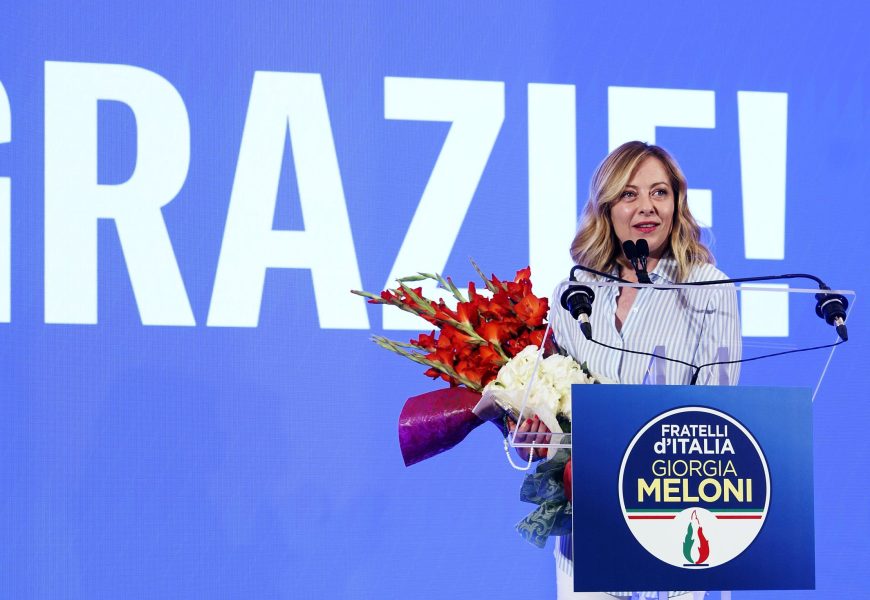
Supporters of Italian Prime Minister Giorgia Meloni are celebrating a political milestone after her government became the longest continuously serving administration in Italy since the end of World War II.
The achievement was marked on Friday in Abetone Cutigliano, a mountain resort in the Tuscan-Emilian Apennines and a stronghold of Meloni's Brothers of Italy party.
Italy has experienced extraordinary political turnover since 1945, with 68 governments formed over eight decades. While former Prime Minister Silvio Berlusconi remains Italy's longest-serving premier when his time in office across four separate terms is combined, Meloni's government has now surpassed Berlusconi's previous record for consecutive days in power, reaching more than 1,412 days.
For supporters, the milestone represents a major shift in a country long associated with fragile coalitions and short-lived administrations.
Abetone Cutigliano was among the municipalities that strongly backed Brothers of Italy in the October 2022 general election. Andrea Tonarelli, a local party councillor and municipal engineer, said supporters were gathering for a celebration, with some travelling to a seaside event while others planned to watch the proceedings from the party's local office.
Tonarelli, who joined Brothers of Italy in 2017, described the achievement as a source of considerable pride.
"Ten years ago, this result would have been unthinkable," he said, crediting the party with attracting younger Italians to its political movement.
A resident of the mountains, Tonarelli said he was drawn to the party's opposition to what he called excessive environmental restrictions, particularly those affecting hunting, infrastructure development and forestry.
He also praised Meloni's emphasis on patriotism, border protection, Italian products and the preservation of traditional heritage.
He said the record should not be viewed solely as an achievement for Meloni or her party, but as the result of a wider community effort.
A Symbolic Political Milestone
Grazia Di Maggio, a 31-year-old Brothers of Italy lawmaker and the youngest member of Italy's Chamber of Deputies, described the government's longevity as "profoundly symbolic".
Meloni became Italy's first female prime minister when she took office in 2022 and leads a right-wing government in a country where memories of Benito Mussolini's fascist dictatorship have long shaped political debate.
Meloni has repeatedly attempted to distance herself and her party from fascism. In 2022, she said the Italian right had consigned fascism to history.
Di Maggio said Meloni's political rise demonstrated that determination and hard work could overcome traditional barriers.
She argued that the government had shown that a right-wing administration could remain stable while governing responsibly.
Longevity Does Not Necessarily Mean Stability
However, political analysts have questioned whether the government's survival should automatically be interpreted as evidence of greater political stability.
Paolo Carusi, a contemporary history lecturer at Roma Tre University, said the length of time a government remains in office is not itself a measure of political stability.
He argued that Italian politics had changed significantly, with voters increasingly shifting their support between parties and showing greater reluctance to participate in elections.
Carusi identified Italy's electoral system as one factor behind Meloni's success. The electoral law introduced in 2018 and used in the 2022 election helped the right-wing coalition secure an outright parliamentary majority.
He also said Brothers of Italy had moderated or abandoned elements of its original electoral programme in order to preserve coalition unity, avoiding some of the conflicts that had brought down previous governments.
That strategy could face a new challenge ahead of the next general election in 2027.
A new far-right movement led by former army general Roberto Vannacci has rapidly gained support and has emerged as one of Italy's strongest political forces only months after its formation.
Carusi said Vannacci's party, National Future, could attempt to portray itself as the only genuine defender of traditional right-wing values at the next election.
Critics Warn of Political Stagnation
Political scientist Piero Ignazi of the University of Bologna offered an even more critical assessment, arguing that Meloni's longevity could represent political stagnation rather than genuine stability.
He said stability could either provide the conditions necessary for meaningful reform or simply allow a government to remain in place without producing significant change.
Ignazi argued that Meloni's government had followed the latter path.
Italy's economic outlook remains a significant challenge. Growth is forecast at only 0.6 percent in 2026, while projections suggest the country could record the weakest economic growth and one of the highest levels of public debt in the European Union in the following year.
Criticism has also focused on the government's social and criminal justice policies.
Ignazi said reforms had introduced dozens of new criminal offences covering conduct that had previously attracted fines or civil penalties.
He argued that many of the new offences relate to public dissent and protest, warning that the changes could represent a serious restriction on civil liberties.
For Meloni and her supporters, however, the government's record longevity remains a landmark achievement in a country where political administrations have historically struggled to survive.
Whether that endurance ultimately produces lasting political and economic change - or simply marks a period of prolonged stagnation - is likely to remain a central question as Italy moves towards its 2027 election.
More Top Stories