°C
 5
Min
Canadian Prime Minister Mark Carney's push to reduce the country's economic dependence on the United States, attract billions of dollars in investment and accelerate major infrastructure projects is facing growing resistance from organised labour.
Carney's Economic Overhaul Faces Growing Union Resistance
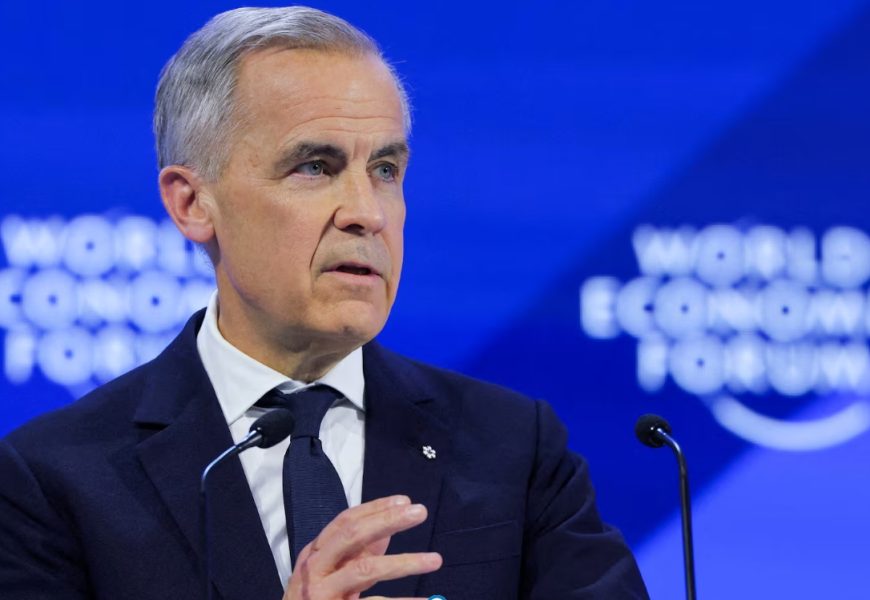
Canadian Prime Minister Mark Carney's push to reduce the country's economic dependence on the United States, attract billions of dollars in investment and accelerate major infrastructure projects is facing growing resistance from organised labour.
The dispute centres on proposed changes to federal labour laws that unions say could weaken workers' right to strike, even as the government argues the measures are necessary to provide greater certainty for businesses and investors.
The tensions come as Canada faces significant economic pressure from the United States. President Donald Trump has imposed substantial tariffs on Canadian goods and repeatedly threatened further measures, while also reviving calls for Canada to become the 51st US state.
Canada has responded with retaliatory tariffs, while a national campaign encouraging consumers to buy Canadian products has gained momentum. The slogan "elbows up", borrowed from hockey and referring to standing firm against an opponent, has become a prominent symbol of the country's response.
With trade negotiations stalled since August, Carney's government has moved quickly to strengthen the domestic economy and attract investment.
Last month, the government introduced Bill C-39, known as the Building Canada Strong Act. The legislation is designed to speed up approvals for major projects and provide investors with greater certainty.
However, it would also establish clearer circumstances under which the federal government could intervene in strikes and lockouts involving federally regulated industries.
The proposal has brought Canada's largest unions together in opposition.
The Canadian Union of Public Employees, which represents about 800,000 workers across sectors including health, education and municipal services, has warned it could resist the proposed restrictions if the legislation passes without significant amendments.
Union leaders have said they support the government's efforts to strengthen Canada's economy and respond to pressure from Washington, but argue that economic resilience should not come at the expense of workers' bargaining rights.
Dispute over the right to strike
The controversy focuses on Section 107 of the Canada Labour Code, which already allows the federal Labour Minister to intervene in labour disputes in the interests of maintaining industrial peace.
Ottawa has used the provision several times since 2024 in disputes involving airlines, railways, ports and Canada Post. It was also used during an Air Canada flight attendants' strike in 2025.
Unions have challenged the government's use of the provision and had hoped the new legislation would significantly restrict its application.
Instead, Bill C-39 would introduce additional conditions before Section 107 could be used.
The government would first have to appoint a special mediator, receive a public report and consider whether a strike or lockout was damaging the national interest.
If industrial action was already under way, the minister could direct the Canada Industrial Relations Board to restore operations and establish a binding process, potentially including arbitration.
The government says the changes would establish clearer safeguards around existing powers while maintaining the fundamental right to strike.
Unions strongly disagree, arguing that the definition of "national interest" could ultimately give the government considerable discretion to intervene.
They also warn that employers could become more willing to hold out during negotiations if they believe Ottawa will eventually step in and end a strike.
Labour representatives say there have already been instances in which employers appeared to expect government intervention.
The Teamsters union has alleged that major Canadian rail companies anticipated federal intervention during their 2024 dispute, while unions have made similar claims about the Air Canada strike the following year. The companies involved have disputed aspects of those claims.
Wider debate over Canada's economic future
The labour dispute reflects a broader argument over the speed and direction of Carney's economic agenda.
Critics argue the government is using the economic uncertainty created by the US trade conflict to introduce reforms that go beyond addressing immediate trade pressures.
That debate was particularly visible around a national investment summit in Toronto, where government officials and business leaders promoted Canada as an attractive destination for global investment.
Outside the event, hundreds of protesters representing labour, Indigenous, environmental and migrant-rights organisations demonstrated against a range of government priorities, including energy and military projects, artificial intelligence and the use of public funds to attract private investment.
Economists have also questioned whether strikes pose a significant threat to the wider Canadian economy.
While industrial action can impose substantial costs on individual companies, some economists argue that the overall effects on employment, incomes and economic growth are generally limited because lost production and transportation are often delayed rather than permanently lost.
They also point to the fact that the overwhelming majority of collective bargaining negotiations are settled without strikes.
From that perspective, weakening workers' bargaining power could itself carry economic consequences. Stronger bargaining positions can help workers secure higher wages, which may support consumer spending, productivity and employee retention.
For Canada's labour movement, the issue has therefore become a test of what the government means by strengthening the country.
Union leaders say workers are willing to stand behind Canada as it confronts pressure from the United States, but argue they cannot do so while losing leverage at the bargaining table.
The dispute is likely to intensify as Bill C-39 moves through Parliament, placing Carney's economic reform agenda on a collision course with one of the country's most organised political and social forces.
More Top Stories